
Time Wasters at Work and How to Avoid Them
Meetings now consume 21.5 hours per week for the average employee, and nearly half are considered wasted. Add Slack notifications, endless follow-ups, and nonstop context switching, and deep work barely survives the modern workday. We broke down the biggest workplace time-wasters ↓


Productivity in 2026 is not really impacted by a lack of effort. The bigger problem is how easily the workday gets fragmented. Hours disappear into things that look productive but do not move important work forward. Endless email threads, back-to-back meetings, constant notifications, and status updates keep people busy while real work gets delayed.
The difficult part is that these habits often feel like progress. Checking email all day can feel like staying informed. Sitting in long meetings can feel collaborative. But in practice, they often break focus and reduce the amount of meaningful work that gets done.
A 2025 workplace analysis showed that employees spend around 60% of their time on “work about work” instead of the core tasks they were hired to complete. Over time, this leads to missed deadlines, more rework, slower execution, and growing stress across teams.
Improving productivity starts with understanding where time is actually going. The guide below looks at some of the biggest workplace time-wasters and practical ways to reduce them.
What you'll get from this article:
- A clear definition of time wasters and why they're hard to spot
- The real business and personal impact of wasted time at work
- Eight common workplace time wasters explained concretely
- Seven practical strategies to reduce each one
- How TMetric makes hidden time waste visible so you can fix it
What are time wasters?
A time waster is anything that takes time and attention away from meaningful work outcomes, that’s the time waster meaning in practice. The more damaging examples of time wasters are not just social media or personal calls; they tend to look like real work.
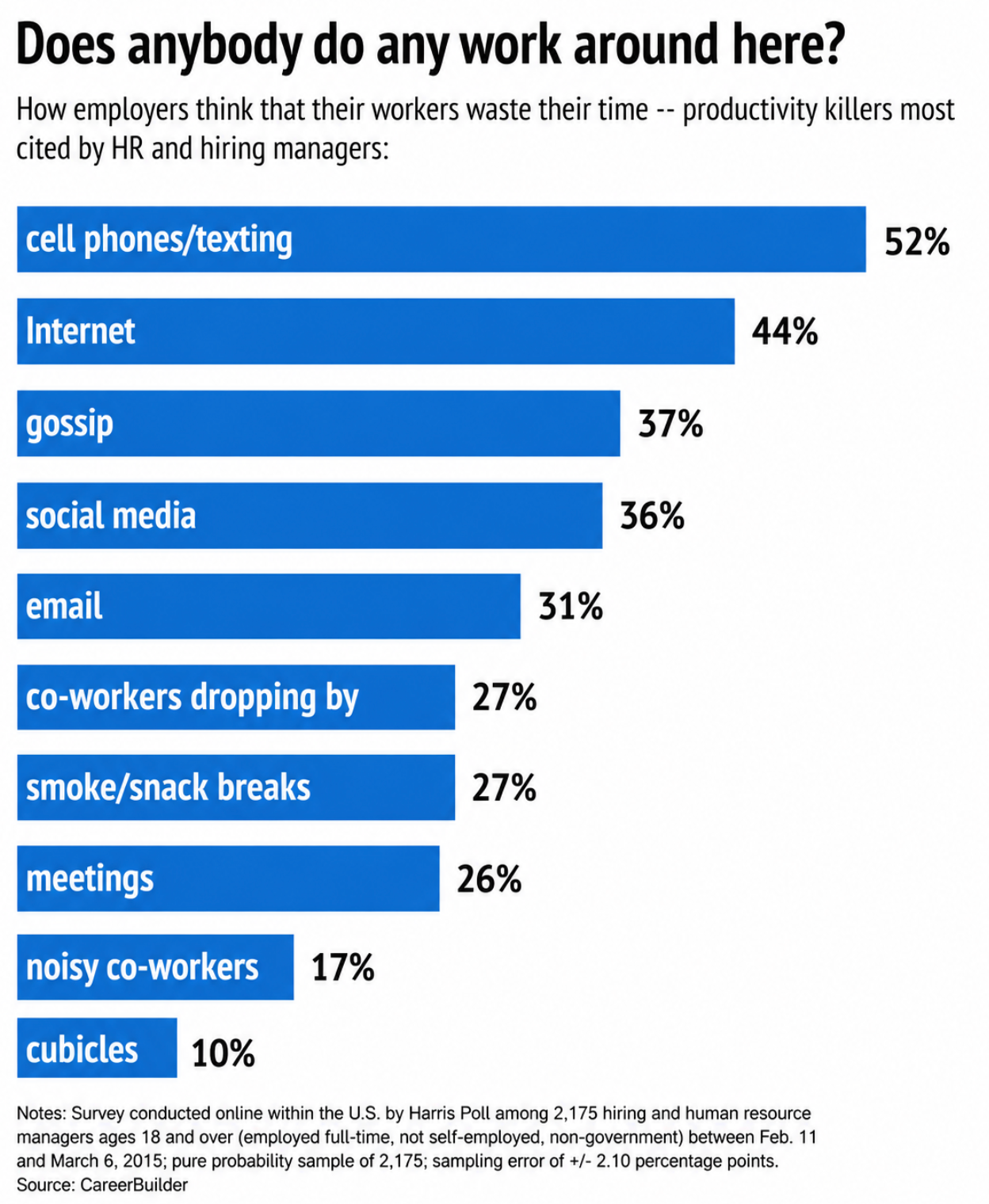
Research shows the average worker spends 51% of their workday on tasks of little to no value: unclear priorities, poor processes, unnecessary back-and-forth, and performative work that signals busyness but produces nothing. The reason this persists is structural. 82% of people have no formal time management system: no framework for deciding what deserves attention, in what order, and for how long. Without that, the default is to respond to whatever feels most urgent. Which is rarely the work that matters most.
Why time wasters matter at work
Understanding why time wasters are a problem is worth doing before jumping to solutions. The stakes go beyond individual efficiency. When wasted time compounds across a team, the effects become a business problem.
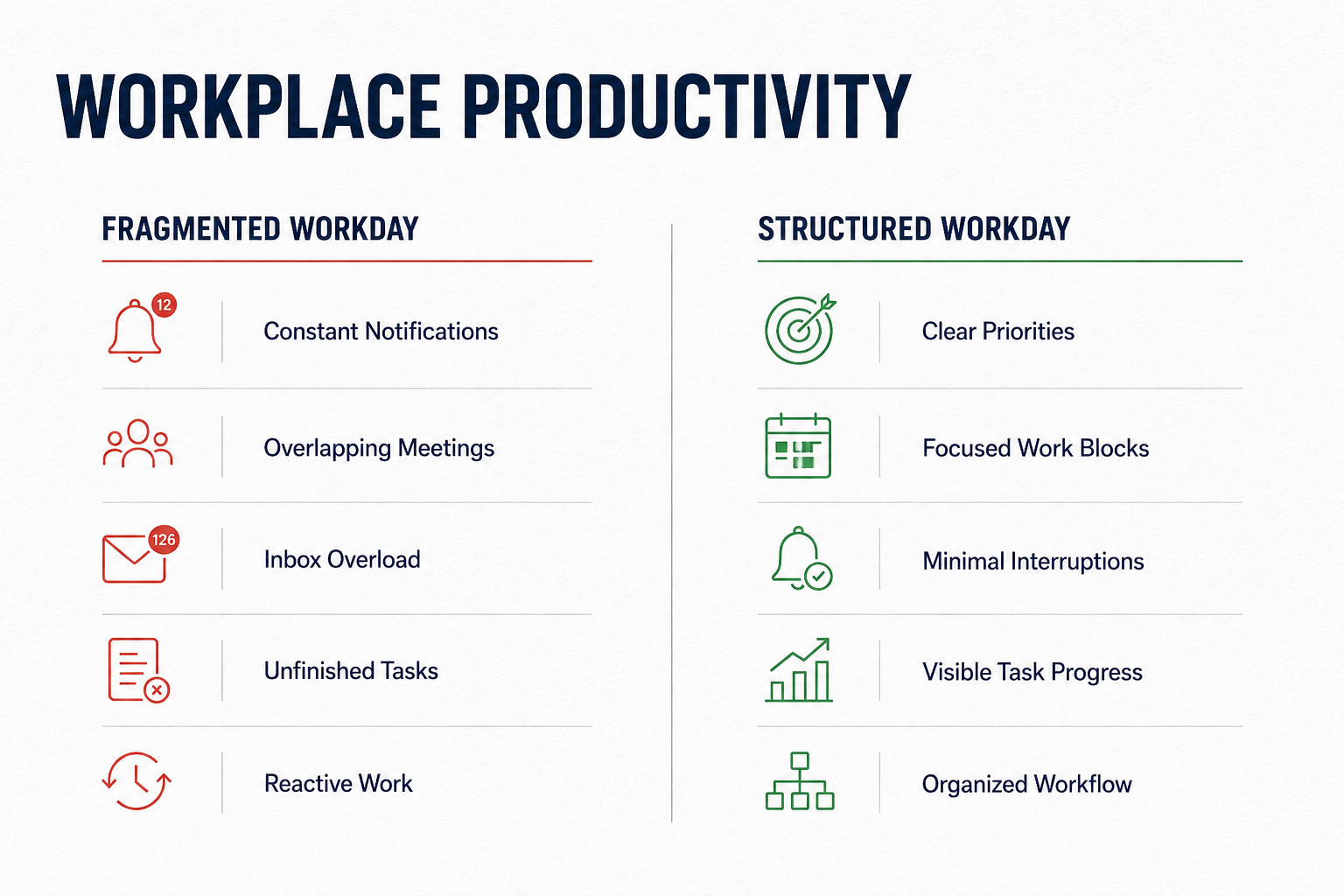
Impact on productivity and focus
Every interruption and every recovery has a hidden cost. The University of California, Irvine found it takes an average of 23 minutes and 15 seconds for employees to return to the original task with the same level of focus after being interrupted. When interruptions occur repeatedly during the day (from notifications, meetings, or ad hoc requests) employees spend most of their day in shallow mode, never arriving at the focused mode where quality work gets done.
The American Psychological Association has also found that chronic multitasking and frequent context switching can consume up to 40% of a person's productive time. For an eight-hour workday, that is roughly three hours of lost output: not because people aren't working hard, but because their brains are constantly reorienting between tasks, tools, and conversations.
Impact on stress, deadlines, and work quality
Wasted time does not disappear, it gets compressed. When hours are absorbed by low-value activity, the real work gets done in a rush, after hours, or not at all. Missed deadlines follow. Rework follows too, because speed without focus produces errors.
The stress is cumulative. Employees end the day feeling busy but behind. Over time, that gap between effort and progress becomes a source of disengagement, and a signal that the problem is systemic, not personal.
Common time wasters at work
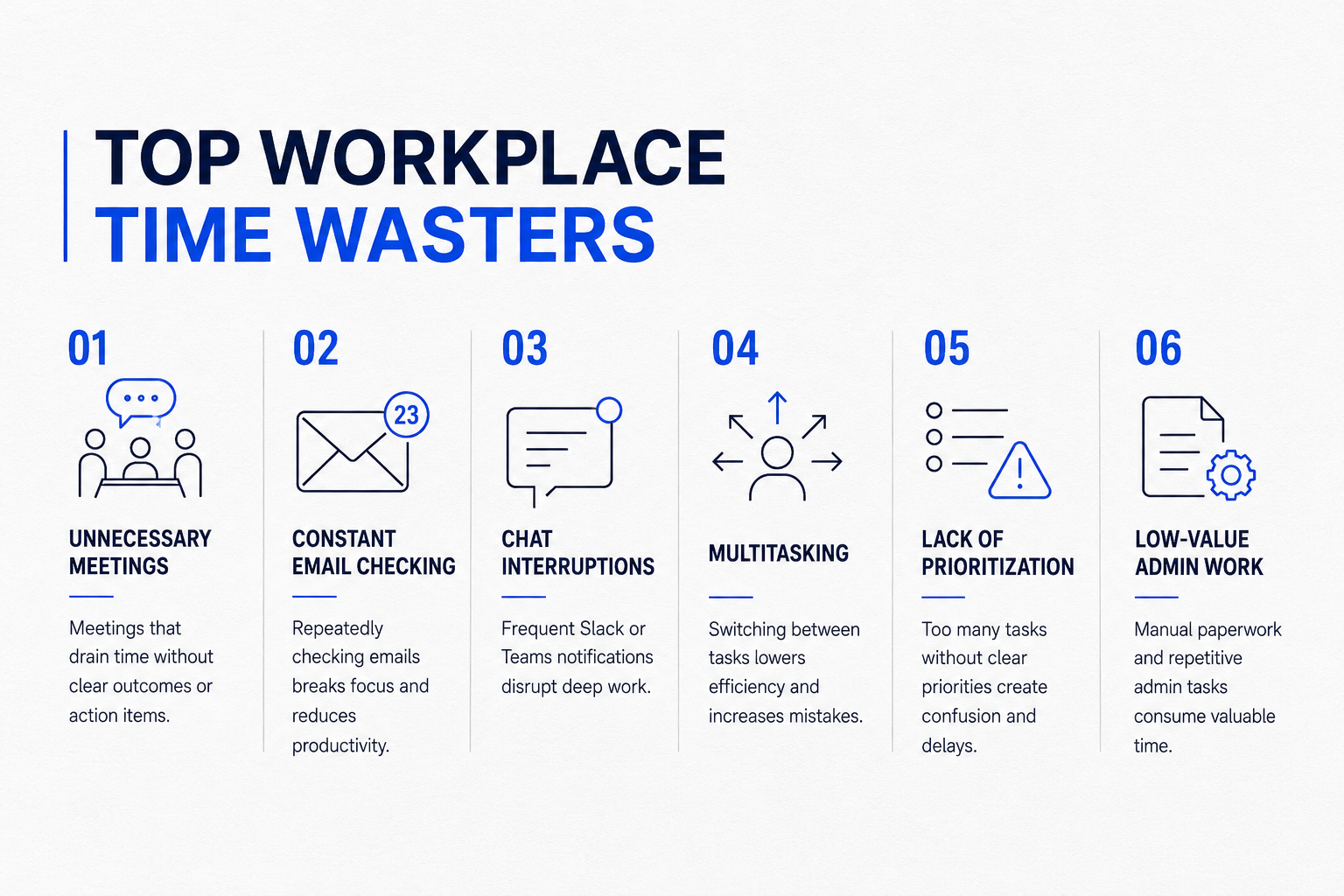
Here is a practical breakdown of the most common time wasters in the workplace. For all of the time wasters examples we will provide, we describe what each one is, why it wastes time, and what it leads to.
Unnecessary meetings
Meetings remain the top productivity drain for 47% of employees. U.S. businesses lose $37 billion annually to unnecessary sessions, with the average worker spending 21.5 hours per week in them. These interruptions break the day into fragments, making concentrated work nearly impossible. A meeting without a clear agenda or decision-maker is simply an interruption dressed in a calendar invite.
Constant email checking
Checking an inbox 121 times per day accounts for 28% of the workweek. While most messages are not urgent, the habit of continuous monitoring creates a cycle of fractured attention. Email often becomes a low-quality communication channel where long threads and unclear requests replace meaningful progress.
Chat notifications
Tools like Slack and Teams often act as a second, faster inbox. Over 50% of workers feel pressured to respond immediately, leading to a state of being perpetually half-present. Each mid-task question forces the brain to shift contexts, creating massive cognitive overhead throughout the day.
Multitasking and context switching
Rapidly switching between tasks is inefficient. Knowledge workers toggle between apps nearly 1,200 times daily, losing four hours per week just to reorientation, roughly five weeks per year. After a single switch, refocusing on demanding tasks can take up to 15 minutes, leaving more time spent "orienting" than actually working.
Lack of prioritization
Reactive work patterns emerge when 82% of people lack a formal time management system. Without clear priorities, high-urgency, low-importance tasks often crowd out strategic goals. This default state ensures that whatever landed in the inbox most recently receives the most attention, regardless of its actual value.
Busywork and low-value admin
Repetitive manual tasks cost businesses $1.8 trillion annually. Employees lose approximately 50 days per year to basic admin, such as formatting ignored reports or attending irrelevant standups. Busywork is a persistent drain because it often signals "participation" while producing zero concrete results.
Procrastination disguised as preparation
Many times, we use excessive research or reorganizing files as a protective shield against difficult tasks. The avoidance is obvious when the prep time is so far over the actual complexity of the project. This habit is characterized by a large “output gap” between time spent and progress made.
Poor handoffs and unclear ownership
Work stalls when tasks lack a specific owner or deadline. Dependencies remain unresolved as people wait for others to move first. This structural gap in coordination can turn a one-day task into a week-long delay, making it one of the most expensive systemic time wasters at work.
Time wasters and how to avoid them
Eliminating time waste does not require a perfect system. It requires identifying the biggest drains and reducing them enough that meaningful work gets more room to breathe.
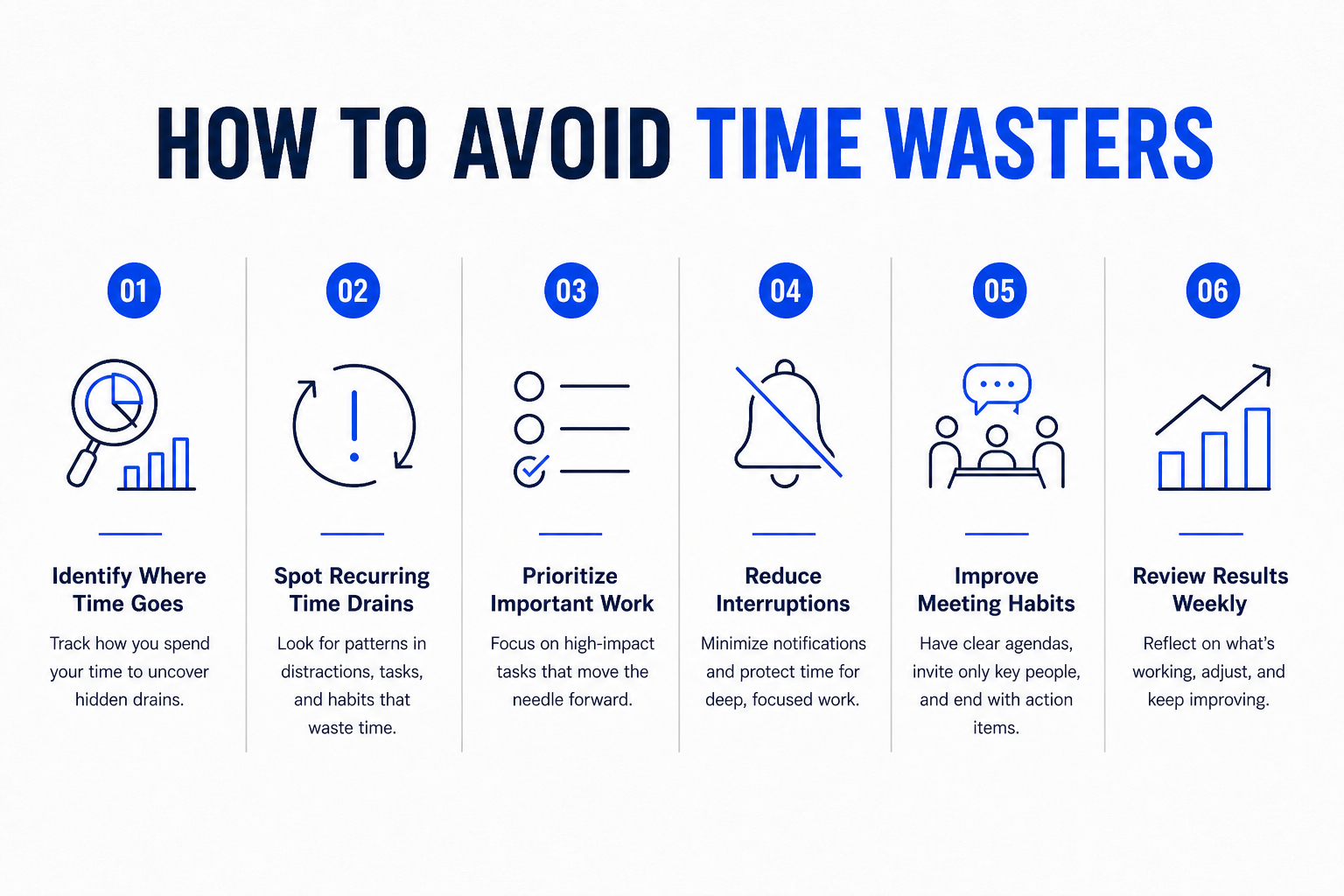
Here is a practical set of actions organized by the most common problem areas.
Audit how time is actually spent
Estimates regarding high-value work are often overly optimistic. Tracking time in detail for one week (recording specific tasks like meetings, email, and admin) reveals the truth. Patterns usually emerge within days, highlighting two or three categories that consume the most hours. Focus efforts there first to avoid the trap of wasting time at work on optimizing the wrong things.
Prioritize high-value work first
Protecting the first 90 minutes of the day for the most important task is a high-leverage habit. The brain is sharpest early, and distractions have not yet accumulated. Identifying one to three essential tasks each morning ensures a productive day regardless of how the remaining hours are spent.
Reduce meetings and make them more useful
Recurring meetings deserve a regular audit. Cancellations or reduced frequencies are often necessary when sessions fail to produce a plan or a decision. Research involving 76 companies found that a 40% reduction in meeting time led to a 71% gain in productivity. Effective sessions require an agenda in advance, a limited attendee list, and a clear list of next steps.
Control notifications and protect focus time
Disabling push notifications during focus blocks breaks the cycle of constant interruptions. Microsoft's 2025 Work Trend Index noted that employees face a digital interruption every two minutes during core hours. Batching responses to two or three designated times per day allows for deeper concentration. Team tools can reflect these "focus mode" statuses to manage colleague expectations.
Stop multitasking and work in blocks
Assigning tasks to specific time blocks is more efficient than multitasking. Even 60 minutes of uninterrupted focus produces more than a full day of fragmented attention. This is especially true for complex work like coding, strategy, or analysis. A 2024 study indicated that heavy multitasking can reduce cognitive performance by up to 10 IQ points, a drop more significant than losing a night of sleep.
Automate, delegate, or eliminate low-value tasks
Recurring admin work should be automated, delegated, or eliminated. Many tasks survive purely out of habit. Estimates suggest that automation could reclaim 520 hours per employee annually from repetitive manual tasks. Tools, templates, and cleaner processes can often remove this overhead entirely.
Review time wasters weekly
Blocking 15 minutes each Friday to review the week creates necessary accountability. Examining which interruptions recurred and which tasks absorbed excessive time helps catch problems before they compound. This habit makes it difficult to ignore the patterns that otherwise lead to a wasted schedule.
How TMetric helps you spot and reduce time wasters
Most time waste is invisible until you have data. People know they feel busy, but without a record of where time actually goes, they have no reliable way to identify the specific activities that are draining hours from the work that matters.
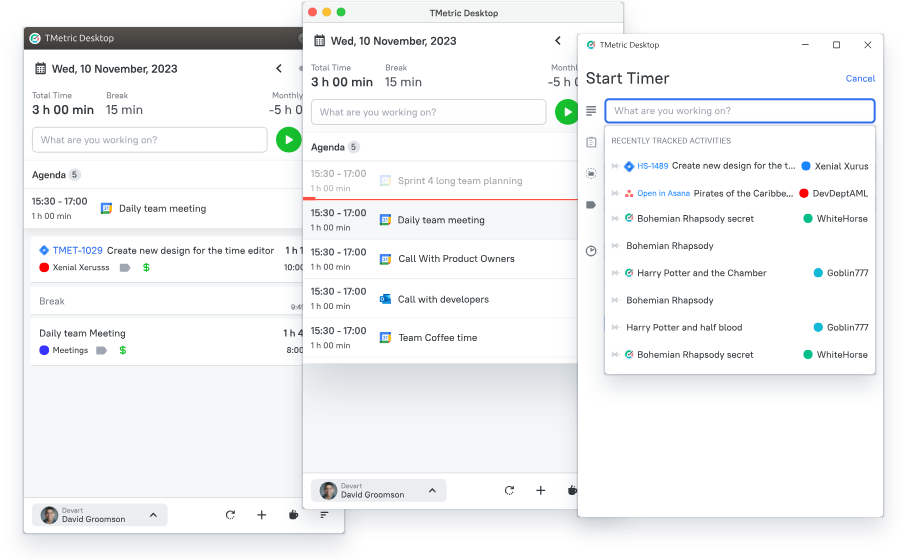
TMetric, a time tracking software, makes the hidden visible. By tracking time at the task level, this work time tracker gives individuals and teams an accurate picture of where working hours actually go, not where people think they go. Given that 89% of workers admit to wasting time every day, and most significantly underestimate how much, the gap between perceived and actual time use is exactly where TMetric does its best work.
See exactly where time goes
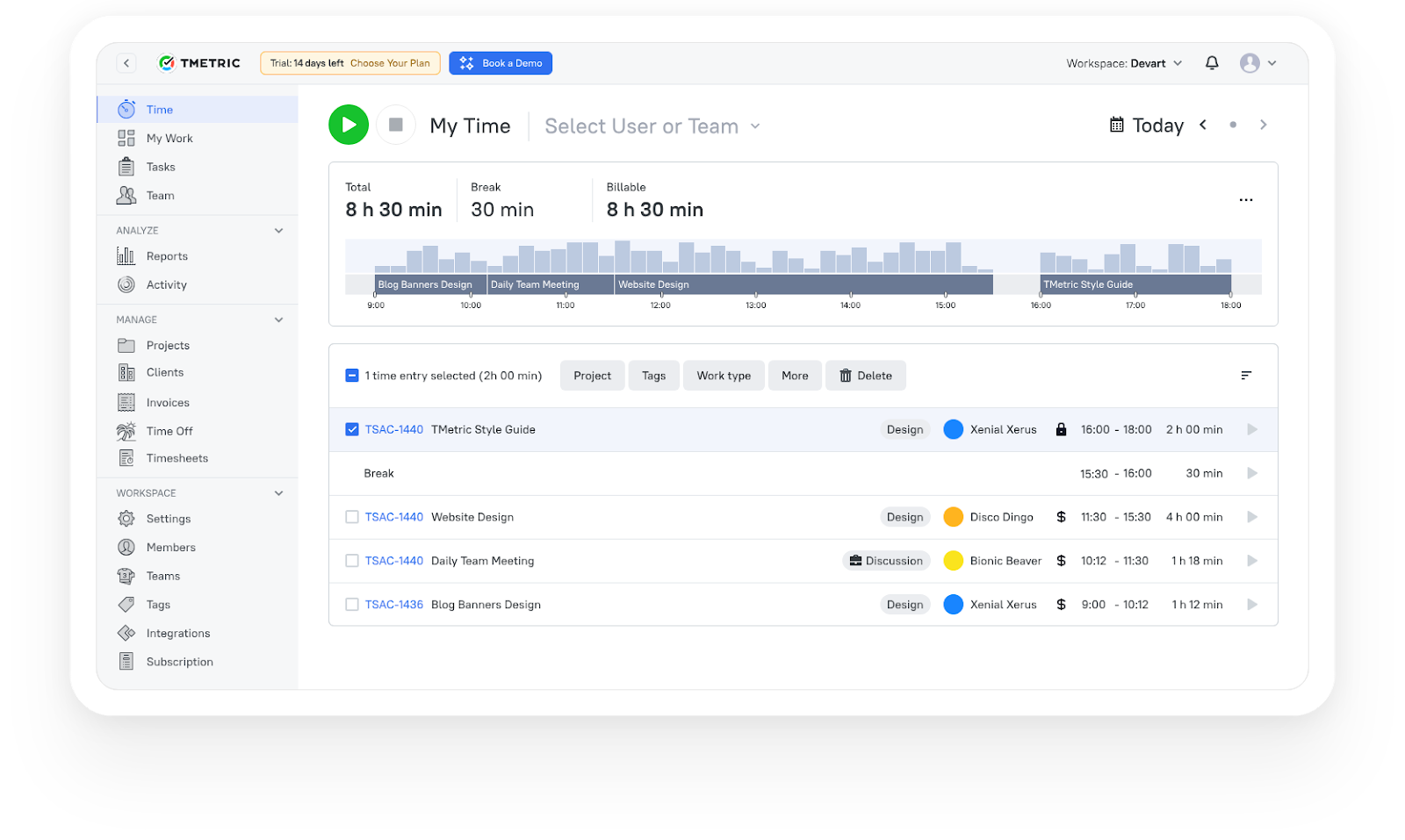
TMetric's task-level time tracking lets you record time against specific activities as you work. At the end of the day or week, you can see exactly how much time went to meetings, email management, admin work, project delivery, and everything in between. The pattern that emerges is almost always different from what people expect.
For teams, the dashboard shows real-time workload across all members:
- Who is over-allocated
- Who is tracking low, and
- Where the distribution of time looks misaligned with priorities.
Use reports to identify recurring drains
TMetric's reporting suite (including task summaries, project reports, and activity breakdowns) lets you analyze time data at whatever level of detail you need. You can look at a single person's week, a project's total logged hours compared to the estimate, or a team's breakdown across all active work.
Build better habits with idle detection and timesheets
Unlike standalone timers, TMetric functions as a task manager with time tracking built directly into the workflow. Tasks carry estimates, projects carry budgets, and every logged hour flows automatically into reports, so the data is always current without requiring extra effort. Idle detection ensures logged hours reflect actual work, while timesheet submission and approval workflows make patterns visible to managers without manual oversight.
Try TMetric free and start tracking work that actually matters. Free for up to two users. No credit card required.
Takeaway
Time wasters at work often remain hidden. They blend into ordinary routines—the reflexive inbox check, the meeting better suited for a quick message, or the planning session that stays in the discussion phase. This camouflage makes them incredibly persistent. These activities feel productive while they occur.
Much of the workday is absorbed by interruptions, cluttered threads, and low-value tasks that crowd out significant projects. The goal is a clear schedule where the biggest sources of friction are removed to give essential work more breathing room.
Tracking where the day goes is an effective first step. Patterns become visible once the day is laid out clearly. TMetric makes this process effortless, the free version helps reveal exactly what the workday looks like.
Start using TMetric for free and bring time tracking, project budgeting, and reporting into one connected workflow.
3,000+ companies, teams, and individuals worldwide use TMetric to track time, manage work, and bill with confidence.
Frequently asked questions
What are time wasters at work?
Time wasters at work are activities, habits, or processes that consume hours without producing meaningful progress. They often look like productive work (constant email checking, low-value admin, unnecessary meetings) but ultimately stall significant results.
What are the most common time wasters in the workplace?
The most common time wasters examples include unnecessary meetings (cited by 47% of employees), constant email and chat monitoring, context switching, unclear priorities, procrastination disguised as preparation, and repetitive admin work that should be automated.
How do time wasters affect productivity?
Time wasters fragment attention and pushes high-value work to the margins. Research shows it takes over 23 minutes to regain full focus after each interruption. When that happens repeatedly, workers spend most of their day in shallow, reactive mode rather than doing focused, high-quality work..
What is the best way to avoid wasting time at work?
Prioritize three high-value tasks each day and protect time for them before email or meetings. Audit recurring meetings, batch communication, work in focused blocks, and use a work time tracker to keep the data honest.
Are meetings one of the biggest workplace time wasters?
Yes. Meetings are consistently the top-rated time waster in the workplace. Unproductive meetings cost U.S. businesses up to $375 billion per year, and the average employee spends 21.5 hours per week in them, nearly half of which are considered wasted.
How can TMetric help identify time wasters at work?
TMetric is time tracking software that records time by task and generates reports showing exactly where working hours go. Comparing logged time to priorities and estimates helps spot recurring drains: meetings that absorbed unplanned hours, admin that ballooned, or tasks that ran far longer than they should.