
Best Time Management Methods That Actually Improve Productivity
When focus feels elusive, and distractions pile up, structure changes everything. Time management methods give you clarity to prioritize, focus, and make real progress. In this guide, we’ll break down the methods that can help you take back your time and accomplish what matters.


With only about 60% of the day truly productive and interruptions hitting every few minutes, focus can be elusive. That’s why time management methods, like Pomodoro, Eisenhower Matrix, and GTD, are game changers. These proven frameworks help you prioritize, focus, and turn your time into meaningful progress.
This guide will walk you through how to harness these frameworks to stay productive, organized, and stress-free.
What are time management methods?
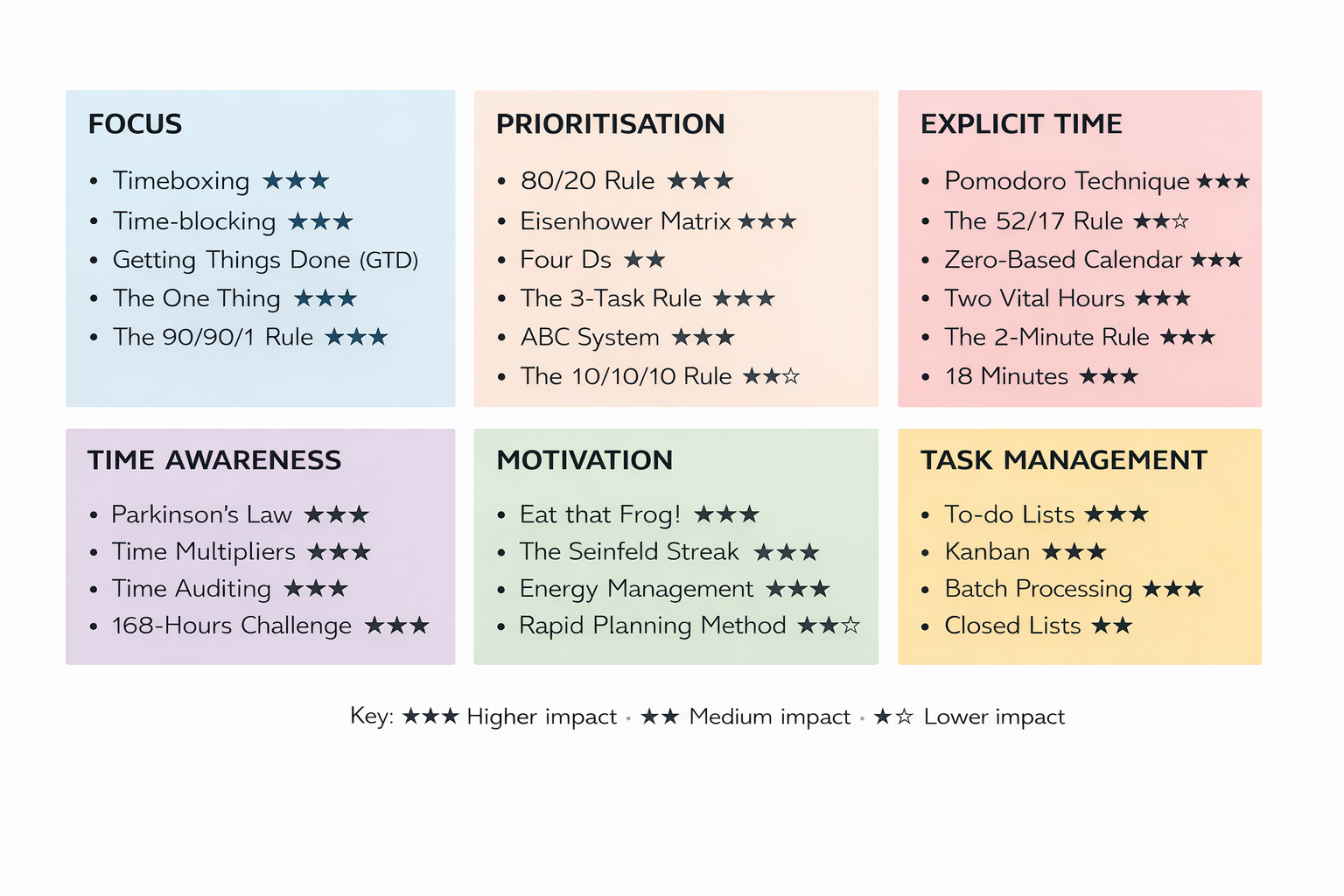
There are many time management techniques, but they are not all created equally. As the overview above shows, different methods address different productivity challenges—some improve focus, others help with prioritization, structure work time, increase time awareness, boost motivation, or simplify task management.
A key distinction exists between time management tips and time management methods.
- Tips are isolated actions or small habits—such as turning off notifications or setting reminders.
- Methods, in contrast, are structured systems or frameworks that guide how work is captured, prioritized, scheduled, and completed.
In practice, a time management method helps answer three core questions:
- What should I work on first?
- How should I organize my tasks?
- How do I maintain focus and consistency?
For example, the Eisenhower Matrix provides a clear framework for prioritizing tasks by urgency and importance, while the Pomodoro Technique structures work into timed focus sessions. Other systems, such as Getting Things Done (GTD), focus on organizing complex workloads and reducing mental clutter.
When used consistently, these frameworks turn daily planning into a repeatable process that supports long-term productivity.
Why time management is a critical skill today
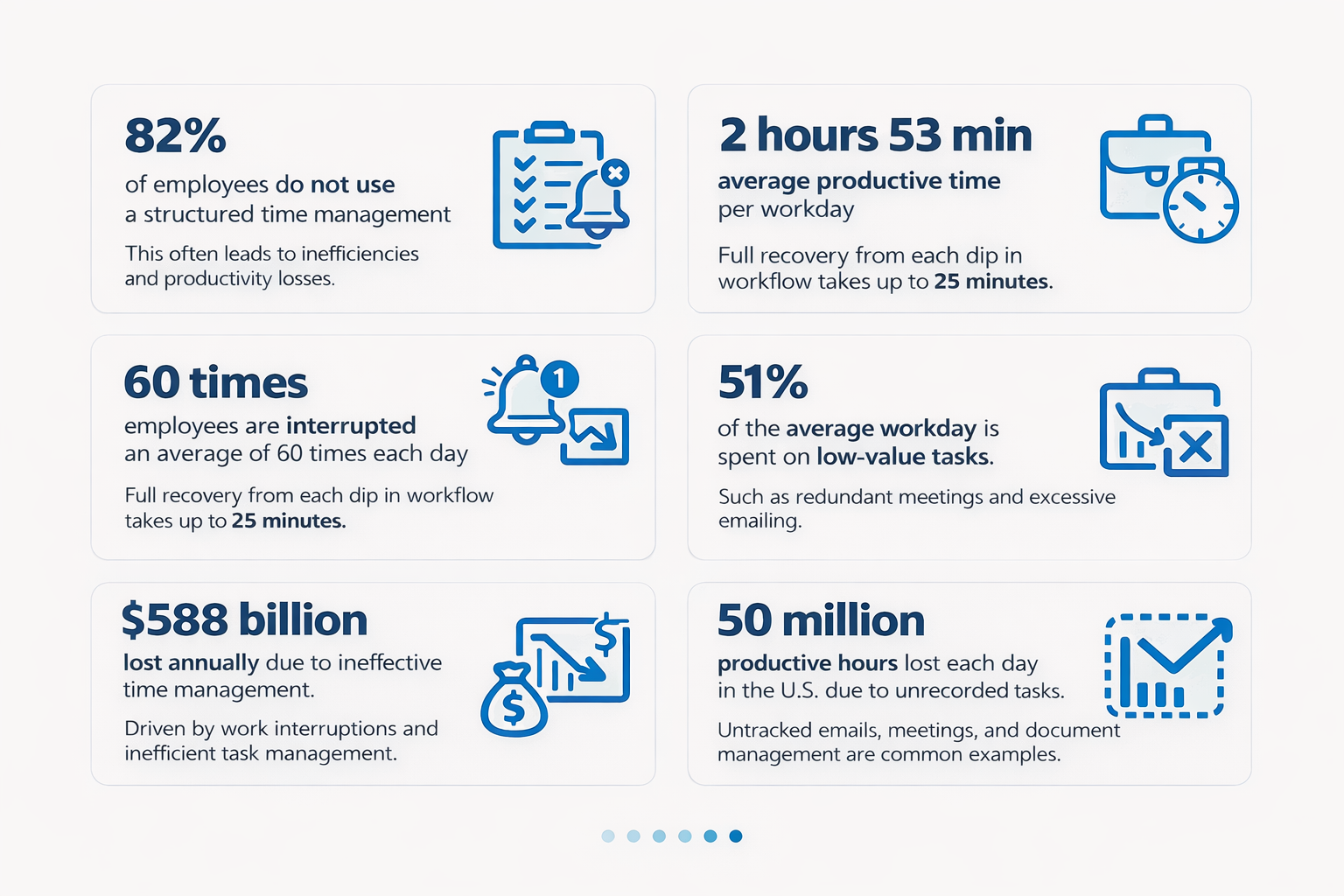
Modern work is chaotic. Emails, meetings, Slack messages, deadlines, and constant notifications compete for attention all day. Without a system, most people spend their time reacting to whatever looks urgent instead of progressing on what actually matters.
That’s where time management becomes critical. Simple frameworks like the Eisenhower Matrix help separate urgent tasks from important ones. That single shift changes how the entire day is structured.
The impact is measurable. Research on prioritization techniques suggests structured task systems can increase task completion rates by around 30% because attention moves to high-impact work instead of constant interruptions.
Done consistently, strong time management leads to:
- More productivity through focused work
- Less stress thanks to clear priorities
- Better work–life balance through smarter scheduling
- Higher quality results because work gets proper attention
 Victoria Avdieieva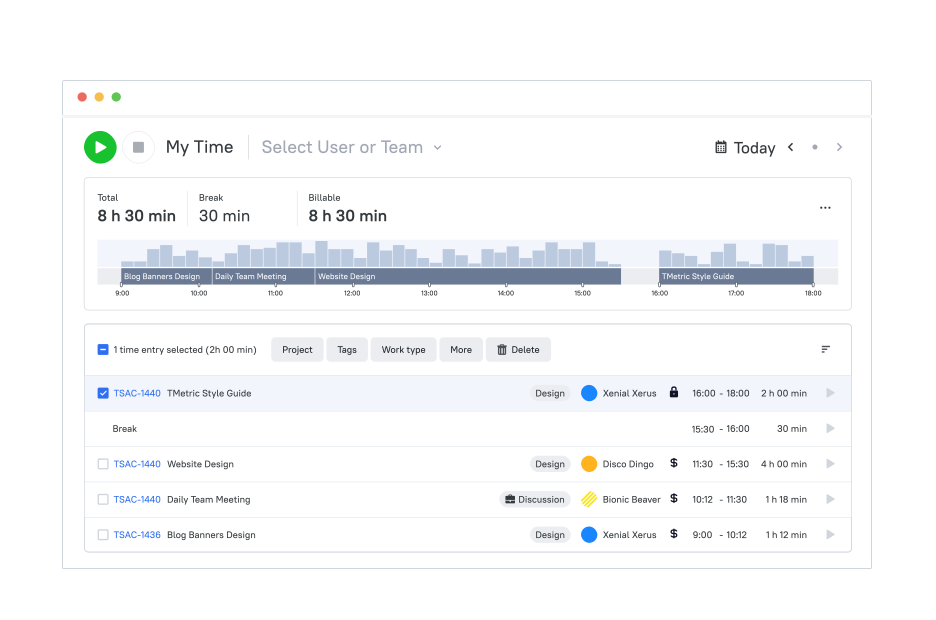
How to choose the right time management method
The best time management method depends on your work style, the type of tasks you handle, and your work environment. No single framework works for everyone.
Some methods are built for deep focus, while others help manage complex workloads or prioritization. The goal is to choose a system that supports how you naturally work, instead of forcing yourself into a structure that doesn’t fit.
A few key factors can help guide that decision.
Choosing a method usually involves some experimentation. Many people start with one system and gradually combine elements from several approaches as they learn what works best for their workflow. Over time, this leads to a personalized time management system rather than strict adherence to a single method.
Best time management methods
Many productivity frameworks exist, but several methods consistently appear in research, professional training, and productivity literature.
Below are the effective time management methods and how they work.
1. Pomodoro Technique
The Pomodoro Technique helps maintain focus by breaking work into 25-minute focus sessions followed by 5-minute breaks, with a longer break after four cycles.
Developed in the late 1980s by productivity consultant Francesco Cirillo, who used a tomato-shaped kitchen timer (“pomodoro” in Italian), the method is now widely used by students, developers, writers, and remote workers to stay concentrated during demanding tasks.
2. Eisenhower Matrix
Named after U.S. President Dwight D. Eisenhower, this method helps people decide what to work on first by categorizing tasks by urgency and importance. Instead of reacting to everything that appears urgent, this method encourages focusing on tasks that actually move work or goals forward.
3. Pareto Principle (80/20 Rule)
Named after Italian economist Vilfredo Pareto, this principle suggests that a small portion of actions often produces the majority of results. In many situations, roughly 80% of outcomes come from about 20% of efforts, making it one of the most widely used concepts in productivity and business strategy.
4. Time Blocking
Time blocking is a scheduling method that assigns specific tasks to fixed blocks of time on your calendar. Instead of relying on a long to-do list, you decide in advance when each activity will happen during the day.
5. Getting Things Done (GTD)
Developed by productivity consultant David Allen, Getting Things Done (GTD) is a productivity system designed to help people manage large volumes of tasks and responsibilities without feeling overwhelmed. The core idea behind GTD is simple: once tasks are captured in a trusted system, they can be organized, reviewed, and completed more effectively.
6. Eat That Frog
The Eat That Frog method focuses on tackling your most difficult or important task first thing in the day. Instead of postponing challenging work, this approach encourages completing it early so the rest of the day becomes easier to manage.
The idea was popularized by productivity expert Brian Tracy, based on the famous quote often attributed to Mark Twain: “If it's your job to eat a frog, it's best to do it first thing in the morning.” In productivity terms, the “frog” represents the task you are most likely to delay but that will have the greatest impact once completed.
7. Parkinson’s Law
Parkinson’s Law suggests that work naturally expands to fill the amount of time available for its completion. When too much time is allocated to a task, people often slow down, overthink, or add unnecessary complexity. Setting tighter deadlines can therefore encourage faster and more focused execution.
The concept was introduced by British historian C. Northcote Parkinson, who observed that administrative work tended to grow regardless of how much work actually needed to be done. In productivity terms, the idea highlights how deadlines influence efficiency.
Tools that support time management methods
Digital tools make it easier to apply time management methods in daily work. While productivity frameworks provide the strategy, tools help turn those ideas into practical routines that can be followed consistently.
The following table outlines the main tool categories that support time management methods.
For example, TMetric allows individuals and teams to track work hours, analyze productivity patterns, and generate reports showing how time is distributed across projects and tasks. This visibility helps teams understand where time is actually spent and adjust schedules or priorities when necessary.
Time tracking can also be combined with project planning through project manager time tracking platforms, allowing teams to connect tasks, deadlines, and time data in one place.
When used together with the outlined methods for time management, these tools help people apply time management methods more consistently. The method provides the structure for organizing work, while the tool supports its execution in everyday workflows.
How to combine multiple time management methods
Many professionals combine several of these popular time management methods instead of relying on a single system. When used together, these different methods of time management can create a more balanced workflow. The key is to assign a clear role to each technique rather than stacking multiple systems that do the same thing.
The most effective productivity systems remain simple. Each method should serve a specific purpose (such as prioritizing tasks, structuring the day, or maintaining focus) without creating unnecessary complexity.
How to measure if a time management method works
A time management method works when it improves productivity while reducing daily stress. The goal is not simply to stay busy, but to complete important tasks more consistently and feel more in control of your schedule.
Several indicators can help determine whether a method is effective.
Task completion rate
If more tasks are completed on time, it usually means prioritization has improved. A good time management method helps identify what should be done first and ensures that important work does not remain unfinished.
Deadline adherence
Consistently meeting deadlines is another strong signal that a scheduling system is working. When tasks are planned realistically and time is allocated properly, projects move forward without constant last-minute pressure.
Stress levels
Effective planning should reduce stress rather than increase it. Clear priorities and structured work periods help prevent the anxiety that often comes from juggling too many unfinished tasks.
Schedule control
Feeling in control of your day is one of the clearest signs that a time management method is working. Instead of reacting to interruptions or urgent requests, your schedule reflects deliberate choices about how time is spent.
Regular weekly reviews help maintain this balance. By briefly evaluating what worked and what didn’t, individuals can adjust their approach and keep their productivity system effective over time.
 Alla Chernets
Takeaway
No single time management method works perfectly for everyone. These frameworks are tools, not strict rules. The most effective approach is to adapt them and build a system that fits your work style, responsibilities, and goals.
Over time, small adjustments help refine that system. The goal is not to follow a productivity method perfectly, but to develop habits that support consistent progress.
Ultimately, the best time management methods are the ones you can maintain consistently. When structured planning becomes part of everyday routines rather than an occasional effort, managing time becomes far more effective.
FAQ
What is the best time management method?
There is no single best method. Popular frameworks like the Pomodoro Technique, Time Blocking, and the Eisenhower Matrix work well because they solve different productivity problems, such as focus, scheduling, and prioritization.
How long does it take to build a time management habit?
Most habits begin forming within three to eight weeks, depending on how consistently the method is practiced.
Can time management reduce stress?
Yes. Clear priorities and structured planning reduce last-minute pressure, helping people feel more in control of their workload and schedule.
Are time management methods scientifically proven?
Many methods are supported by research in productivity and decision-making. Studies show that structured prioritization systems can significantly improve task completion rates.