
7 Best Business Goal Tracking Software in 2026
Setting goals is easy. Keeping them visible and tied to real work is harder. This guide compares the best tools for tracking OKRs, KPIs, projects, productivity, and team performance.

Most companies set goals, but it’s often difficult to track them when objectives, tasks and reports live in different tools. According to Microsoft, 48% of employees and 52% of leaders say their work feels chaotic and fragmented. That kind of setup makes priorities to slip and for progress reviews to happen too late.
To help you keep goals visible, this guide compares the best business goal tracking software for 2026 across OKRs, KPIs, projects, productivity, employee goals, and strategy.
Our top picks
Why trust our review
The reviews were based on current product information, checking features, integrations and pricing against official vendor sources. We also considered some user perspective from Capterra ratings, but these did not influence the rankings.
Additionally, we’ve grouped these best goal tracking software for small business by what they track primarily, from OKRs and KPIs to projects, productivity, employee performance, and strategy. Each tool was judged on how well it handles its main use case.
What is business goal tracking software?
Business goal tracking software is a tool companies use to set goals, assign owners, update progress, and measure results in one place. It gives managers a clearer view of what is moving, what is stuck, and who is responsible.
Some tools are dedicated OKR platforms built for company strategy. Others track goals through projects, tasks, work hours, budgets, productivity, or employee performance. The best goal tracking software for business depends on what the company actually wants to measure.
What makes the best business goal tracking software?
The best goal tracking app for business makes goals clear, keeps progress visible, and reduces the need to chase people for updates.
Clear goal structure
Goals need an owner, deadline, and measurable result. People should understand what success looks like and how their goal connects to the wider business.
Progress tracking and dashboards
The dashboard should quickly show what is on track, falling behind, or no longer being updated. Managers should not have to dig for that information.
Team alignment and ownership
It’s important that everyone knows who’s playing and who scored each goal. That is especially true when progress is dependent on more than one department.
Check-ins and review cadence
Regular check-ins keep goals from falling off. Updates should be weekly or monthly and should include what is blocking progress, what has changed and what needs to happen next
Integration with daily work
Check whether the software connects with the tools your team already uses. Automatic updates can remove a lot of manual reporting.
Reporting for managers and executives
Reports should show progress, risk, owners, and next actions. A completion percentage on its own does not tell leaders what to do next.
Quick comparison table: Best business goal tracking tools
Use this table to build a quick shortlist.
7 Best business goal tracking software for 2026
Here are seven of the top business goal tracking software options for 2026. They cover different needs, from project time and budgets to OKRs, KPIs, employee performance, and company strategy.
1. TMetric
Rating: 4.5/5 (Capterra)
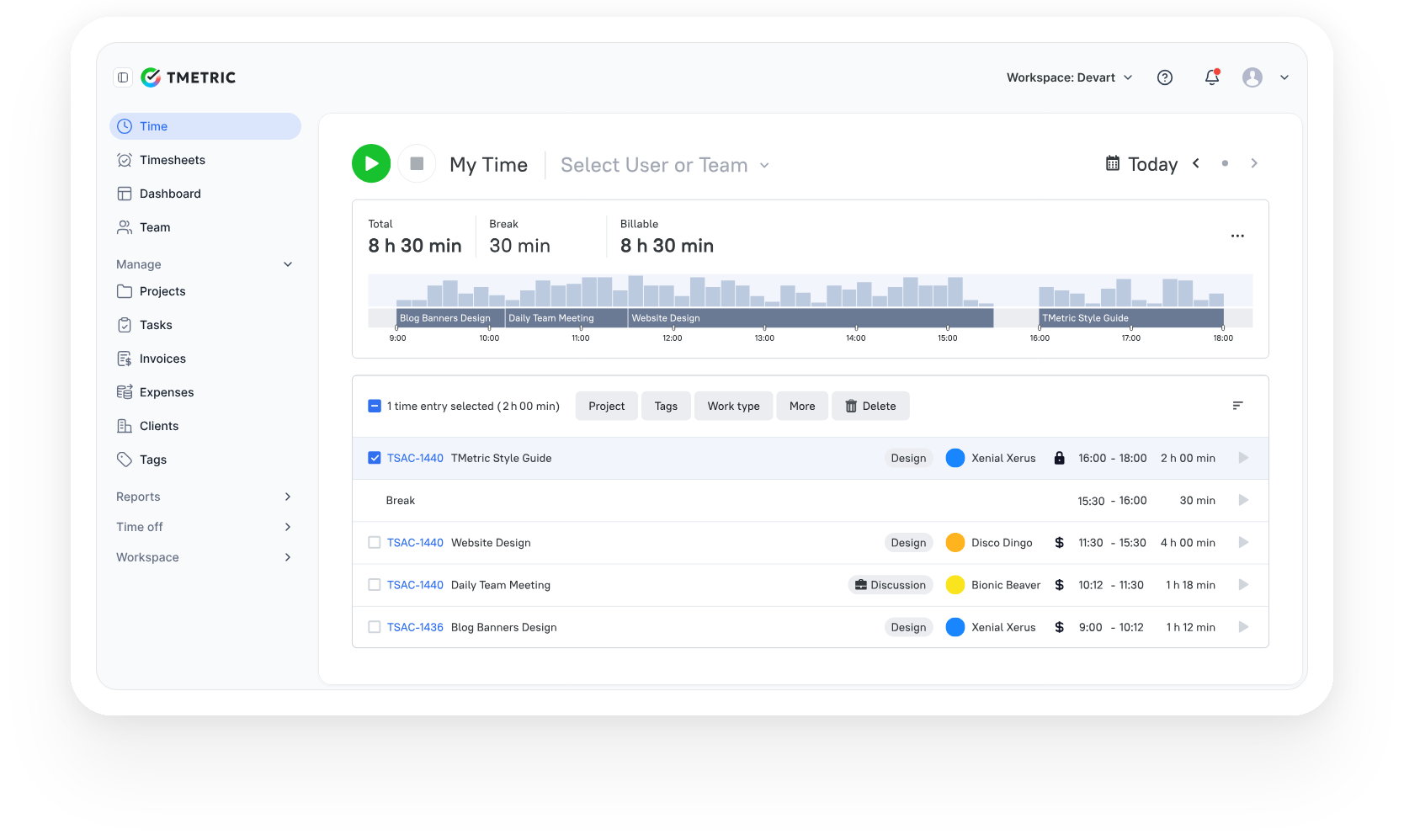
TMetric is a good fit for teams that want to connect business goals with the work people are actually doing. This time tracking application tracks time, tasks, workload, productivity, project costs, budgets, and team performance. It is not a dedicated enterprise OKR platform. It works best when goals can be measured through hours, output, workload, costs, or project results.
The free goal tracker app is a simple starting point, while the team time tracking software adds team oversight.
2. Profit.co
Rating: 4.8/5 (Capterra)
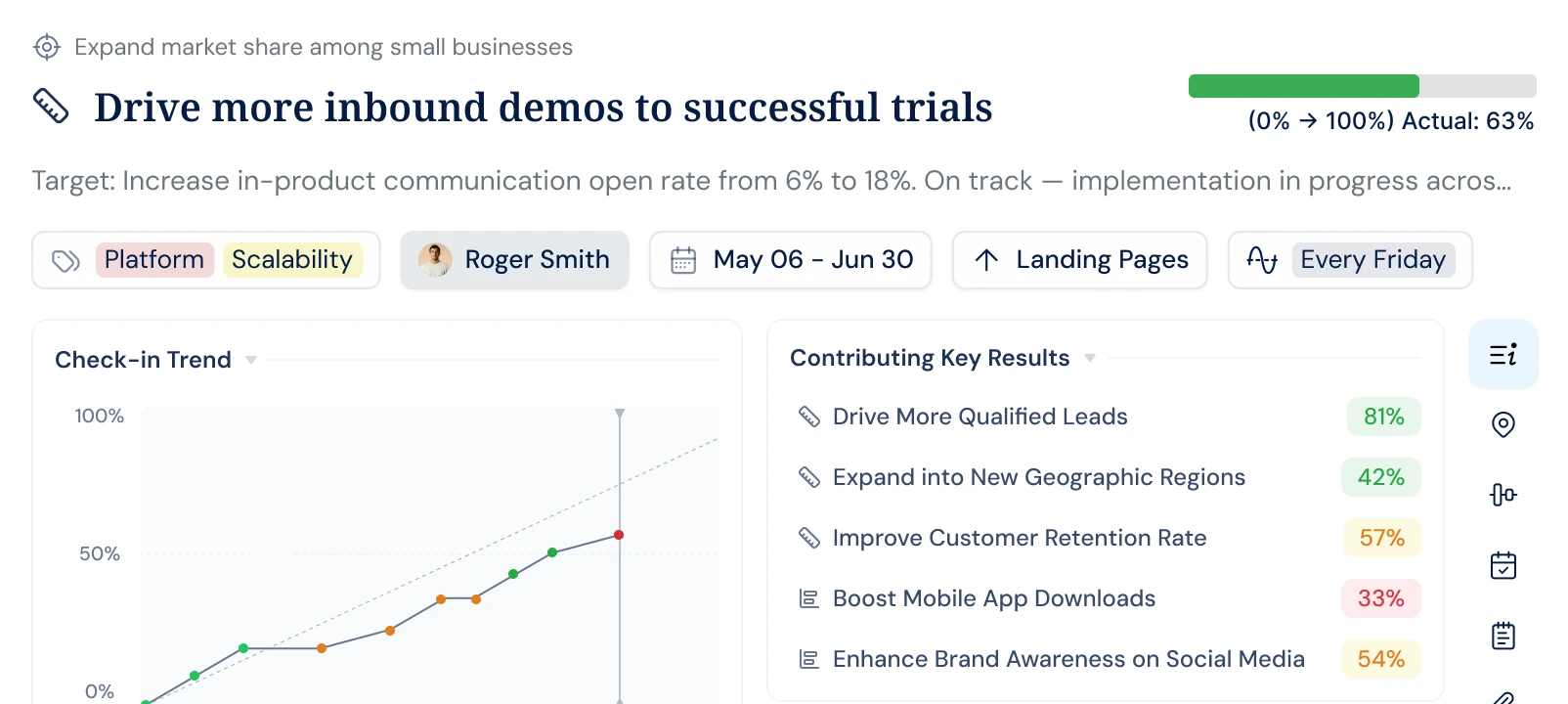
Profit.co is for companies that want a little bit more structure to their goals and strategy. It connects company, team and individual OKRs with KPIs, tasks, projects and performance reviews. There’s a lot here, which can also mean it feels like too much for teams that just want to track a few quarterly goals.
3. Weekdone
Rating: 4.5/5 (Capterra)
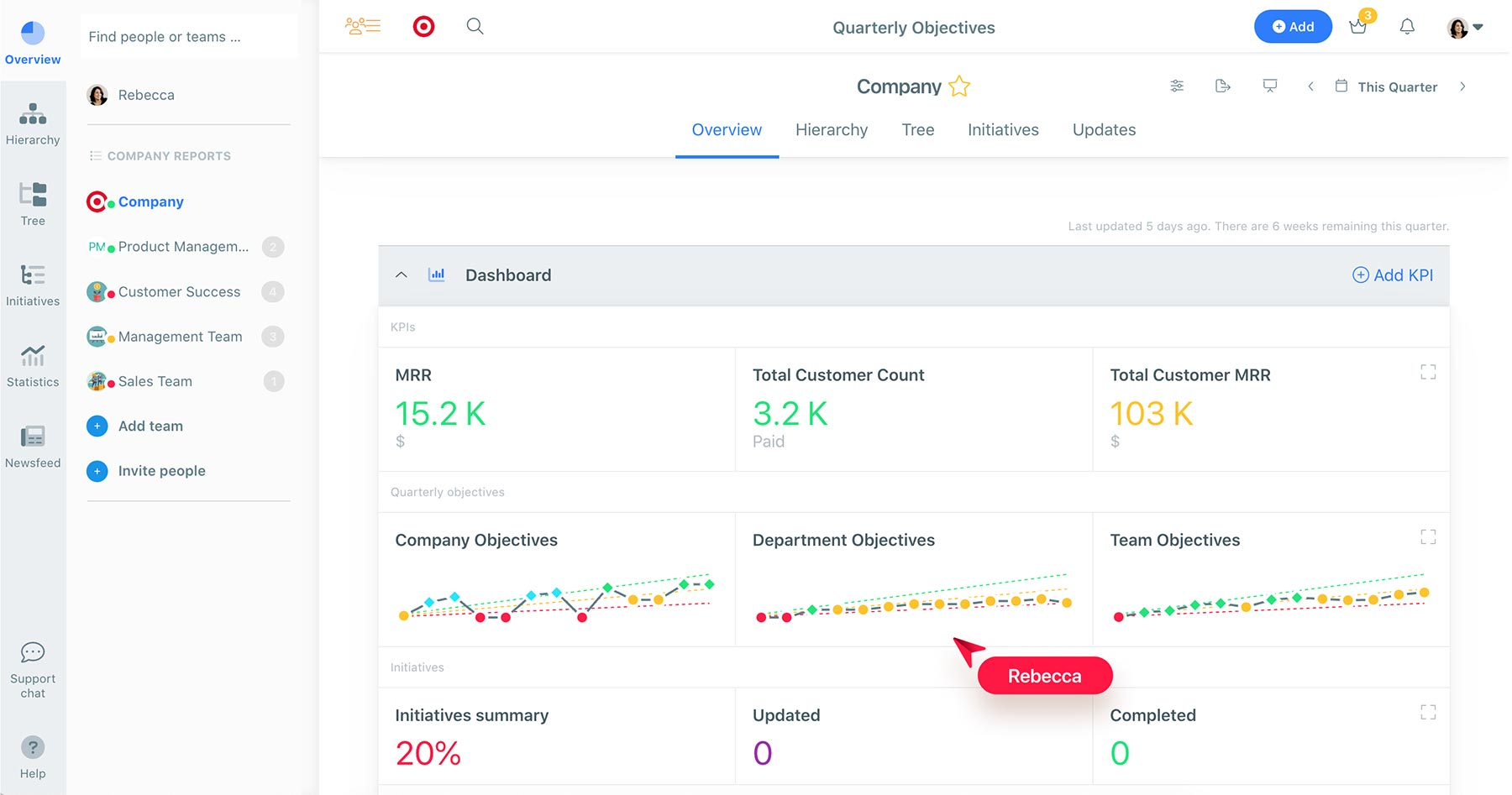
Weekdone is great for smaller teams that want OKRs to be part of the weekly process, not something that is just looked at in the end of the quarter. It blends quarterly goals with Plans, Progress and Problems check-ins. This makes it a good choice for small businesses, but it may be too limited for more complex portfolio management.
4. Perdoo
Rating: 4.4/5 (Capterra)
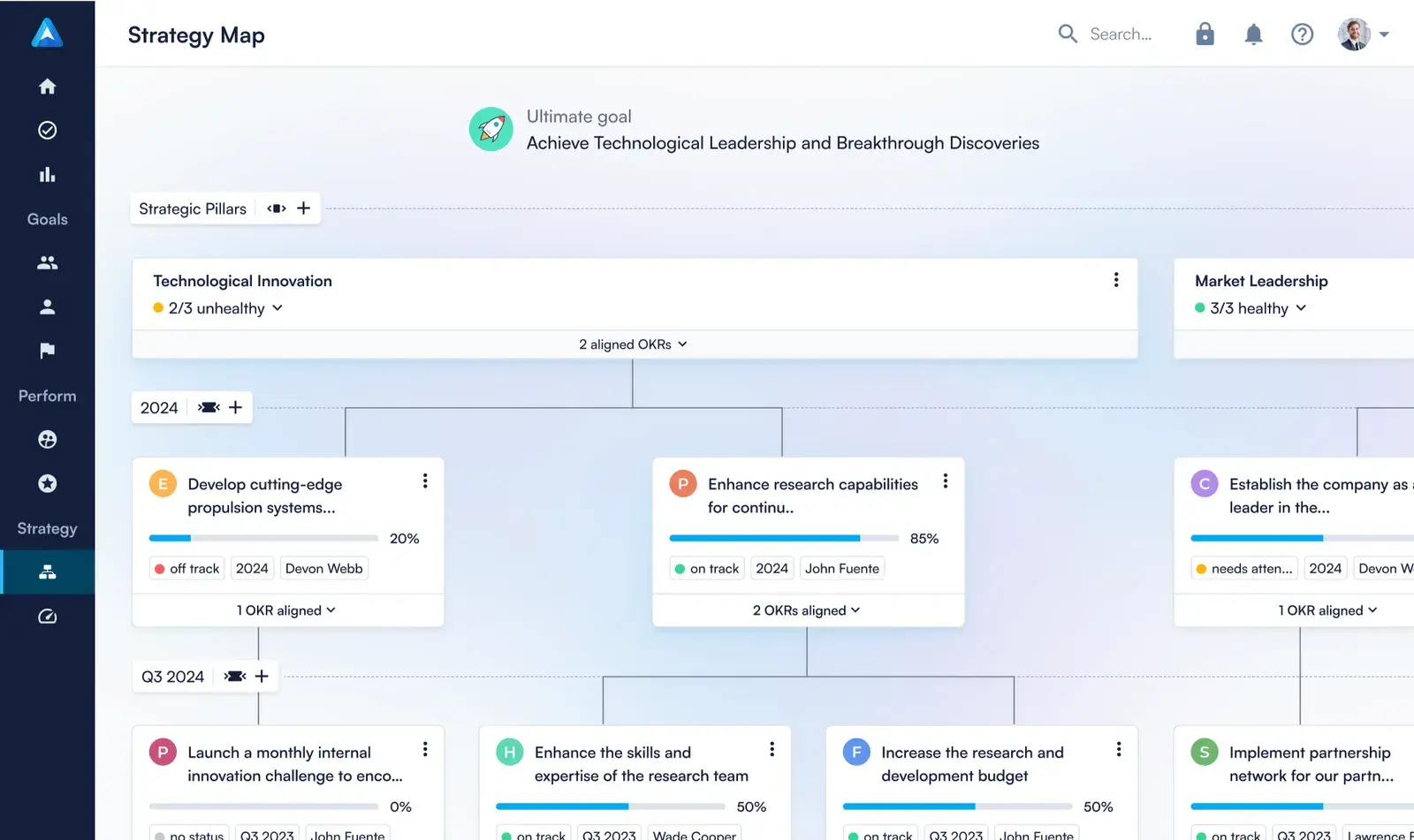
Perdoo is strongest when a company wants to see how strategy, OKRs, KPIs, and initiatives fit together. Its Strategy Map gives goals some context instead of leaving them in a flat list. The platform is fairly approachable, but teams still need a proper goal framework to get much value from it.
5. WorkBoardAI
Rating: 4.5/5 (Capterra)
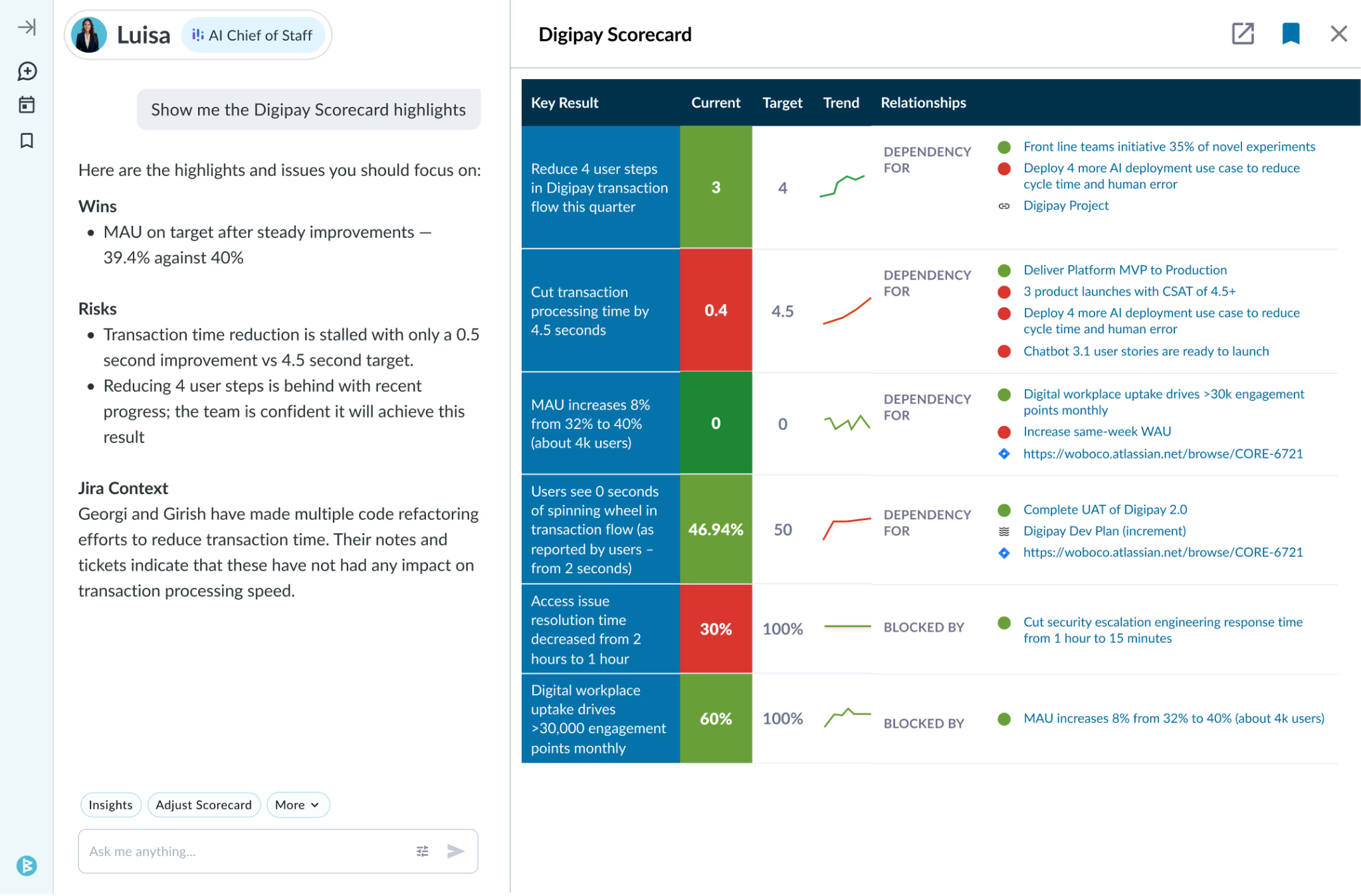
WorkBoardAI is squarely aimed at large companies running strategy across business units. It brings together OKRs, Scorecards, Portfolios, and Business Reviews into a single operating rhythm. Its AI agents can generate meeting briefs, chase updates and flag risks. Yes, good at enterprise level. Lightweight? No.
6. Lattice
Rating: 4.5/5 (Capterra)
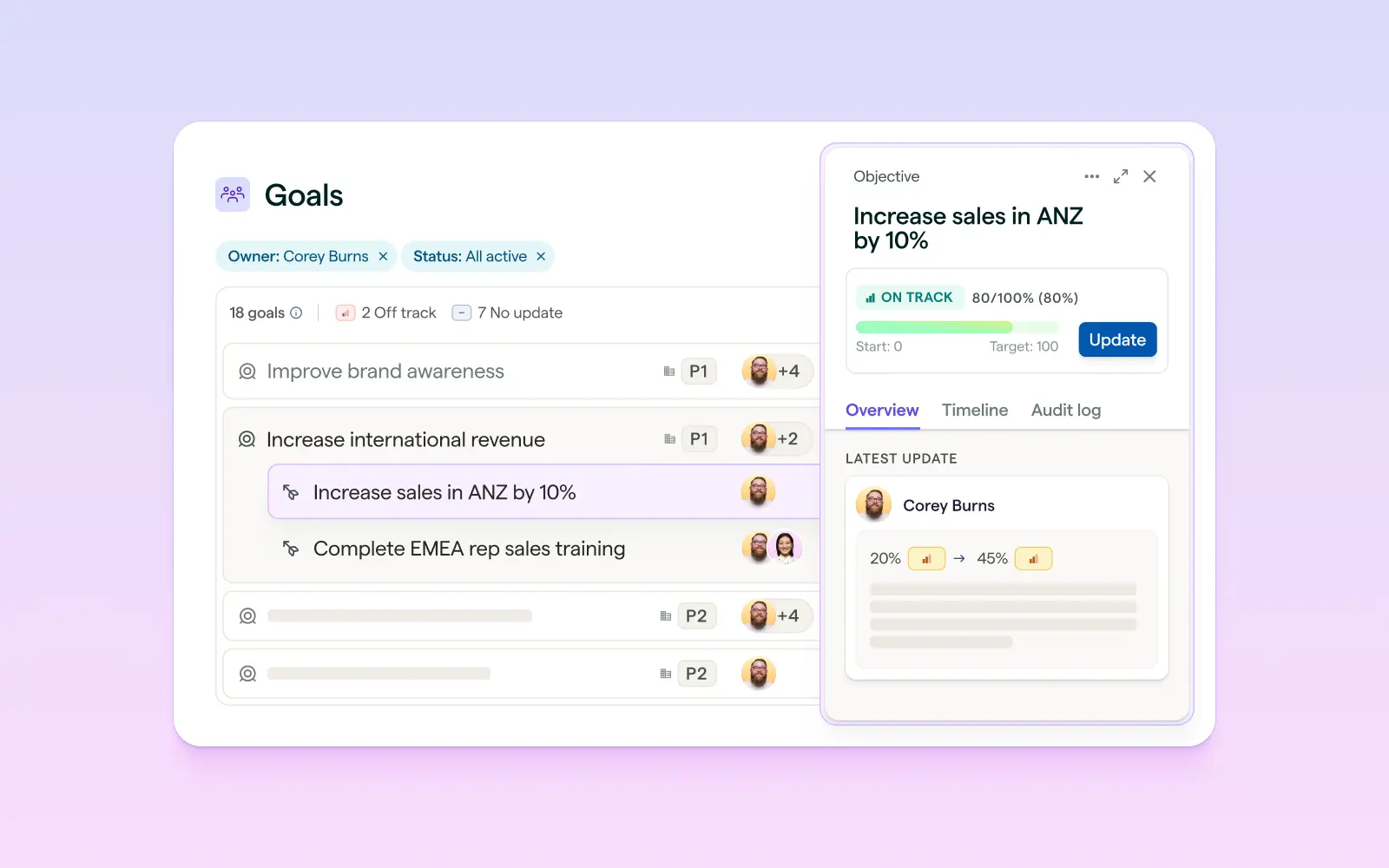
Lattice treats goals as part of people management. Managers can connect individual and team objectives to company priorities, then bring that progress into one-to-ones and performance reviews. It is one of the more HR-focused business goal tracking apps, so operations teams may find parts of the wider platform less relevant.
7. Betterworks
Rating: 4.3/5 (Capterra)
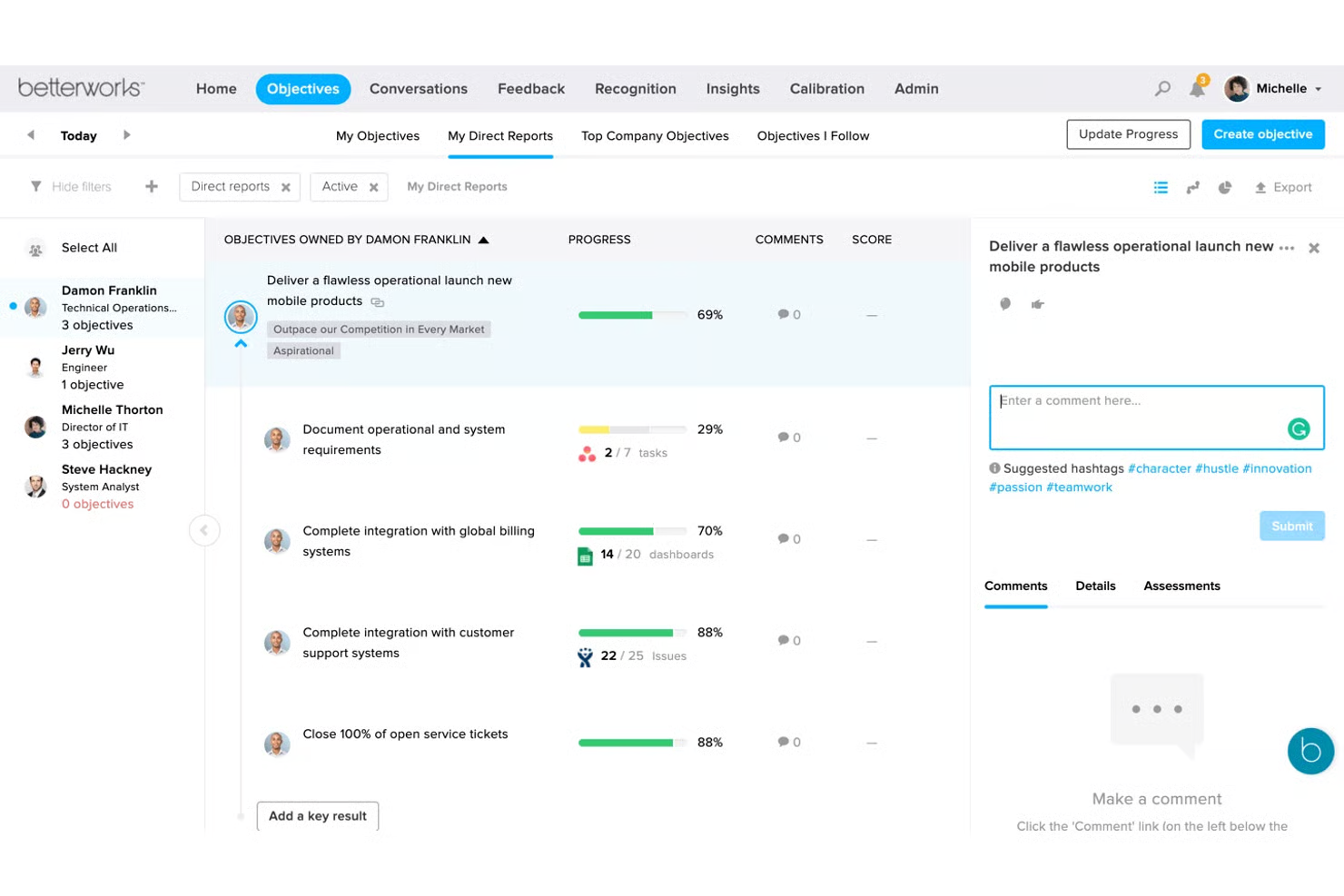
Betterworks connects goals with the rest of the performance cycle: feedback, one-to-ones, reviews, calibration, and talent decisions. Goals can update from systems where work already happens, which reduces some of the usual reporting chase. It is built mainly for mid-market and enterprise HR teams, not a five-person startup.
How to choose the best business goal tracking software
The right tool depends on your goals, data, and workflow.
Decide what type of goals you need to track
Start with the measurement model. OKRs pair direction with measurable results; KPIs monitor ongoing health. Projects track milestones, time, and budget. Employee goals support development, while revenue and operational goals often need CRM, finance, or BI data.
Choose between a dedicated OKR tool and a work management tool
If you want to focus on strategy, cascading goals, and business reviews, go for an OKR platform. If goals need to be tied to tasks, projects, time or costs, a work management tool might be a better fit.
Check whether progress updates are manual or automatic
Automate the numbers you already have in other tools. Keep human check-ins for confidence, blockers, context, what happens next.
Look for dashboards that managers will actually use
All the progress, risks, blockers, owners and next actions should be visible to managers in one place. A basic completion report usually doesn't tell the whole story.
Review integrations with existing workflows
Make sure the tool integrates with Jira, Asana, ClickUp, Slack, Teams, Google Workspace, your CRM, time tracking, BI, and HR tools. Also look at what data gets passed between the two and how often it syncs.
Test adoption with one team first
Pilot one team or goal cycle. Measure update completion, reporting time, and manager usage before expanding.
Common mistakes when choosing goal tracking software
The biggest mistake is just choosing the wrong tool. For a small project a full OKR platform might be overkill, and spreadsheets can become a mess when goals keep changing. Price is important but it shouldn't be the deciding factor for you to choose one over the other.
Teams also face challenges when they try to accomplish too many goals, don't assign owners, employ fuzzy measures, or fail to integrate. And what looks good in a demo can be a pain to use day-to-day. Normally it is better to test it with one team and few real goals first.
Takeaway
The best business goal tracking app really depends on what you need to track. TMetric fits well for goals that are connected to daily work, like time, tasks, workload, budgets, costs, and productivity. If the focus is primarily on OKRs, company strategy or employee performance, other tools are better suited.
However, before you choose a tool, define your use case, shortlist two or three tools, and test them with one team. If real work data matters most, TMetric is worth trying.
FAQ
What is business goal tracking software used for?
Business goal tracking software helps companies set goals, assign owners, and follow progress over time. It also gives managers a clearer view of delays, risks, and work that needs attention.
What features should business goal tracking tools include?
Useful features include progress dashboards, reports, reminders, integrations, and automatic updates. The tool should also show who owns each goal and what needs to happen next.
What is the difference between OKR tracking and KPI tracking?
OKRs focus on what a team wants to achieve and the results that show success. KPIs track ongoing performance in areas such as sales, productivity, costs, or customer retention.
Can TMetric be used as business goal tracking software?
Yes. TMetric works well when goals are tied to time, tasks, workload, productivity, project costs, or budgets. It is less suitable for companies that need a full enterprise OKR system.
Should I choose an OKR tool or project management software?
Choose an OKR tool when you need to connect company strategy with team and individual goals. Choose project management software when progress depends mainly on tasks, milestones, hours, deadlines, or budgets.