
How to Manage a Team Effectively: Strategies, Techniques, and Tips
According to Gallup, 71% of employees who quit say management played a major role in their decision. The good news? Many management problems are preventable. Read the article to discover proven strategies for leading more productive, motivated, and aligned teams.

Most employees don’t resign from a job because the work is hard. They leave because the day-to-day experience of working under a manager becomes frustrating. According to Gallup, 71% of people who quit say management played a major role in their decision.
Managing a team goes beyond assigning tasks and chasing deadlines. People need direction, support, feedback, and a work environment that actually functions well day to day.
This guide breaks down practical team management strategies, habits, and techniques that help teams stay productive, aligned, and easier to manage over time.
Summary
- Learn the basics of effective team management.
- Build a repeatable process for managing teams day to day.
- Improve productivity, alignment, and accountability.
- Manage remote and hybrid teams more effectively.
What is team management?
Team management is the art of managing people and work so that a team can function consistently and deliver results. It blends leadership with day-to-day delivery. A manager is responsible not only for what gets done, but also for keeping people aligned, removing obstacles, supporting performance, and ensuring the team has what it needs to succeed.
Effective task management with time tracking helps create a setup where people can do their best work. That usually means clear expectations, fair workloads, useful feedback, and enough visibility to spot problems early. It’s not something you set up once and forget about.
Team management vs. project management
Team management and project management often overlap, but they focus on different things. Team management is about the people doing the work. Project management is about the work itself.
| Team management | Project management |
|---|---|
| Focuses on people | Focuses on deliverables |
| Manages workload, communication, and development | Manages scope, timelines, and budgets |
| Looks at long-term team performance | Focuses on completing a specific project |
| Measures team capacity and engagement | Measures progress, deadlines, and outcomes |
In many organizations, the same person handles both roles. The key is making sure you pay attention to both the work and the people doing it.
Why team management matters
Poor team management affects more than morale. It can lead to higher turnover, communication problems, missed deadlines, and lower-quality work. Good team management helps teams stay productive, aligned, and engaged.
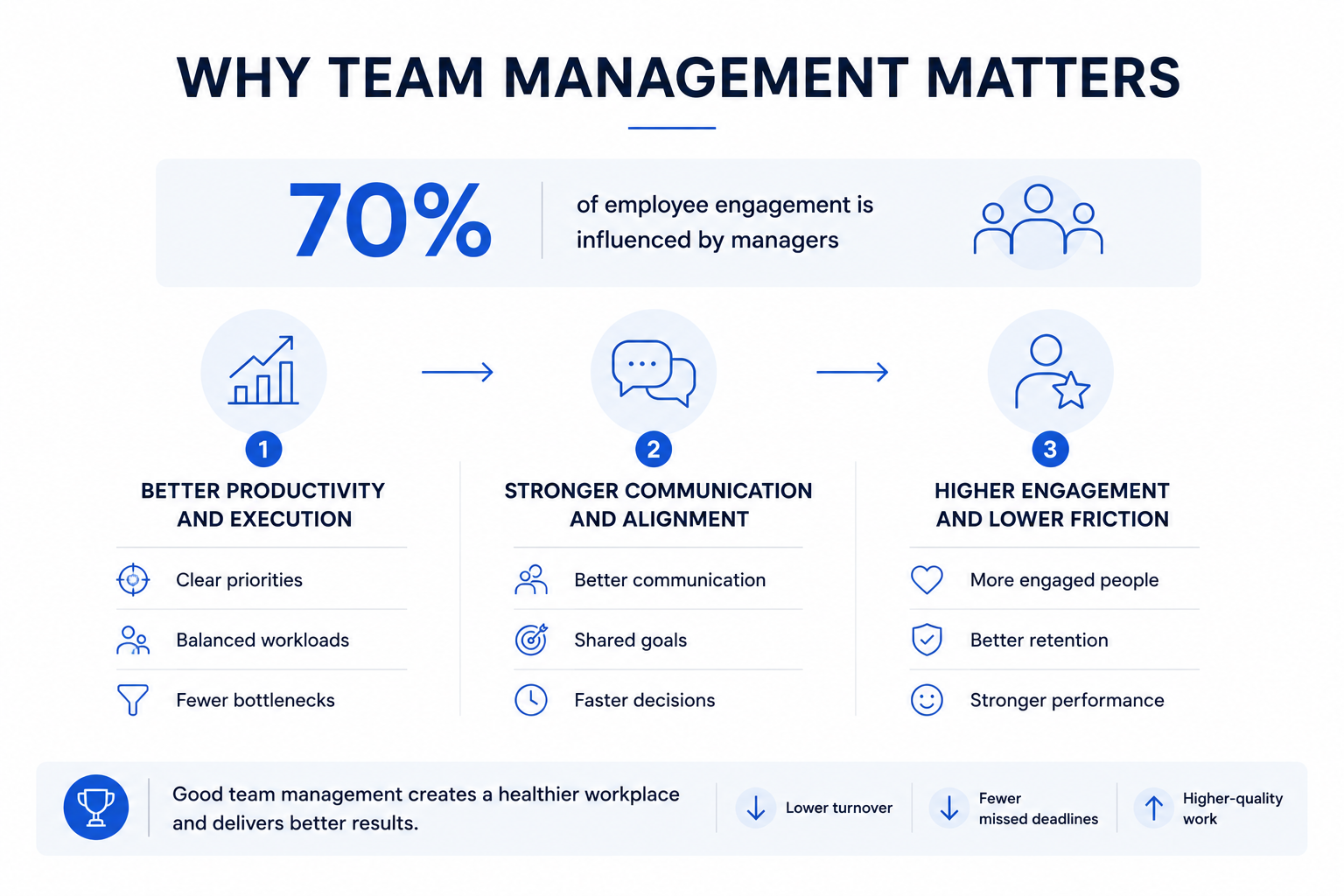
Better productivity and executionTeams usually work better when people know what needs attention and workloads feel reasonable. Problems tend to show up when too much work piles onto a few people or priorities keep changing halfway through the week. Managers who stay close to the work can usually catch these issues early before deadlines start slipping.
Stronger communication and alignmentA lot of team problems are really communication problems. Instructions get misunderstood, context gets lost, feedback comes too late, and suddenly everyone is working off different assumptions. In fact, 86% of employees and executives say poor communication is a major reason workplace projects fail. Regular conversations and clear updates help prevent that drift.
Higher engagement and lower friction
People usually do better work when they feel supported and trusted. Bad management tends to create frustration, tension, and disengagement pretty quickly. Good team management helps reduce that and makes day-to-day work easier for everyone.
The team management process
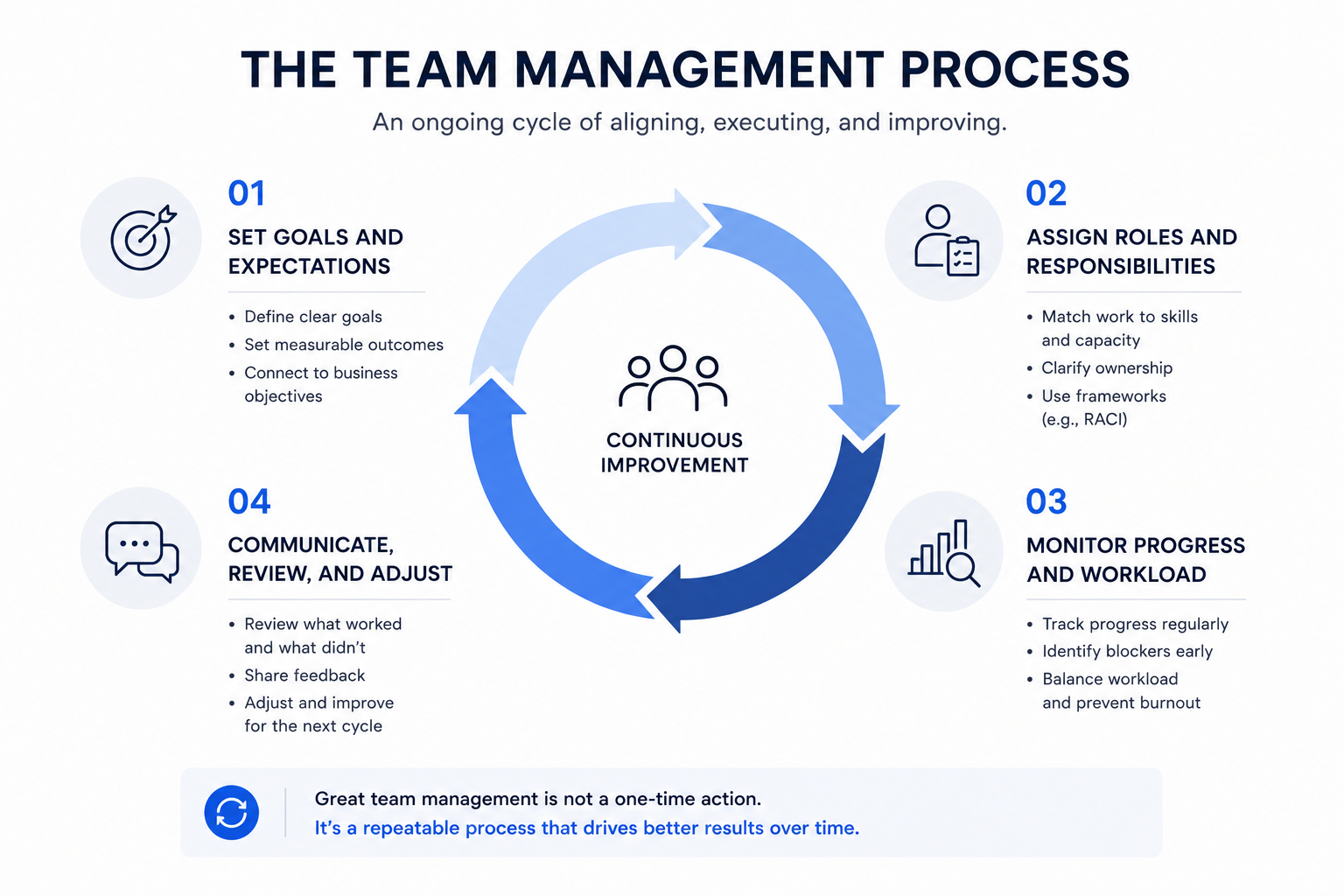
Team management is not a one-time task. It is an ongoing cycle of setting direction, assigning work, monitoring progress, and making adjustments. Treating it as a repeatable process helps managers stay consistent regardless of the project or team they are leading.
Set goals and expectations
A lot of team problems start when expectations are vague. People need to know what they’re responsible for, what matters most, and when work needs to be done. Otherwise everybody starts making their own assumptions.
Assign roles and responsibilities
Once priorities are clear, divide the work properly. Some people are overloaded while others have room to take on more, so workload matters just as much as skill set. Clear ownership also stops tasks from quietly falling through the cracks.
Monitor progress and workload
Managers need visibility into the work, but that doesn’t mean hovering over people all day. Quick check-ins usually help catch delays, blockers, or uneven workloads before they turn into bigger issues. If nobody pays attention, the same reliable people often end up carrying too much.
Communicate, review, and adjust
Not every sprint or project goes smoothly. Sometimes timelines slip, communication breaks down, or priorities change halfway through. Good teams talk about what worked, what didn’t, and what needs to change next time instead of repeating the same mistakes.
Team management strategies that work
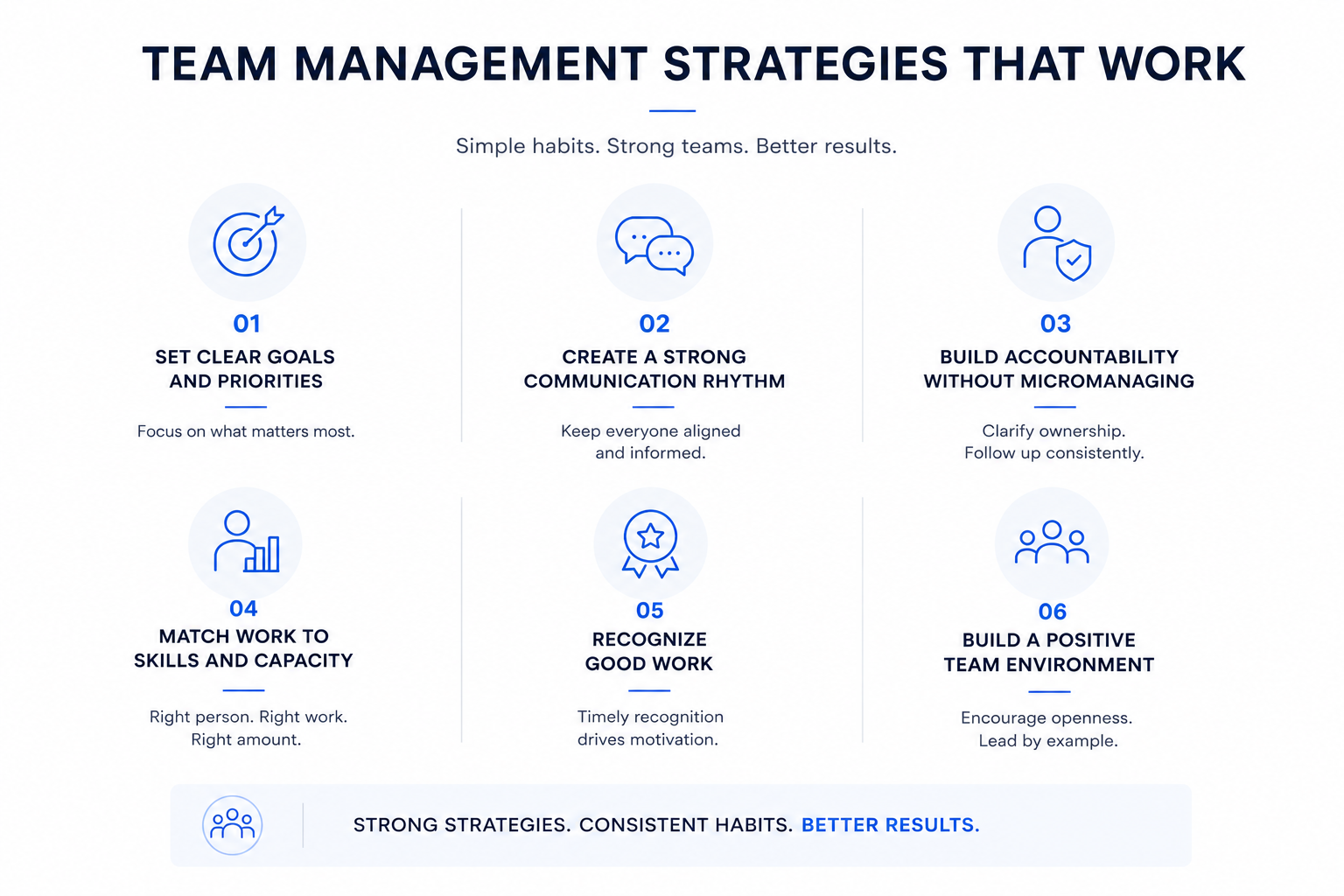
There is no single formula for managing a team effectively. The most successful managers rely on a set of practical habits that improve communication, accountability, workload management, and team culture.
Set clear goals and priorities
Teams perform better when they know what matters most. Start each week, sprint, or project with clear priorities and measurable goals. Whether you use OKRs, sprint goals, or a simple task list, consistency is more important than the framework itself.
Create a strong communication rhythm
Regular check-ins, stand-ups, and status updates help teams stay aligned without creating unnecessary meetings. For remote and hybrid teams, team management tasks like written updates and documented decisions are especially important because informal office communication is no longer available.
Build accountability without micromanaging
People need ownership, not constant supervision. Agree on deliverables upfront, track progress transparently, and follow up on commitments consistently. If managers feel the need to check in constantly, the problem is often unclear expectations rather than poor performance.
Match work to skills and capacity
Assign work based on both ability and availability. Giving the right tasks to the right people improves results and reduces burnout. Regular one-on-ones can help identify workload issues before they affect performance.
Recognize good work
Recognition helps reinforce positive behaviors and maintain motivation. A timely, specific acknowledgment is often more effective than formal reward programs. Focus on what was done well and why it mattered.
Build a positive team environment
Teams perform better when people feel comfortable sharing ideas, asking questions, and raising concerns. Managers help create this environment by encouraging open communication, responding constructively to mistakes, and leading by example.
How to manage a team effectively in different work environments
The basics of team management stay the same no matter where people work. Teams still need clear goals, good communication, accountability, and support. What changes are the challenges managers need to deal with.
Managing in-office teams
Working in the same place makes collaboration easier. People can ask quick questions, solve problems on the spot, and pick up on things that would be missed in a message. At the same time, it is easy to assume everyone is aligned when they are not. Regular stand-ups and documenting key decisions help prevent important information from getting lost in conversations.
Managing remote teams
Remote teams usually need more structure because people can’t just turn around and ask a quick question anymore. Small misunderstandings also tend to pile up faster when communication mostly happens through Slack or email.
That’s why written updates and documented decisions matter more in remote setups. Regular one-on-ones help too. They give managers a better sense of who’s overloaded, who’s stuck, and who may be quietly disengaging.
Managing hybrid teams
Hybrid teams often struggle with information gaps. People in the office naturally hear more conversations and get more context than those working remotely. A good rule is to treat hybrid teams as remote-first. Share decisions in writing, use shared agendas, and make sure remote employees are included in discussions and recognition.
Common team management mistakes to avoid
Most management problems are not new. They usually come from a few common mistakes that are easy to miss in day-to-day work.
Unclear expectations
People cannot consistently meet expectations they do not understand. When goals, deadlines, or quality standards are unclear, teams end up making assumptions. Be clear about what success looks like and revisit expectations regularly, especially when priorities change.
Micromanagement
Micromanagement often starts with good intentions, but it usually has the opposite effect. When managers get involved in every detail, people become less likely to take ownership or make decisions on their own. Clear goals and regular progress updates provide visibility without constant oversight.
Poor communication habits
Communication problems rarely show up all at once. They build over time through missed updates, vague feedback, and unanswered questions. Establishing simple communication habits and clear expectations helps prevent confusion before it affects delivery.
Overlooking workload balance
Some people will be overloaded and others will have spare capacity, and in the end, performance will suffer. Workload is often part of the problem. In 2024, 52% of employees said they felt burned out. We regularly review workload so that managers can identify problems early and redistribute work before frustration arises.
Not recognizing or supporting the team
People want to feel their work matters. When effort is not recognised, or support is lacking, engagement often drops off. Gallup says disengaged employees are 18% less efficient. Regular feedback, recognition, and development conversations help people stay motivated and connected to their work.
How TMetric supports better team management
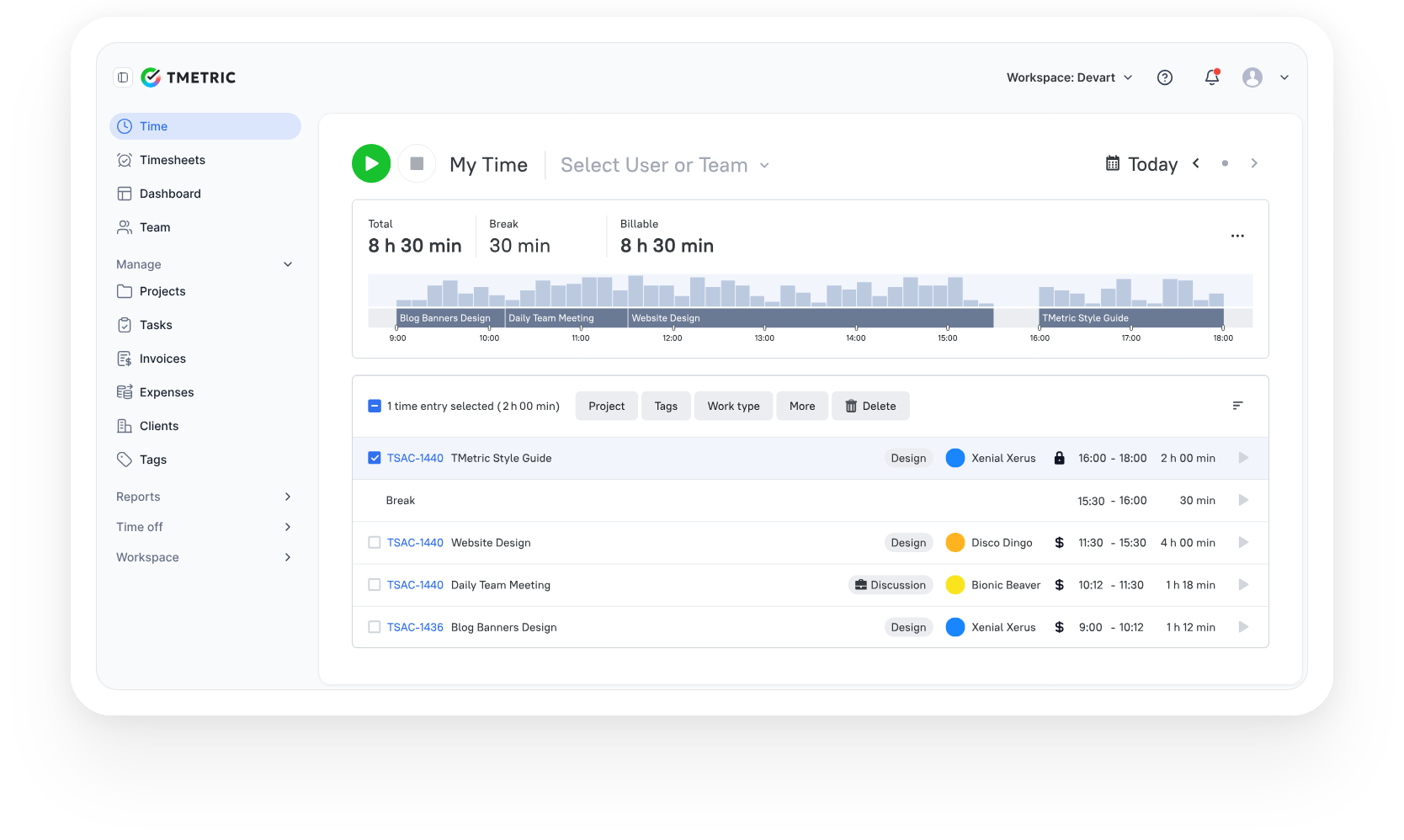
One of the trickiest parts of managing a team is knowing what’s going on without constantly asking people for updates. Managers need some visibility into workloads and progress, but nobody wants to feel watched all day either.
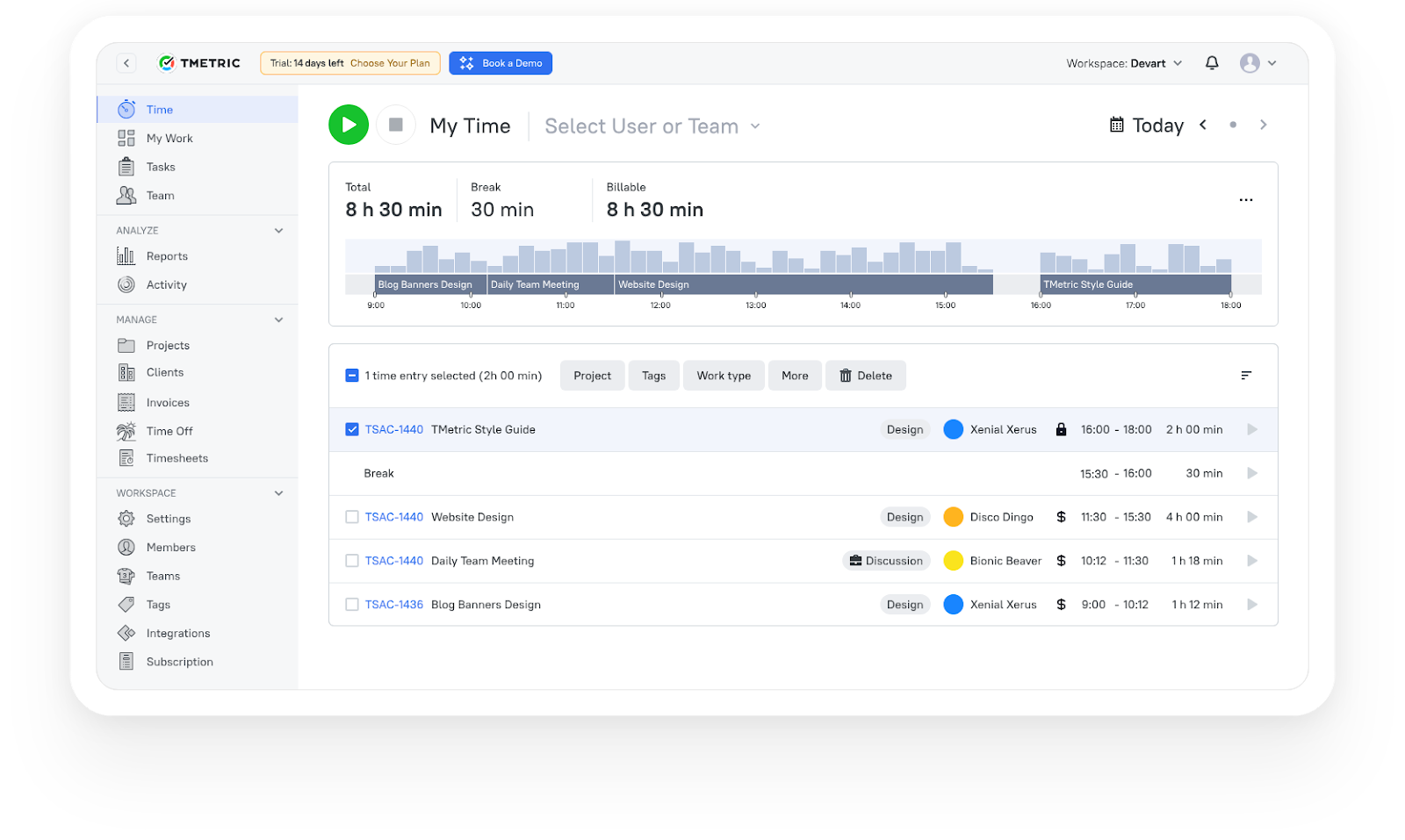
TMetric, a time tracking app, helps bridge that gap. It gives teams a clearer picture of where time is going, what work is moving, and where projects may be slowing down.
| Need | How TMetric helps |
|---|---|
| Visibility into work | Live team dashboard and activity tracking |
| Workload management | Identify overloaded and underutilized team members |
| Accountability | Track time and progress across tasks |
| Team coordination | Timesheet approvals and shared reporting |
| Remote work support | Mobile, desktop, web apps, and 50+ integrations |
TMetric will not make management decisions for you, but it can make those decisions easier. By providing reliable time and workload data in one place, it helps managers spot issues earlier, balance workloads more effectively, and spend less time chasing updates.
If you want better visibility into how your team spends its time, TMetric offers a 14-day free trial with no credit card required.
Takeaway
Good team management isn’t about having the perfect leadership style. It’s about doing the fundamentals well and consistently, setting clear expectations, communicating regularly, balancing workloads, and supporting your team when the going gets tough.
Little improvements in these areas add up over time. A clearer priority, a better check-in process, or a more balanced workload can impact productivity, engagement, and team performance.
If you need better visibility into how work is progressing across the team, time tracking for remote teams can help by bringing time, workload and project data into one place to make it easier to spot issues early on and make informed decisions.
3,000+ companies, teams, and individuals worldwide use TMetric to track time, manage work, and bill with confidence.
Frequently asked questions
What are the best team management strategies?
Set clear goals. Communicate regularly. Hold people accountable—but don’t micromanage. Match work to people’s strengths. Good teams also need a safe environment where people feel safe to raise issues.
How do you manage a team effectively?
Effective team management strategies boil down to clear expectations, regular communication, tracking progress, and supporting the team when needed. The aim is to support people to work well without being watched all the time.
What are the most important team management tips and skills?
Good managers are good communicators, good delegators, good listeners, and they nip problems in the bud. They also know how to prioritize work and balance workload.
What team management techniques help improve performance?
One-on-ones, goal setting, sprint planning, tracking progress and retrospectives all help teams work better. Recognition and psychological safety also matter because people work better when they feel safe to speak their mind.
How can TMetric help manage team work?
TMetric provides managers visibility into team activity, workloads and project progress. Features like time tracking, timesheet approvals, project budgets and reporting make it easier to track work and make informed decisions.
Is TMetric useful for remote and hybrid teams?
Yes. TMetric is available for the web, desktop, and mobile, plus browser extensions, and integrates with Jira, Asana, Slack, and other tools. It gives managers a more transparent view of what’s happening across projects without the need for constant follow-ups and status meetings.
What motivates team members to perform better?
People generally do better work when expectations are clear, the workload feels fair and they own what they do. There is scope for growth and meaningful work along with recognition.