
Priorities Management: How to Manage Priorities and Balance Workload Without Stress
Only 18% of people say they have a reliable system for managing priorities and workload. Everyone else is mostly reacting in real time. This guide explores the priority management skills that help professionals stay focused, organized, and in control of their work.


We’ve all had those days. You work for eight hours, feel completely drained, then realize the important project barely moved. Usually, it’s not because you were lazy. The day just disappeared into random small tasks that kept getting in the way of real work.
That’s where priority management comes in. It’s about knowing what actually needs your attention first and protecting time for the work that matters before the day turns reactive. Done properly, it makes heavy workloads feel more manageable and a lot less stressful.
Below, we break down simple techniques and systems for managing time and priorities that help you stay productive without burning out.
What is priority management?
Priority management is the ability to know what needs your attention, and do that first, before emails, meetings and little requests take over your day. Without clear priorities, important projects sit quietly while low value tasks consume your time.
That’s more important than ever now. Almost 60% of an employee’s day is spent on coordination activities such as email, meetings and finding information, leaving less time for meaningful work. Priority management helps make sure that limited time goes toward work that actually moves things forward.
Priority management vs Time management and prioritization
These terms are often used like they mean the same thing, but they solve different problems. Understanding the difference makes it easier to manage workload properly instead of just staying busy all day.
These terms are closely related, but they solve different problems. Understanding the difference helps you understand how to manage multiple priorities more effectively instead of simply staying busy.
Benefits of effective priority management
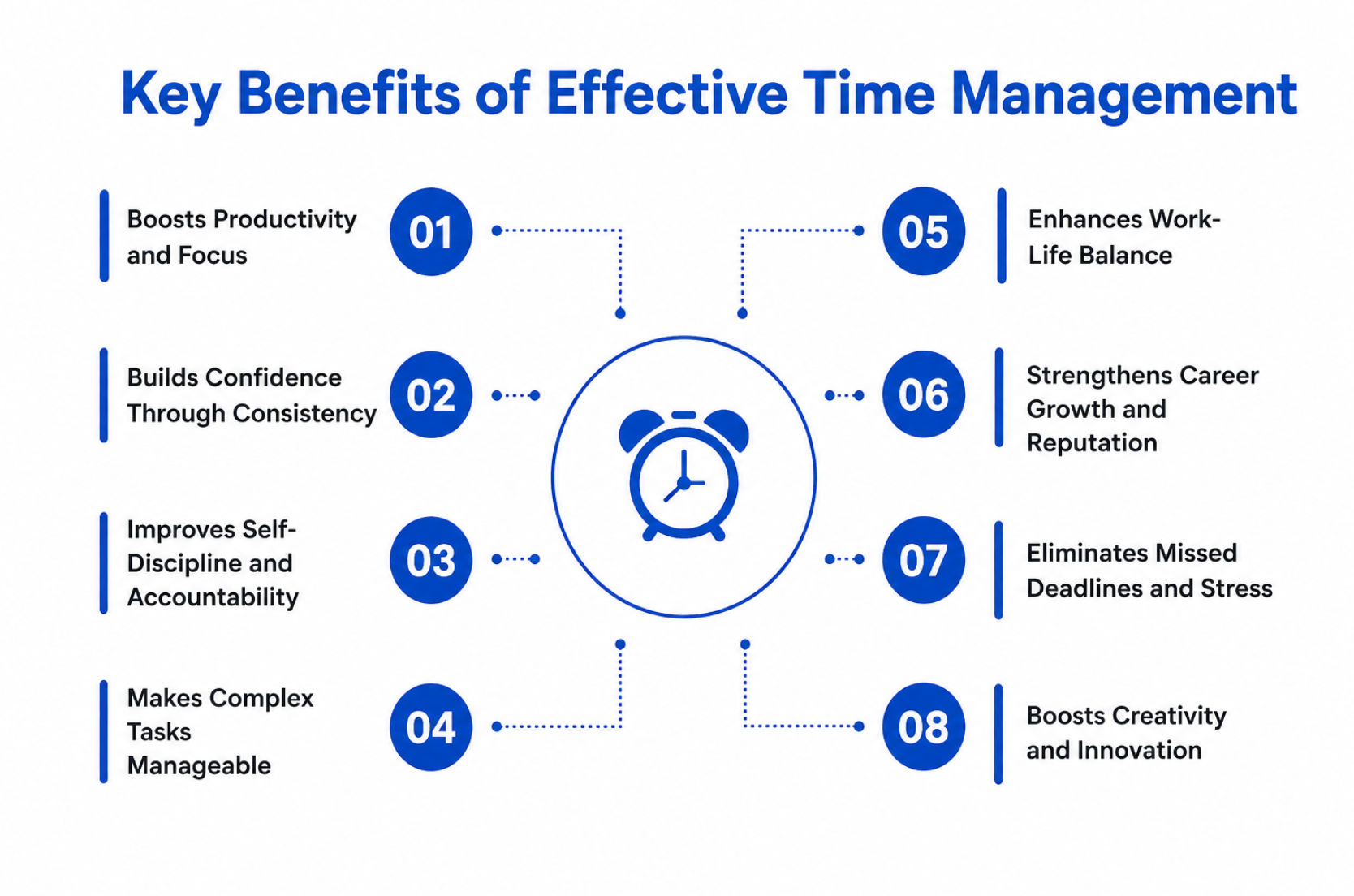
With clear priorities, work is less chaotic. You spend less time reacting to random stuff and more time getting important stuff done.
Improved productivity
Priority management helps stop the habit of jumping from one task to another all day. That matters because constant task switching can waste up to 40% of productive time. Even small distractions can take around 25 minutes to fully recover from.
Lowered stress and better balance
Most of the work stress comes from the feeling that everything is urgent at once. Clear priorities take the pressure off because you know what needs to be done today and what can wait. Managing workload is more important than ever, with 79% of workers saying they regularly feel stressed.
Better team performance
Teams struggle when everyone works from different priorities. Important tasks get delayed, work gets duplicated, and deadlines start slipping. Knowledge workers lose more than four hours a week to duplicated work alone. Clear priorities help teams stay aligned and avoid unnecessary confusion.
How to manage priorities effectively: Step-by-step process
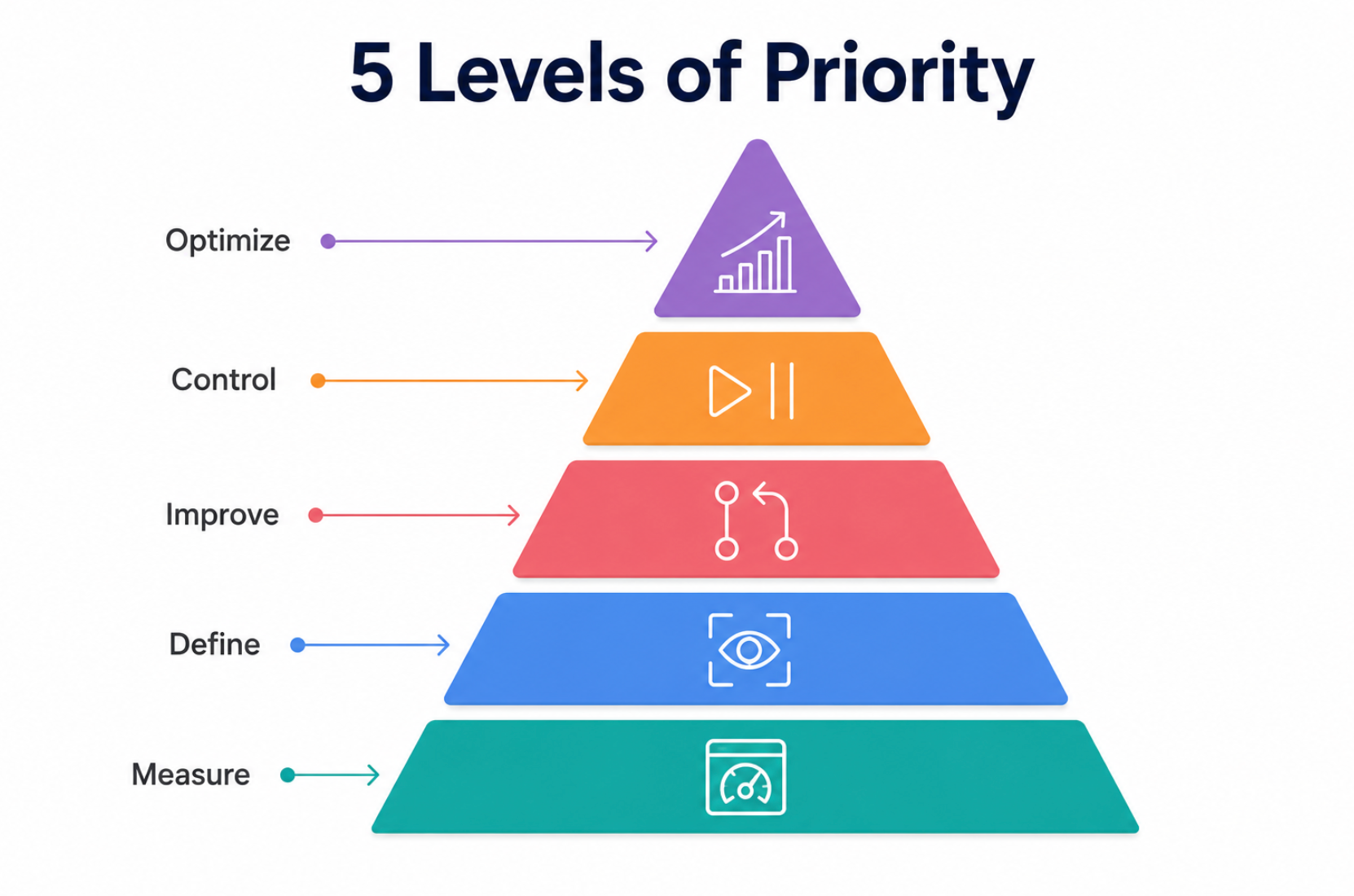
Managing priorities is less about motivation and more about having a simple system you can follow when work gets busy.
This five-step cycle is the foundation of all effective priority management systems. The specific method you use to rank tasks can vary, but the cycle itself is non-negotiable.
Best priority management techniques and frameworks
Proven prioritization and time management methods remove the guesswork from deciding what to work on. Each framework below suits a different working style and context; the right one is the one you will actually use consistently.
Eisenhower Matrix (Priority Square Time Management)
The Eisenhower Matrix, sometimes called the priority square time management tool, divides every task into one of four quadrants based on urgency and importance. The data backs its effectiveness. Over 50% of people who use the Eisenhower Matrix report feeling their work is under control every day, compared to consistently worse outcomes for those relying on ad-hoc time management prioritization.
Here is how to classify tasks using the matrix.
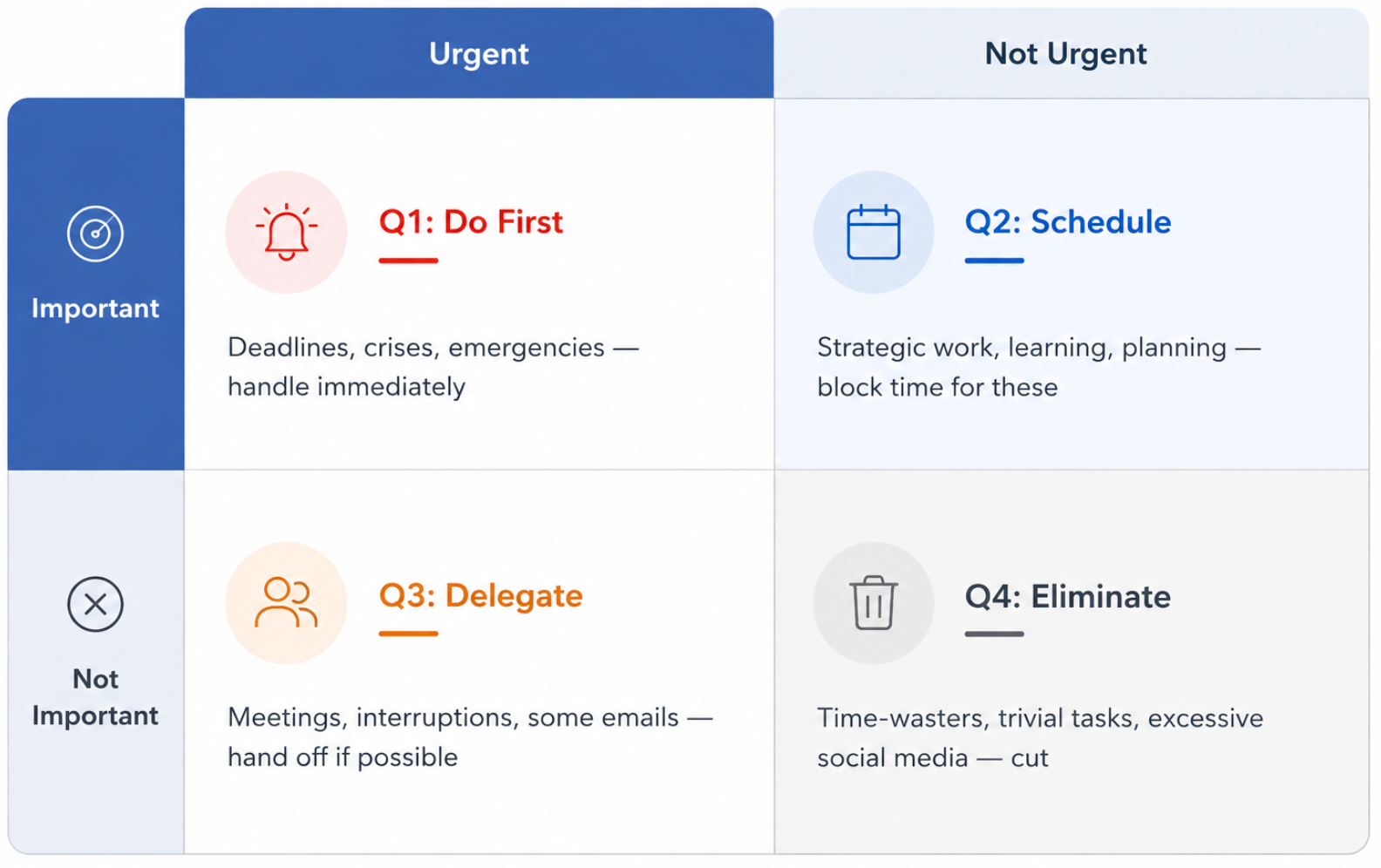
The most valuable quadrant is Q2, Important but Not Urgent. Strategic thinking, skill development, relationship building, and long-term planning all live here. Most professionals neglect Q2 because nothing is on fire. The Eisenhower Matrix makes Q2 work visible and schedules it before it becomes a Q1 crisis.
Use this table as a weekly sorting exercise: take your full task list and place every item in a quadrant. It takes ten minutes and eliminates hours of confused effort.
ABCDE Method for prioritizing tasks
The ABCDE Method, popularized by Brian Tracy, helps you sort tasks by importance and consequence.
- A = must-do tasks with serious consequences if ignored
- B = important tasks, but less critical
- C = nice-to-do tasks with little real impact
- D = tasks that should be delegated
- E = tasks that should be eliminated completely
The real strength of this method is the E category. It forces you to cut out low-value work instead of carrying it from one day to the next. That matters because many workers say meaningless tasks are one of the biggest sources of frustration at work.
You can also number tasks within each category. For example, A-1 becomes the most important task of the day, followed by A-2. This creates a clear order of execution instead of just a long priority list.
Ivy Lee Method for daily prioritization
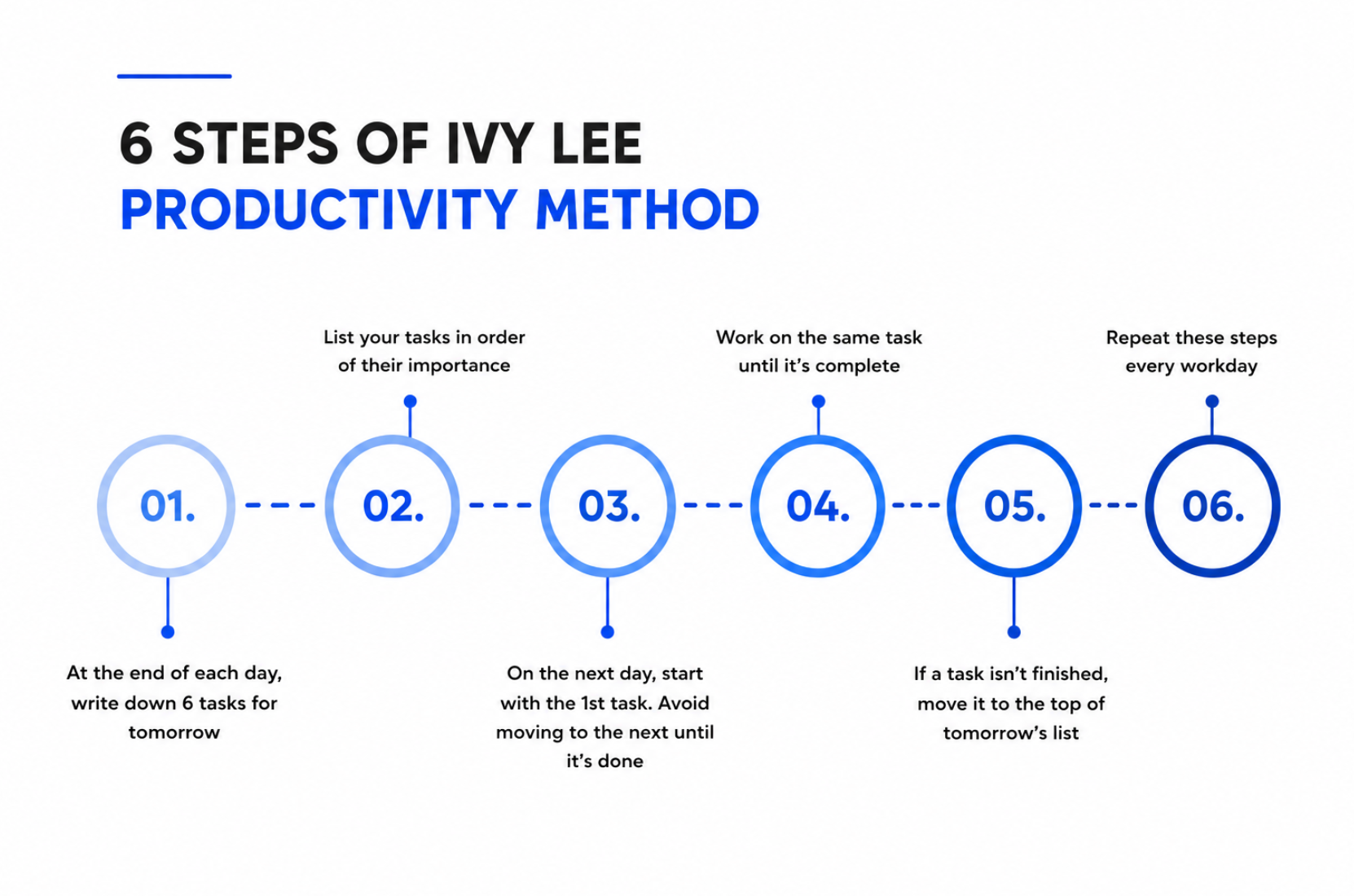
The Ivy Lee Method is deceptively simple: at the end of each workday, write down your six most important tasks for tomorrow in order of priority. The next morning, start on task one and do not move to task two until it is complete. Any tasks not finished carry over to the next day's list.
Lee sold this method to Charles Schwab in 1918 for $25,000, a figure worth well over half a million dollars today. The value is in the constraints it forces. Six tasks is enough to be ambitious but few enough to be achievable. Working sequentially prevents the scattered energy that kills output. And writing your list the night before means you start each morning with a plan, not a decision to make.
This method works especially well for knowledge workers with complex deliverables rather than high-volume transactional work. If your days involve deep work (writing, analysis, strategy, development) the Ivy Lee Method creates the focus structure that makes it possible.
Eat the Frog technique
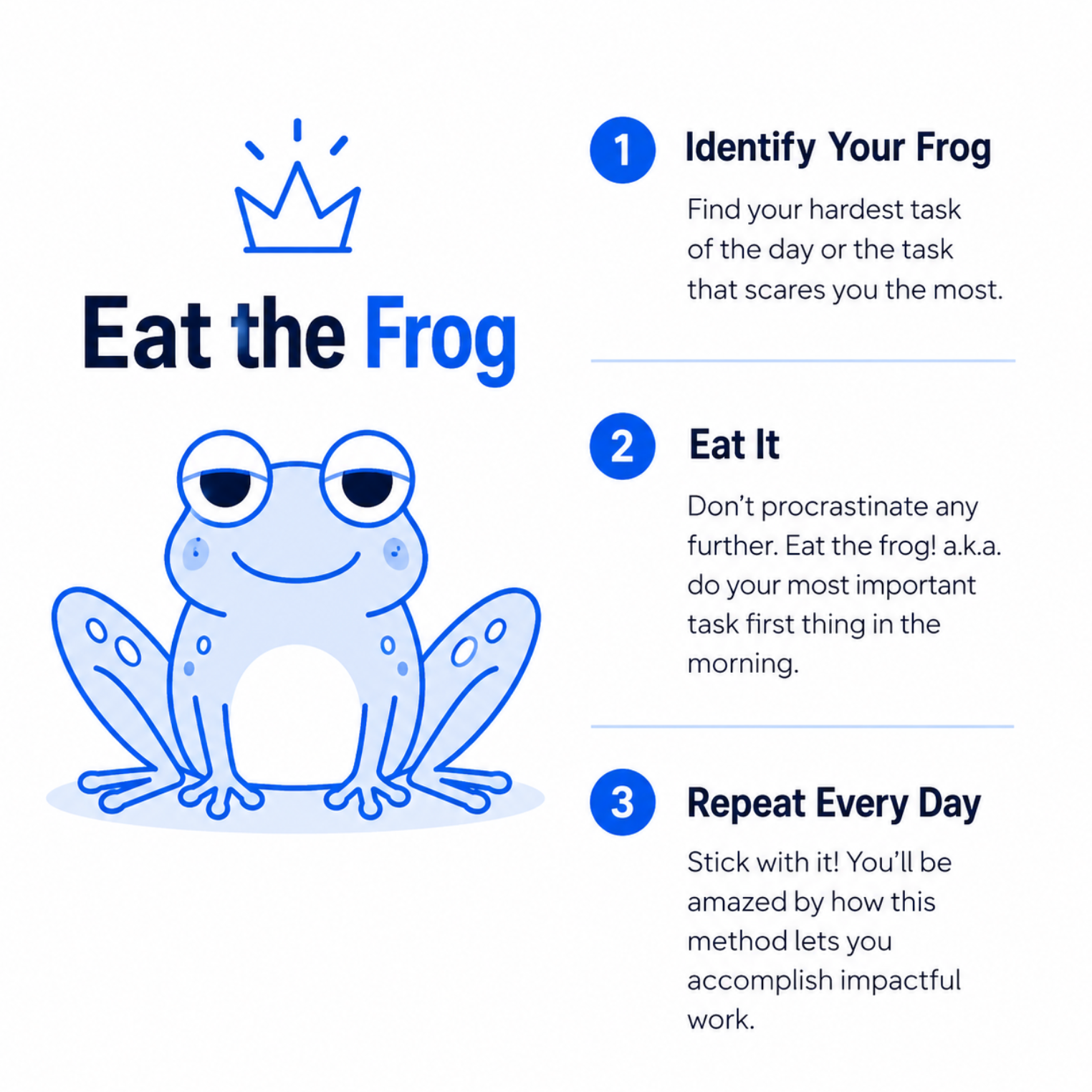
Brian Tracy’s Eat the Frog technique is simple: do your hardest and most important task first thing in the morning before emails, meetings, and distractions take over. The idea is that your focus and mental energy are usually strongest earlier in the day, not later.
It also removes the stress of carrying that difficult task around in your head all day. Once it is done, the rest of the day feels lighter and easier to manage.
A good way to use this method is to decide on your “frog” the night before. Then start working on it as soon as your day begins, before checking notifications or getting pulled into smaller tasks. Even 30 focused minutes in the morning can produce better work than trying to do the same task late in the afternoon.
Priority management tools and systems that improve productivity
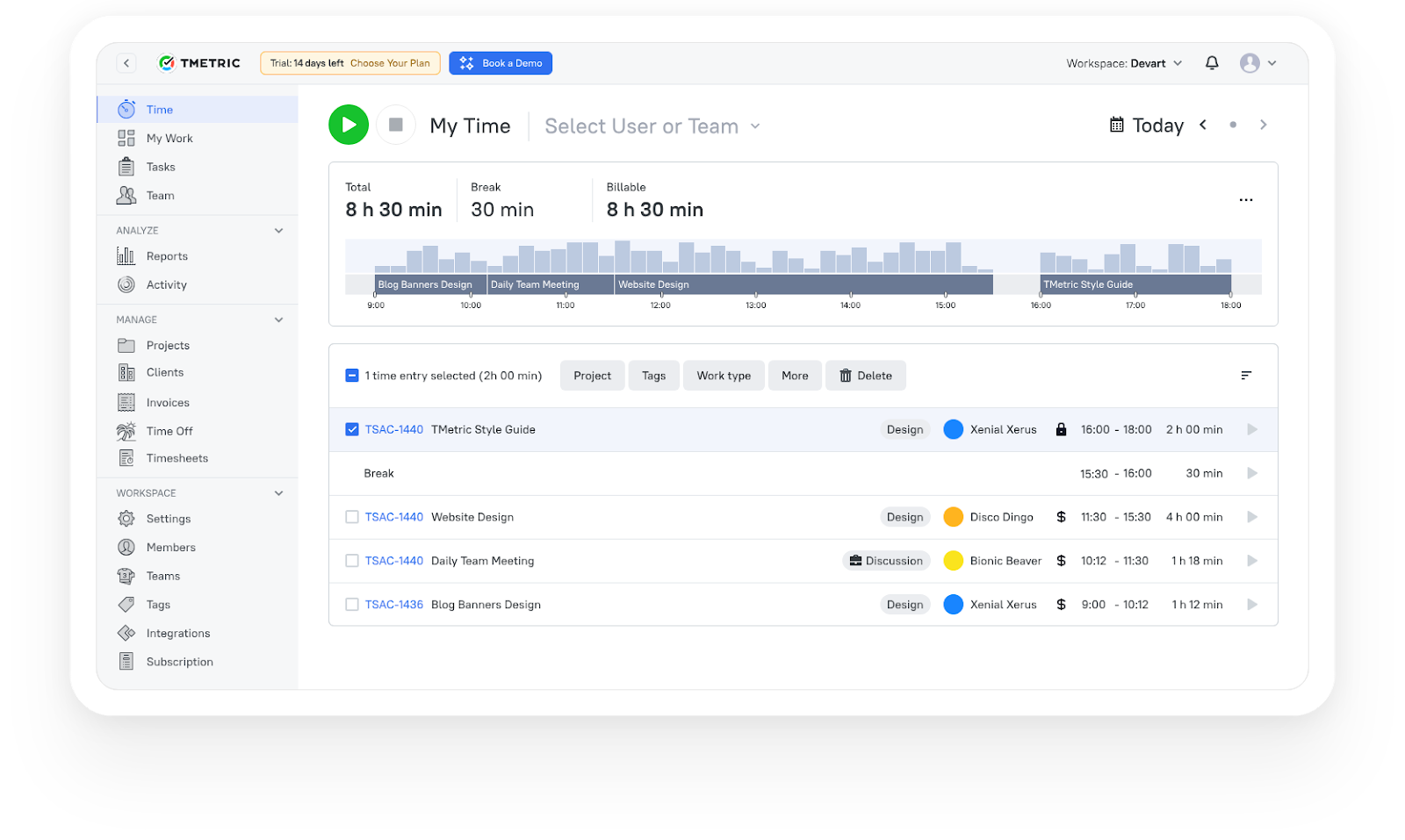
A priority framework helps you decide what matters. A tool helps you actually stay on top of it. Without a clear system, priorities quickly get buried under emails, chats, and scattered apps. In fact, 67% of employees say they would focus better if their work tools were centralized in one place.
Here are some features that make priority management tools genuinely useful:
- Priority ranks and labels. Good tools tell you at a glance what matters most, with labels, flags, or color coding.
- Deadline tracking & reminders. Don’t trust your memory on important things. Smart reminders ensure you’re never caught out by deadlines.
- Visibility of workloads. You can see your entire workload, so you can set more realistic priorities instead of trying to do everything in one day.
- Teamwork. For teams, visibility is even more important. Managers need to know who has capacity, where work is stuck, and how priorities are changing.
- Integrated with time tracking. Keeping track of how long it actually takes to do work can help you plan better for the future. Tools such as TMetric, time tracking software, combine time tracking with task management, helping teams understand where their time is really spent.
Advantages of using priority management tools
Prioritizing tasks and time management becomes much easier when you stop trying to remember everything in your head. Good tools keep tasks, deadlines, reminders, and priorities in one place. That takes away some of the mental pressure of trying to track everything yourself and makes work easier to see and organize.
They also make planning more realistic. When you track both tasks and time, you start seeing where your day actually goes. Patterns become easier to spot, wasted time becomes more visible, and workloads become easier to manage. Studies show digital productivity tools can improve efficiency by up to 47%, yet most people still do not use them properly.
Priority management tools also help prevent overload before it turns into burnout. When priorities, deadlines, and workloads are visible, it becomes easier to adjust schedules, redistribute work, and avoid taking on too much at once.
Takeaway: How priority management helps reduce stress
Priority management is really about getting control of your workday again. Without clear project management priorities, the day becomes reactive very quickly. Emails, meetings, and small requests take over, while important work keeps getting delayed. After a while, that constant pressure builds into stress and burnout.
Clear priorities help break that cycle. Important work gets done earlier, there is less last-minute rushing, and the workload feels more manageable. Even small habits help, spending just 10 minutes planning the day can save up to two hours of productive time later on.
The goal is not to create a perfect schedule. It is to build a simple system you can rely on consistently, whether that is the Eisenhower Matrix, the Ivy Lee Method, or a digital planning tool.
If you are trying to learn how to prioritize tasks in project management, the biggest thing is just picking one method and sticking with it. After some time, work starts feeling more manageable, focus improves, and your head feels less crowded.
3,000+ companies, teams, and individuals worldwide use TMetric to track time, manage work, and bill with confidence.
Frequently asked questions
What are priority management skills?
Priority management is simply deciding which tasks matter most and giving those your attention first. It helps you spend more time on important work instead of reacting to every message, request, or interruption that shows up during the day.
What are the methods for managing multiple priorities?
To manage multiple priorities effectively, list out all your tasks and assess the impact and urgency of each. Use something like the Eisenhower Matrix to categorize them, and then schedule high-priority work in dedicated time blocks before reactive tasks fill your day. Review and re-rank every day.
What is the best priority management system?
The best priority management system combines a clear methodology for setting priorities with a digital tool that tracks deadlines and provides team visibility. One such tool is TMetric, which offers task management, workload planning, and time tracking.
How do you manage multiple priorities effectively?
Prioritize tasks by separating them out into impact and urgency. Rank each task accordingly . First thing in the morning , check your messages only after you have done the highest priority item . If it does not help you achieve your key goals , delegate or defer . The Ivy Lee Method and Eat the Frog are both good places to start.
Why is prioritization important in project management?
Prioritization in time management helps teams focus on deliverables that drive project success. It helps to remove bottlenecks, allows for proper allocation of resources, and keeps projects on track even when things don’t go as planned.