
Task Management Skills: Definition, Examples, and How to Improve Them
Most people are not overwhelmed because they have too much work. They are overwhelmed because they lack a system for managing it. Studies show over 82% of professionals operate without a formal task management framework. Here are the skills that actually help.


Most people treat their workday like a game of Tetris, responding to falling blocks until the screen is full. They confuse a long to-do list with a strategy. Studies show that over 82% of professionals are really working without a formal system at all.
Task management is not just keeping a to-do list updated. It’s the ability to plan work, prioritize what matters, and stay in control when everything starts competing for attention. When these skills are strong, work moves forward cleanly. When they’re weak, urgency takes over and quality slips fast.
This guide breaks down the task management skills that actually make work more manageable, along with practical ways to improve them using systems and tools like TMetric.
Summary
- Understand what task management skills actually involve.
- Find out how task management can increase productivity and decrease stress.
- Build core skills like planning, prioritization, scheduling, and follow-through.
- Use practical ways to manage and organize work more effectively.
- Avoid the common habits that result in overload, missed deadlines and reactive work.
What are task management skills?
Task management skills are the practical habits that help you turn work from an idea into a finished result. They include planning, prioritizing, organizing, estimating time, tracking progress, and staying focused long enough to actually complete the work.
These skills apply both to individual workloads and team-based environments where multiple people depend on shared timelines, handoffs, and clear ownership. This isn’t a single “soft skill.” It’s a group of everyday decisions that shape how well work gets organized, how visible priorities remain, whether deadlines are met, and how consistently tasks are executed under real working conditions.
Importance of task management skills
Strong task management skills give people better control over their workload. That means clearer priorities, fewer missed deadlines, smoother coordination, and better accountability for what actually gets done.
Without these skills, work becomes reactive very quickly. People jump between emails, meetings, messages, and unfinished tasks without a clear system for deciding what actually deserves attention first. According to Asana’s 2025 Anatomy of Work Index, knowledge workers spend 60% of their time on coordination, status updates, meetings, and other “work about work” instead of focused skilled work.
The effects spread beyond individual productivity. Bad task management in teams causes delays, duplicated effort, missed handoffs, unclear ownership, etc.
Key components of task management skills
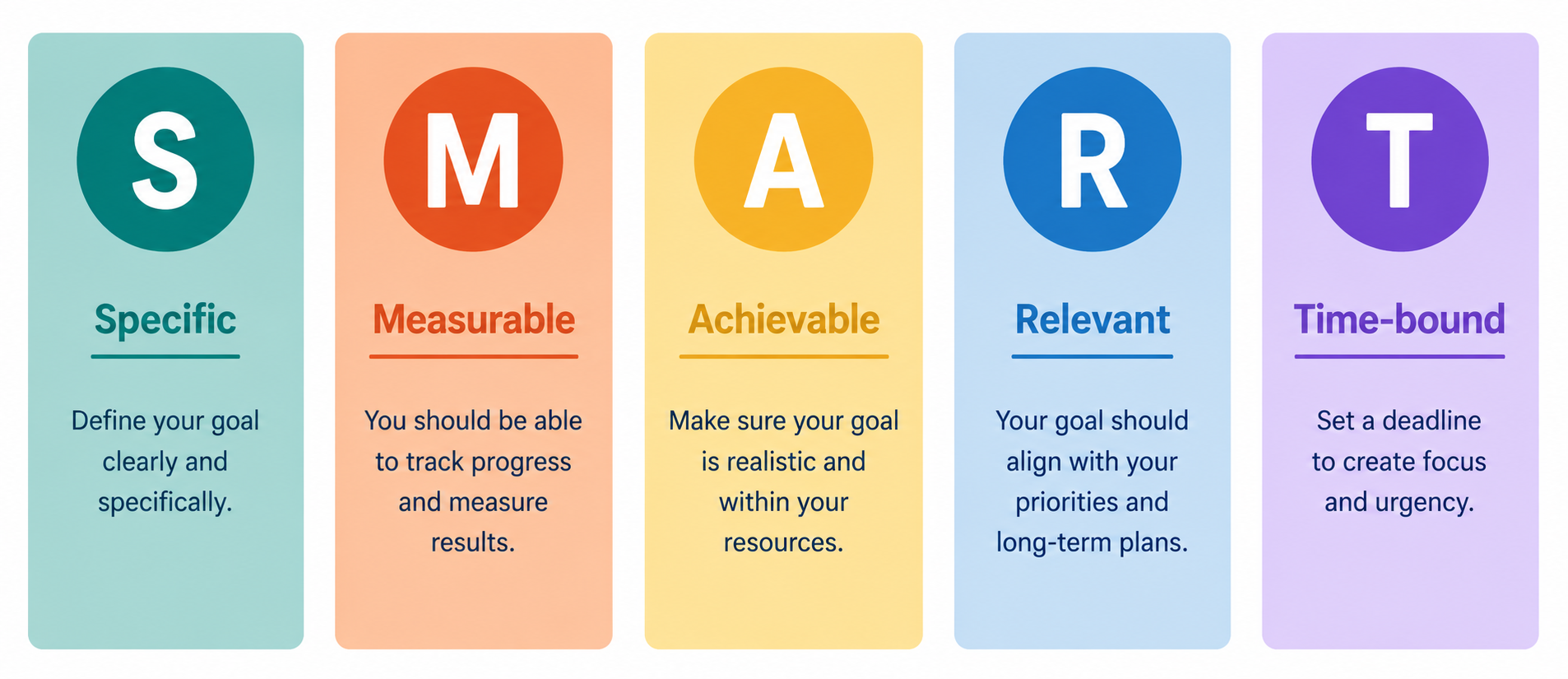
Task management is made up of a few simple skills that help people stay organized and get work done properly.
1. Planning and organization
Planning helps break work into smaller steps and puts them in the right order. Organization keeps tasks, notes, deadlines, and files in one place so nothing gets lost or forgotten.
2. Prioritization and decision-making
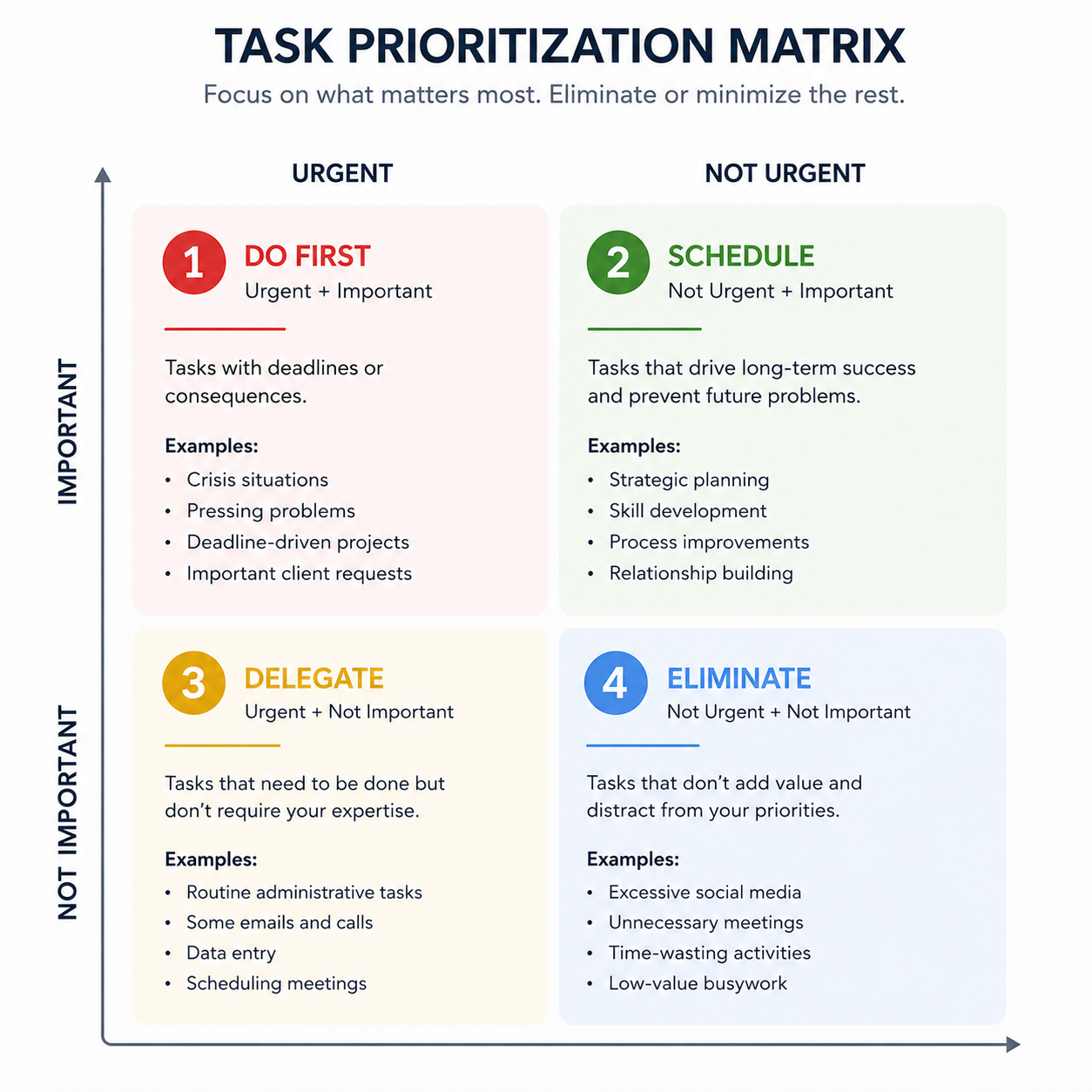
Prioritization means knowing what needs attention first and what can wait. It helps people focus on important work instead of reacting to every interruption.
3. Time management and scheduling
Good task management means being honest about how long work will take. Scheduling helps set aside time for important tasks before meetings, emails, and distractions fill up the day.
4. Tracking and follow-through
Tracking helps people keep up with deadlines, progress, and unfinished work. Follow-through makes sure tasks actually get finished instead of being left half-done or delayed.
Why is task management important?
Modern work is full of interruptions, changing priorities, and constant distractions. Strong task management helps people stay organized and focused instead of reacting to whatever shows up next.
Boosting productivity
Good task management keeps work clear and structured. Without a system, it’s easy to spend the day jumping between emails, meetings, messages, and unfinished tasks. Research highlighted by the American Psychological Association found that constant task switching can reduce productivity by up to 40%.
Reducing stress
A lot of work stress comes from feeling scattered or unsure about what to focus on next. Keeping tasks organized in one system helps reduce mental clutter and makes workloads feel easier to manage.
Improving collaboration
Task management also affects how well teams work together. Clear ownership, visible deadlines, and reliable follow-through help projects move smoothly, while poor organization creates delays, confusion, and duplicated work.
Modern work is full of interruptions, shifting priorities, and competing deadlines. Strong task management helps people stay organized and productive instead of constantly reacting to whatever appears next.
Examples of task management skills
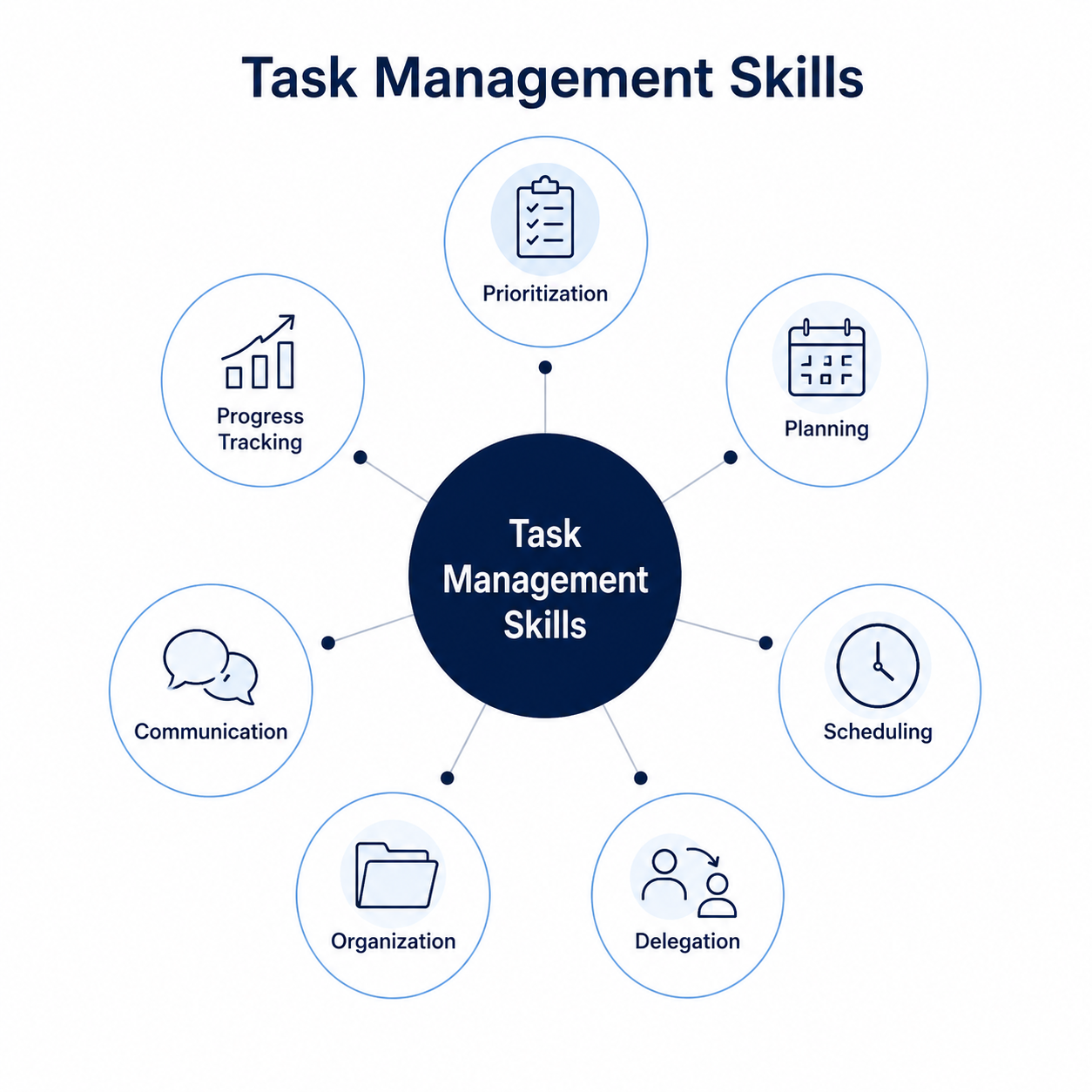
Here are some of the most important task management skills examples that influence how effectively people organize, prioritize, and complete their work. Mastering these habits can make a noticeable difference in productivity, focus, and day-to-day workload management.
Some people look busy all day and still finish almost nothing important. Usually, the problem isn’t effort. It’s how the work is being handled.
Prioritization
A lot of work feels urgent when it really isn’t. Prioritization is the habit of figuring out what actually moves things forward before getting buried in smaller requests.
ExampleA project manager handles the task blocking the rest of the team first instead of answering low-priority emails all morning.
Delegation
People with poor task management often try to do everything themselves. That usually slows projects down.
ExampleA team lead passes research work to a junior employee so they can focus on decisions that actually need their experience.
Time management
Some tasks quietly eat half the day if there’s no structure around them. Meetings are especially good at this.
ExampleA developer blocks off two uninterrupted hours every morning because they know coding between constant notifications rarely works.
Organization
Scattered work creates scattered thinking. When tasks live across sticky notes, emails, Slack messages, and memory, things slip through.
ExampleA consultant keeps all deadlines and project tasks in one place instead of trying to mentally track everything.
5. Communication
Good task management strategies are based on clarity: requirements defined early, blockers flagged and updates shared with stakeholders. This transparency means no surprises for the whole team.
Example
A designer notices a change in a project brief and immediately updates the client and the task timeline rather than quietly absorbing scope creep.
6. Adaptability
Priorities and deadlines are fluid. Adaptability means recalibrating quickly when new work arrives without losing sight of existing commitments.
Example
When a client emergency hits, a marketer adjusts their planned product launch by one day and communicates the shift proactively, rather than letting both projects suffer.
Task management tips: How to improve your task management skills
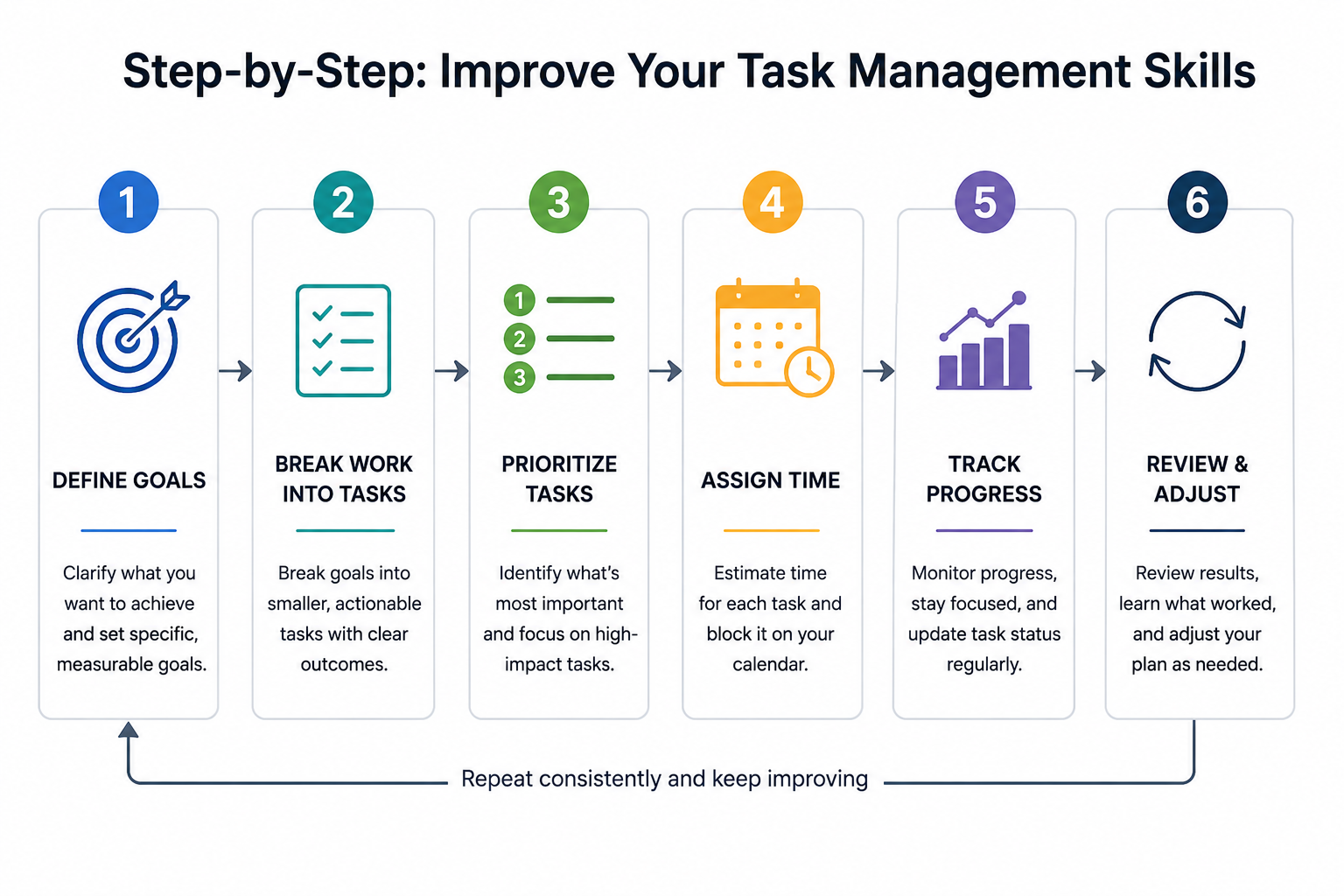
Improving task management usually comes down to building a few consistent habits that make work easier to organize and complete.
Have clear goals
Vague tasks are harder to start and easier to skip. Clearly define work with specific outcomes and deadlines so you always know what “done” looks like.
Utilize a task management system
It’s easier to track priorities, deadlines, and progress when all your tasks are in one trusted system. TMetric and similar tools can connect tasks with task timer and workload visibility.
Divide large tasks into small steps
Breaking big projects into smaller actions makes them easier to manage. Clear next steps reduce overwhelm and make it easier to start.
Priorities reviewed regularly
The priorities keep changing. Weekly review tasks help you align your workload with what matters most.
Set achievable deadlines
Effective task management is about planning for real capacity, not ideal scenarios. Allow for interruptions, revisions, and work you didn't plan for.
Cut down on multitasking
Constantly switching tasks kills focus and slows work down. Usually, if you finish one task before you jump onto the next, you’ll get better speed and quality.
Know how to say 'No'
Doing too much leads to missed deadlines and unnecessary stress. Sometimes strong task management means putting things off, or delegating, or renegotiating priorities.
Common task management mistakes to avoid
Most issues with managing tasks stem from a few recurring habits that quietly destroy focus and organization.
Treating everything as urgent
When everything is urgent, important work gets lost under constant reaction and interruption. Prioritization helps separate the noise from the real deadlines .
Keeping tasks in too many places
Tasks get lost in emails, sticky notes, chats and memories. Having everything in one trusted system makes it easier to track and manage work.
Not reviewing the priorities
Priorities are always changing. A task list that is never reviewed becomes stale and no longer reflects what really matters most.
Taking on more than capacity allows
Overcommitting leads to missed deadlines, lower quality work and unnecessary stress. Strong task management strategies also means knowing when to delay, delegate, or say no.
Improve task management skills with TMetric
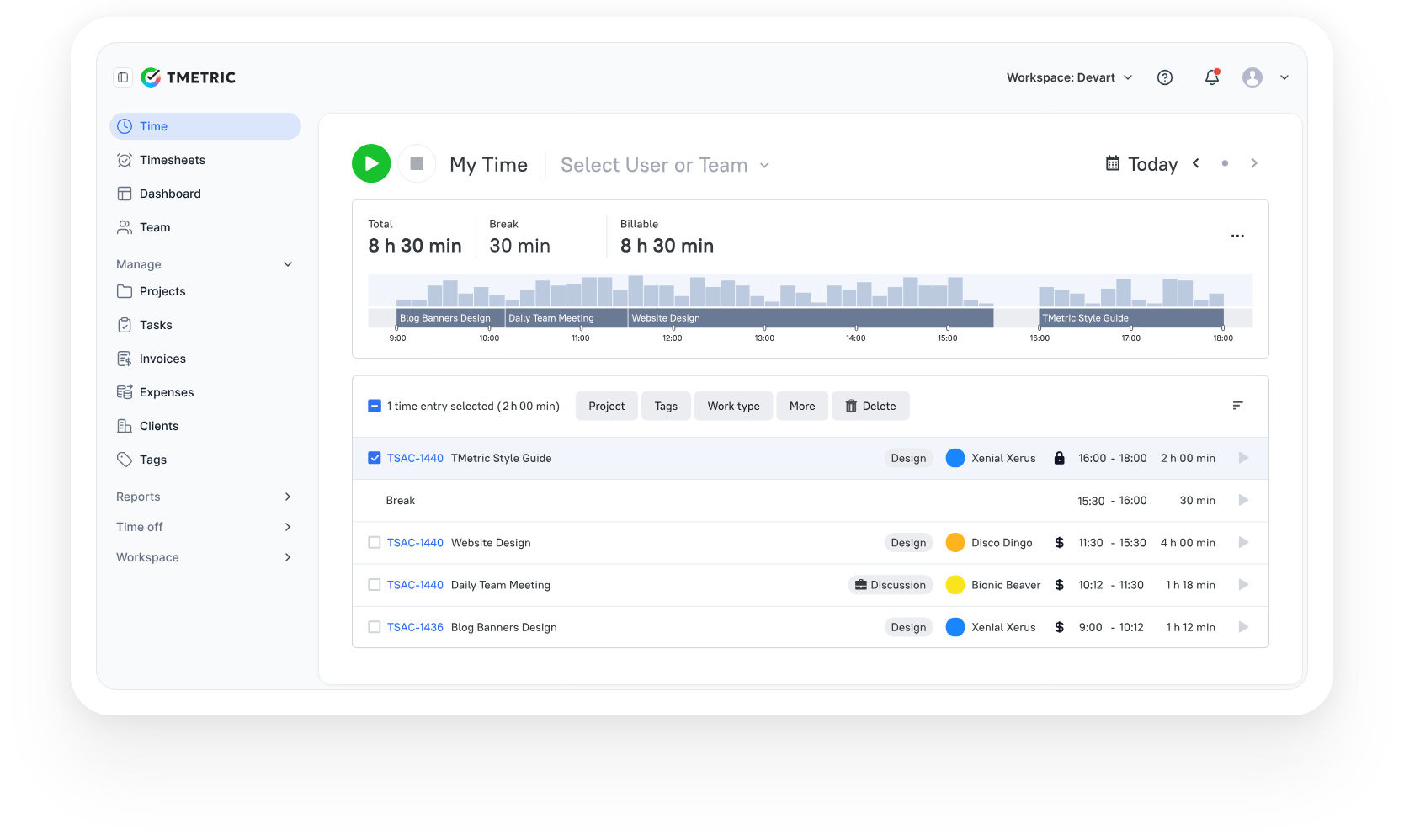
Task management skills are easier to develop when you can see your work clearly. That's where TMetric fits in.
TMetric is a task manager with time tracking built for professionals and teams who want better visibility into how time connects to work. You can create and organize tasks inside projects, track time against specific items, monitor deadlines, and review how your hours are actually being spent. That kind of real-time feedback makes it much easier to spot patterns: tasks that consistently take longer than planned, time blocks that get interrupted, priorities that keep getting pushed.
For managers, TMetric adds a layer of team-level visibility: who's working on what, how workloads are distributed, and whether projects are tracking against budget. For individuals, it creates accountability between plans and execution.
TMetric integrates with 50+ tools (including Jira, Asana, Trello, Notion, Slack, and GitHub) so you can track time directly from the tools you already use. It's available on web, desktop, and mobile, with browser extensions for Chrome, Firefox, Edge, and Safari. A fully featured 14-day free trial is available with no credit card required.
Get started with TMetric now and build a workflow where tasks, time, and deadlines finally stay aligned.
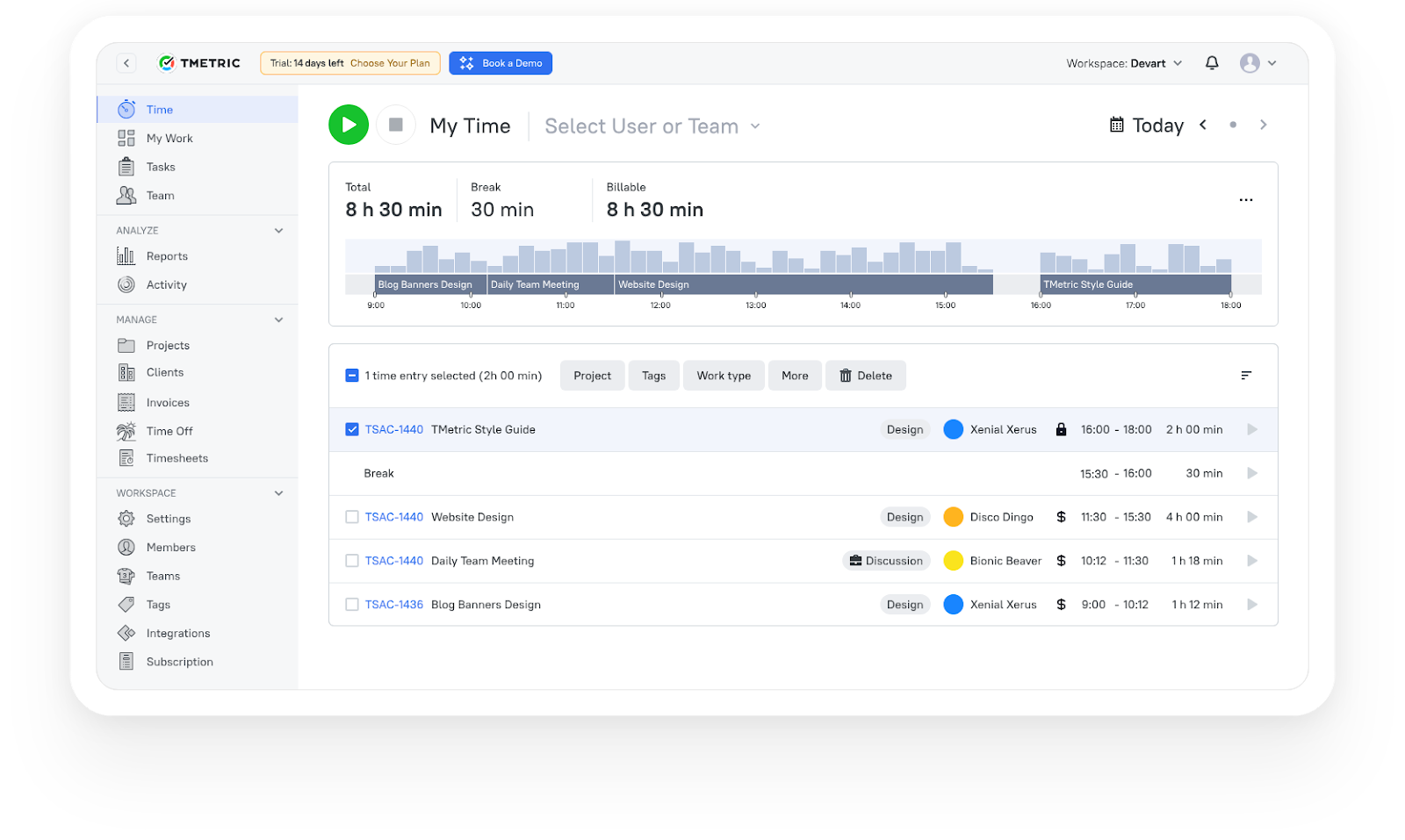
3,000+ companies, teams, and individuals worldwide use TMetric to track time, manage work, and bill with confidence.
Takeaway
Task management skills help turn busy work into organized, consistent execution. Those who manage tasks well tend to have more clarity, less stress and better control over their workload.
The good news is, these skills can be learned. Making a few small adjustments to planning, prioritization, scheduling and follow-through can make a noticeable difference over time. Tools like TMetric, a task timer, help reinforce those habits by giving individuals and teams better visibility into tasks, time and workload.
Frequently asked questions
What are the most important task management skills to develop first?
Start with prioritization and planning, they underpin every other skill. If you can consistently decide what matters most and break it into clear steps, everything else becomes easier to build on top of.
What is the difference between task management skills and time management skills?
Time management is how you allocate and protect your hours. Task management is what you do in that time: organizing, prioritizing and tracking specific work items. They overlap a lot but task management is more granular and work-specific.
What are common mistakes that weaken task management?
Treating everything as urgent, having tasks spread across multiple systems, not doing regular priority reviews, and taking on more than you can handle. All of these can be solved with small system changes and better habits.
How often should you review and update your task list?
A daily micro-review (5 minutes to see what’s ahead) and a weekly full review (15-20 minutes to reprioritize and clean up) is a good baseline. The key is consistency. A review at irregular intervals is better than no review, but a regular review builds the habit.
How TMetric can help you with improving task management skills
TMetric combines time tracking with tasks and projects. You can see how long you were supposed to do a task and how long it took you. This feedback loop helps you get better at estimating, prioritizing, and building more realistic schedules over time.
How to manage tasks effectively at work?
Yes. TMetric offers a free plan for up to 2 users and scales to full team functionality — including workload tracking, timesheets, project budgets, and billing. Whether you're a solo freelancer or managing a team of 50, the core visibility and task-tracking features work the same way.
How to improve task management skills?
The secret to getting things done is to have a clear system of prioritizing, scheduling, and tracking the work. An easy way to manage workloads and meet deadlines is to break big projects down into smaller steps, review priorities often, and limit distractions.
What is the best free alternative to Toggl?
Better task management skills are built on consistent habits. First, you should centralize tasks, set realistic deadlines, review your priorities weekly, and focus on one task at a time (not multitasking).
What is an example of task management skills?
Examples of task management skills include the ability to prioritize, schedule, plan, organize, estimate time, delegate, and track progress on projects or deadlines.