
The Best B2B Project Management Software for SaaS Teams in 2026
Most teams track tasks. Very few track what those tasks actually cost. In B2B SaaS, that gap is where profit disappears. Read on to stay one step ahead.


In B2B SaaS, every project is a commitment tied to revenue and client trust. But to deliver on that commitment and meet expectations, you need tools that manage contracts, billable hours, budgets, and client outcomes. Without these, generic task tools leave you blind to profitability and accountability.
This guide reviews the top four B2B project management tools in 2026, breaking down their strengths in time tracking and how well they tie project work to real financial outcomes.
Compare:
What is B2B project management?
B2B project management is the coordination of projects delivered from one business to another. For SaaS teams, this usually translates into implementation, onboarding, customizations, client support initiatives, and delivery of recurring services, all tied to contracts, milestones, and revenue targets.
The key characteristics that separate B2B project management from general task tracking:
- Contract-based deliverables with defined scope and timelines.
- Recurring billing cycles that require accurate time and cost data.
- Multi-stakeholder approval workflows involving both internal teams and clients.
- Revenue-linked performance tracking, project profitability, budget variance, and billable utilization.
Generic tools like basic Kanban boards or simple to-do apps don't address any of these. B2B management software needs to bridge the gap between task execution and financial accountability: tracking not just what's being done, but whether it's being done within budget and delivering the margin your contracts require.
 Alla Chernets
List of the best B2B project management software
Here are the best B2B SaaS project management software 2026 has to offer. Each offers a different balance of time tracking, workflow management, and reporting capabilities.
1. TMetric
⭐ 4.6/5 (G2)
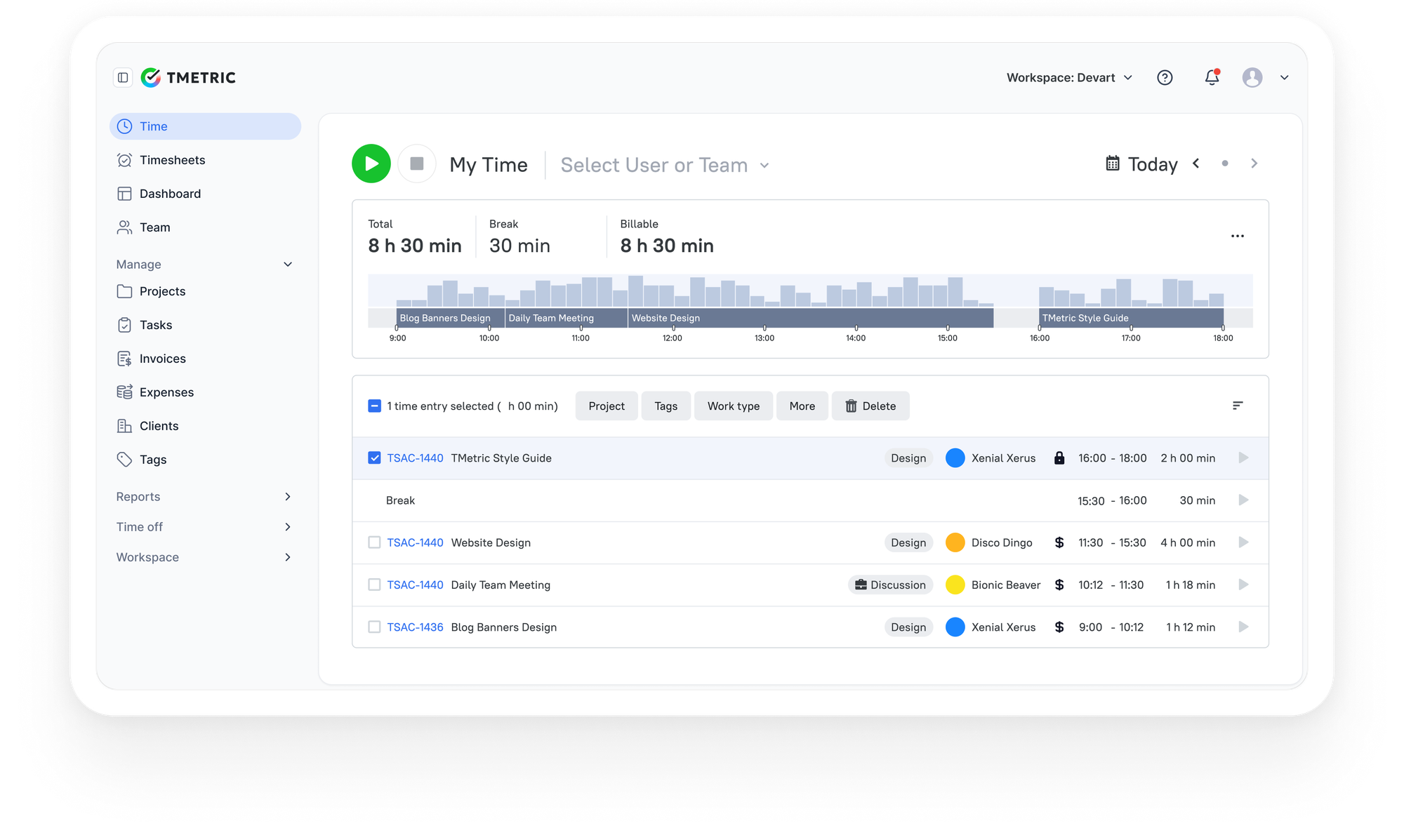
Best for: B2B SaaS teams that need reliable time tracking, project budgeting, and payroll-ready reporting.
TMetric is project-oriented time tracking software. It ties tracked hours to billable rates, project budgets, and reports, helping teams understand how time is spent and the effect on project costs. TMetric doesn’t consider time tracking a side feature, but maintains it at the core of logging, reviewing, and reporting on work.
 Marina Timchenko
Key operational highlights
What TMetric users are saying
We are tracking time of developers and reviewing their work according to TMetric data and it really helps us to manage our team and product development. Also TMetric is part of our KPI calculation. —Ali N, CTO
"TMetric has become an essential tool for our marketing team. I love how easy it is to track time across projects, campaigns, from SEO and content creation to ad management. For us, the ability to add billable rates and set project budgets is a must and I'm glad TMetric has both options. Also, detailed reports are vital for our workflow since we can see how much time is spent for each project and task and can use this informaiton for future estimates." —Ruslan Q, Marketing Lead
"As an outsourcing company with a growing team at Intellabridge.com we needed flexibility and low cost with integration into Jira and Trello. Tmetric was the obvious solution. Because of the ease of use and ability to add browser extensions for Jira and Trello it makes it much easier to track time and invoice clients. I would highly recommend this product!" —Maria N, Managing Director
2. Jira
⭐ 4.3/5 (G2)
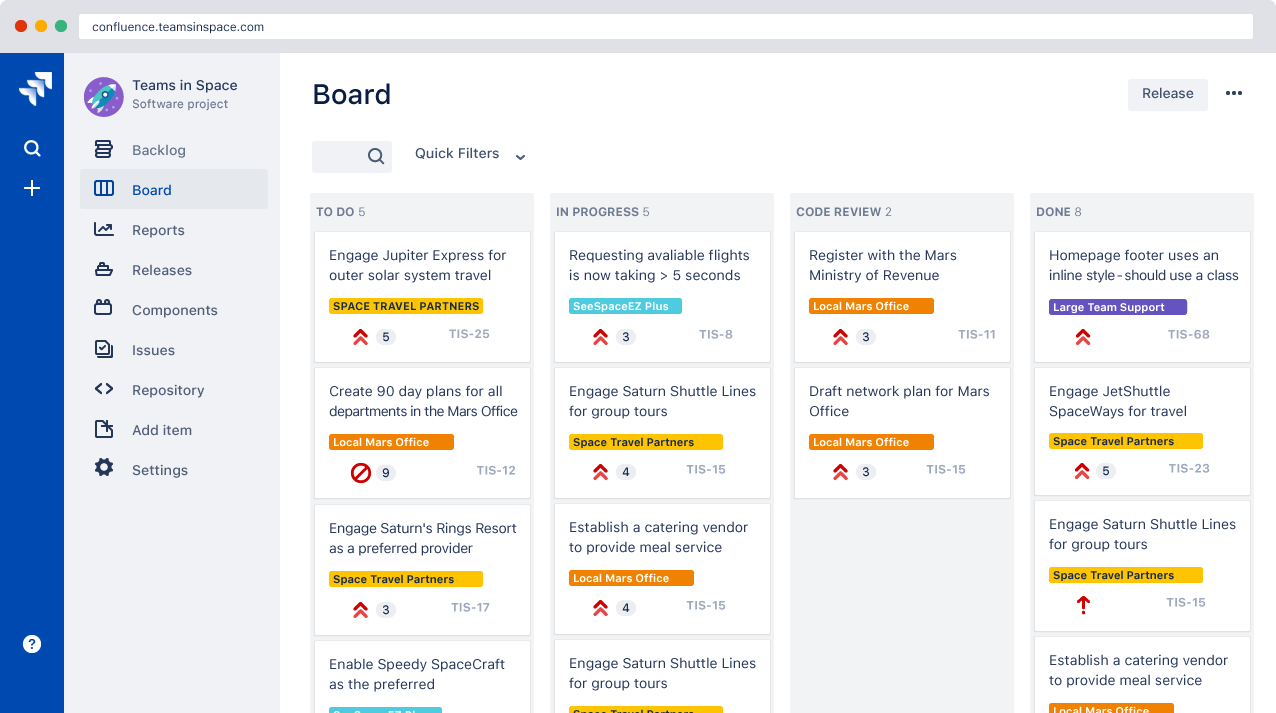
Jira is a project management tool for software development teams. It supports Agile workflows with tools for sprint planning, backlog management, issue tracking, and release coordination. Jira coordinates engineering development work across teams and projects for SaaS companies where engineering is the engine of delivery. However, B2B teams often need to use add-ons or separate tools for financial visibility.
Key operational highlights
| Category | Details |
| Project workflow | Agile boards with Scrum and Kanban support |
| Issue tracking | Track tasks, bugs, stories, and epics |
| Planning tools | Sprint planning, backlog management, and roadmaps |
| Reporting | Velocity charts, burndown reports, and sprint analytics |
User reviews
3. Asana
⭐ 4.4/5 (G2)
Best for: Cross-functional teams coordinating work across departments and client projects.
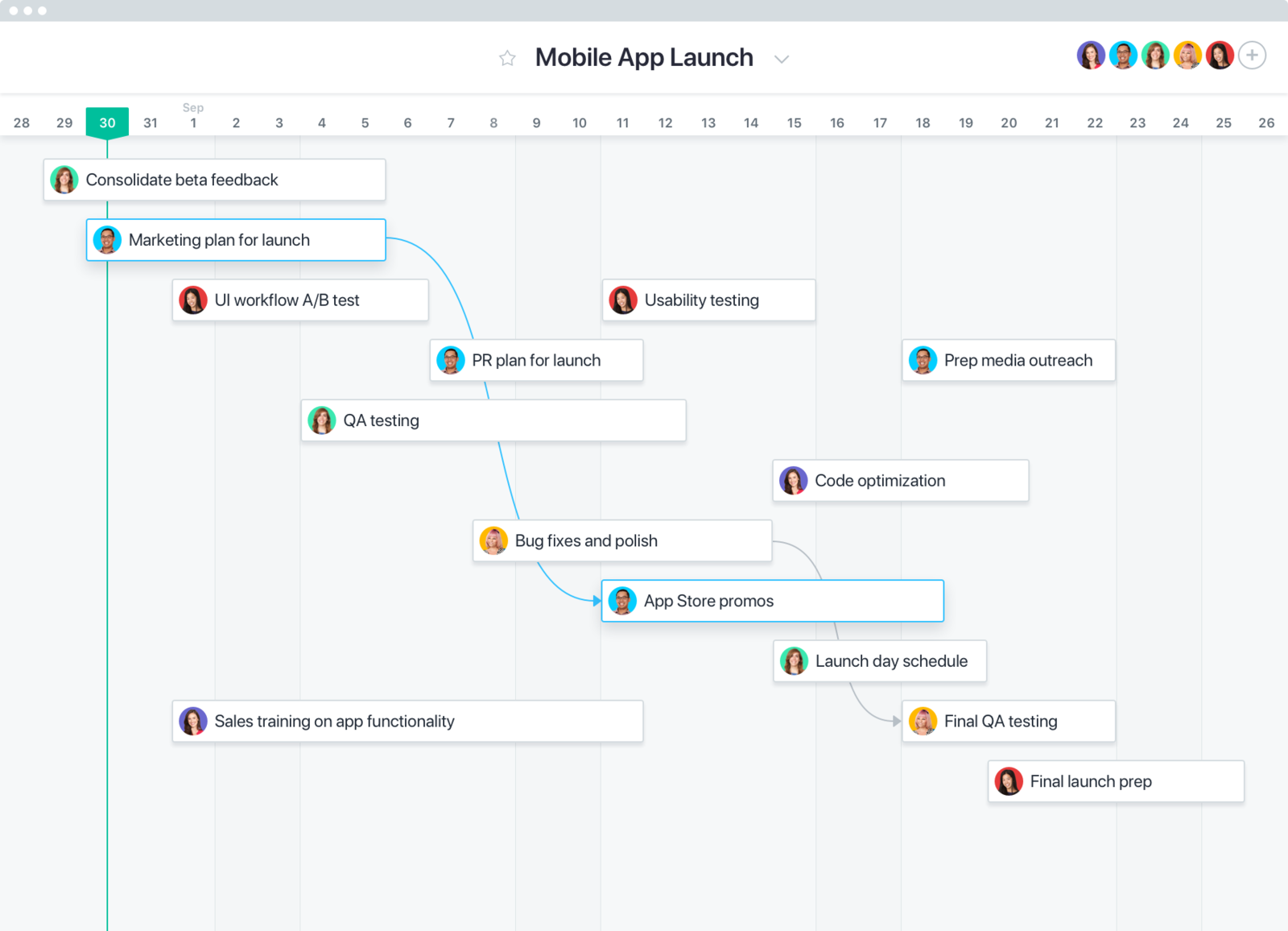
Asana is a work-management platform that helps teams organize tasks, track project progress, and align work with big-picture goals. It provides tools for timelines, project portfolios, and workflow automation, making it a useful tool for coordinating work across multiple teams. Asana gives SaaS organizations working on onboarding, customer success, and implementation projects a clear view of project status, but it lacks more in-depth financial tracking capabilities.
Key operational highlights
| Category | Details |
| Project workflow | Task lists, boards, timelines, and Gantt-style planning |
| Coordination | Cross-project portfolios and workload management |
| Automation | Workflow rules and task automation |
| Reporting | Project dashboards and progress tracking |
Compatibility
Web application with iOS and Android mobile apps, plus integrations with Microsoft 365, Google Workspace, Slack, Salesforce, and hundreds of other tools.
User reviews
4. ClickUp
⭐ 4.7/5 (G2)
Best for: Teams that want project management, documentation, and basic time tracking in one workspace.
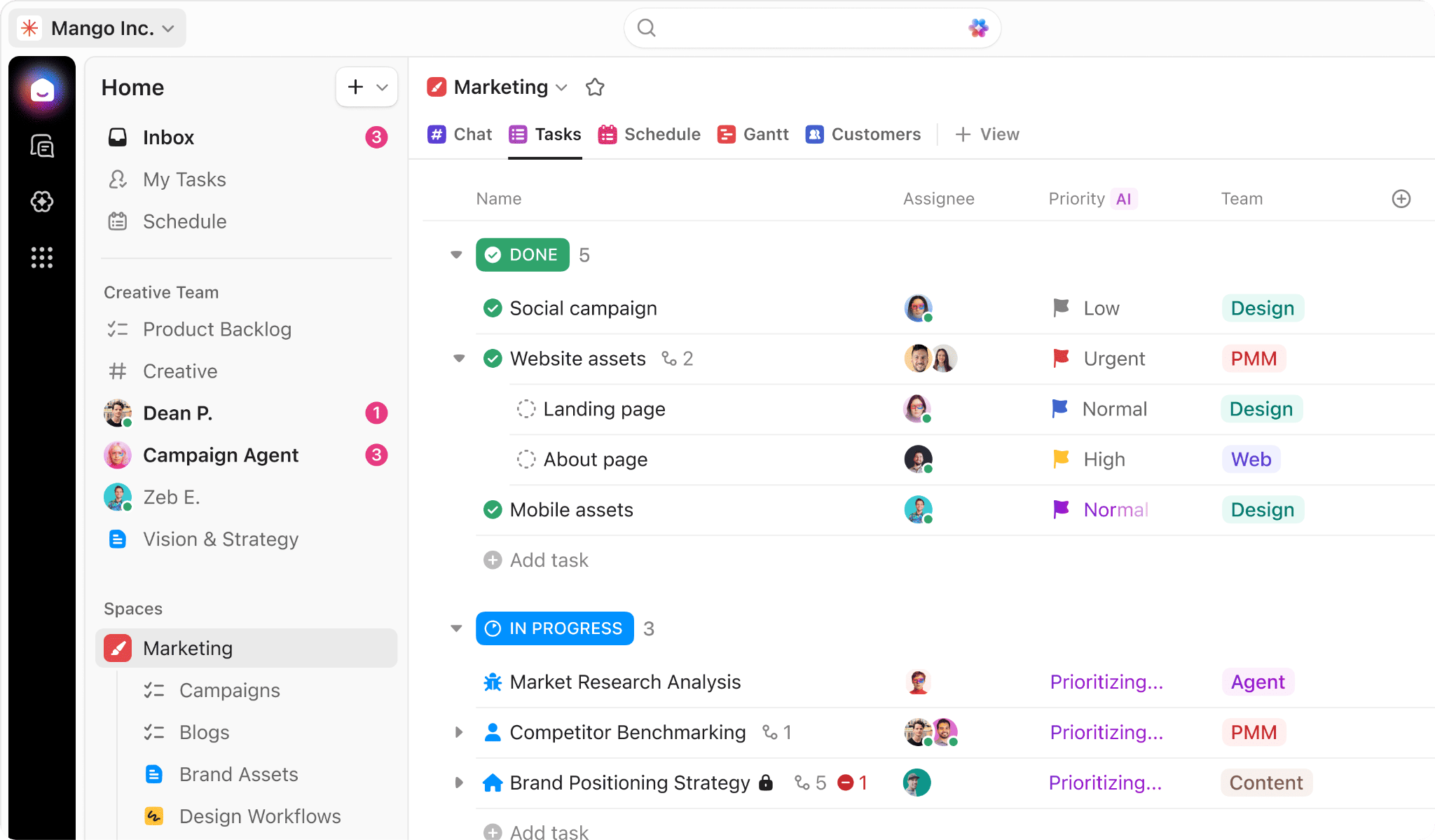
ClickUp is a work management tool that brings together documentation, goals, dashboards, and task management in one place. It lets teams manage projects in multiple views like lists, boards, timelines, and calendars. ClickUp offers flexibility and customization for SaaS teams working across departments and types of work, but its time tracking and financial reporting are less sophisticated than those of specialized tools.
Key operational highlights
| Category | Details |
| Project workflow | Tasks, subtasks, boards, timelines, and calendars |
| Workspace tools | Docs, goals, dashboards, and task management |
| Automation | Workflow automation with customizable rules |
| Reporting | Dashboards with project and workload insights |
Compatibility
Web app, Windows and macOS desktop apps, iOS and Android mobile apps, and browser extensions. Integrates with over 1,000 third-party tools.
User reviews
To make the differences clearer, here’s a quick comparison.
B2B project management software comparison table
The following table summarizes the key differences in time tracking, budget control, reporting, and pricing so you can compare them quickly.
| Tool | Best For | Time Tracking | Budget Control | Client Reporting | Payroll Export | Starting Price |
| TMetric | Revenue-focused SaaS teams | Native + deep | Project budgets & alerts | Exportable PDF/CSV | Yes (Business+) | Free plan available |
| Jira | Agile dev teams | Add-on required | Limited | Moderate | No | Free (up to 10 users) / paid starts at $8–$9/user |
| Asana | Cross-dept coordination | Advanced tier only | Limited | Basic (Starter+) | No | $10.99/user (Starter, annual) |
| ClickUp | Flexible all-in-one teams | Built-in (basic) | Moderate | Moderate | No | Free plan / paid starts at $7/user |
A quick comparison helps, but the right choice still depends on how your team actually works.
How to choose the best B2B project management software
The best project management software for B2B SaaS teams depends on where your operational pressure is highest. Work through these five criteria before committing.
1. Revenue visibility
Can the tool track billable hours and provide data on project profitability? This is a non-starter if your team bills clients for time spent. TMetric has native support for it. Jira and Asana need add-ons or separate tools.
2. Client reporting requirements
Can you produce exportable reports that can be sent directly to clients? Baseline: PDF and CSV exports with breakdowns at the project level. TMetric supports this on all plans, and ClickUp and Asana on higher tiers.
3. Payroll Integration
Does the tool turn tracked time into payroll-ready totals? That takes away a lot of manual reconciliation for teams managing salaried or hourly staff across multiple client projects. Among those listed here, only TMetric offers native payroll-ready exports.
4. Integration into Ecosystems
Does it sync with your current CRM, Git repositories, and accounting software? TMetric integrates with QuickBooks, Jira, GitHub, and Slack. Jira hooks into the entire Atlassian ecosystem. 1,000+ tools covered with ClickUp. The Advanced tier integrates Asana with Salesforce and Tableau.
5. Scalability for 2026 Growth
Consider the granularity of user permissions, the depth of automation, and API access. Jira and Asana scale well for large-enterprise teams. TMetric and ClickUp are solid mid-market value with enterprise-level options. Always consider total cost based on your anticipated team size, not just your current headcount.
The Takeaway
For B2B SaaS companies, visibility into time, cost, and delivery performance is critical. Projects are tied to contracts, budgets, and client reporting, so gaps between task management and financial tracking quickly turn into billing errors or margin leaks.
If your main challenge is linking billable time to project budgets, client invoices, and payroll reporting, TMetric focuses directly on that layer. Jira, Asana, and ClickUp approach project management differently and typically rely on integrations when deeper financial tracking is required.
Jira remains a strong option for engineering-led teams working in Agile development cycles. Asana works well for coordinating work across departments and customer-facing teams. ClickUp offers a flexible workspace that combines project management, documentation, and basic time tracking in one platform.
The right tool depends on how your team delivers projects and how closely you need to connect work activity to financial reporting.
Explore TMetric free to see how time tracking, project budgets, and reporting work together in a single workflow.
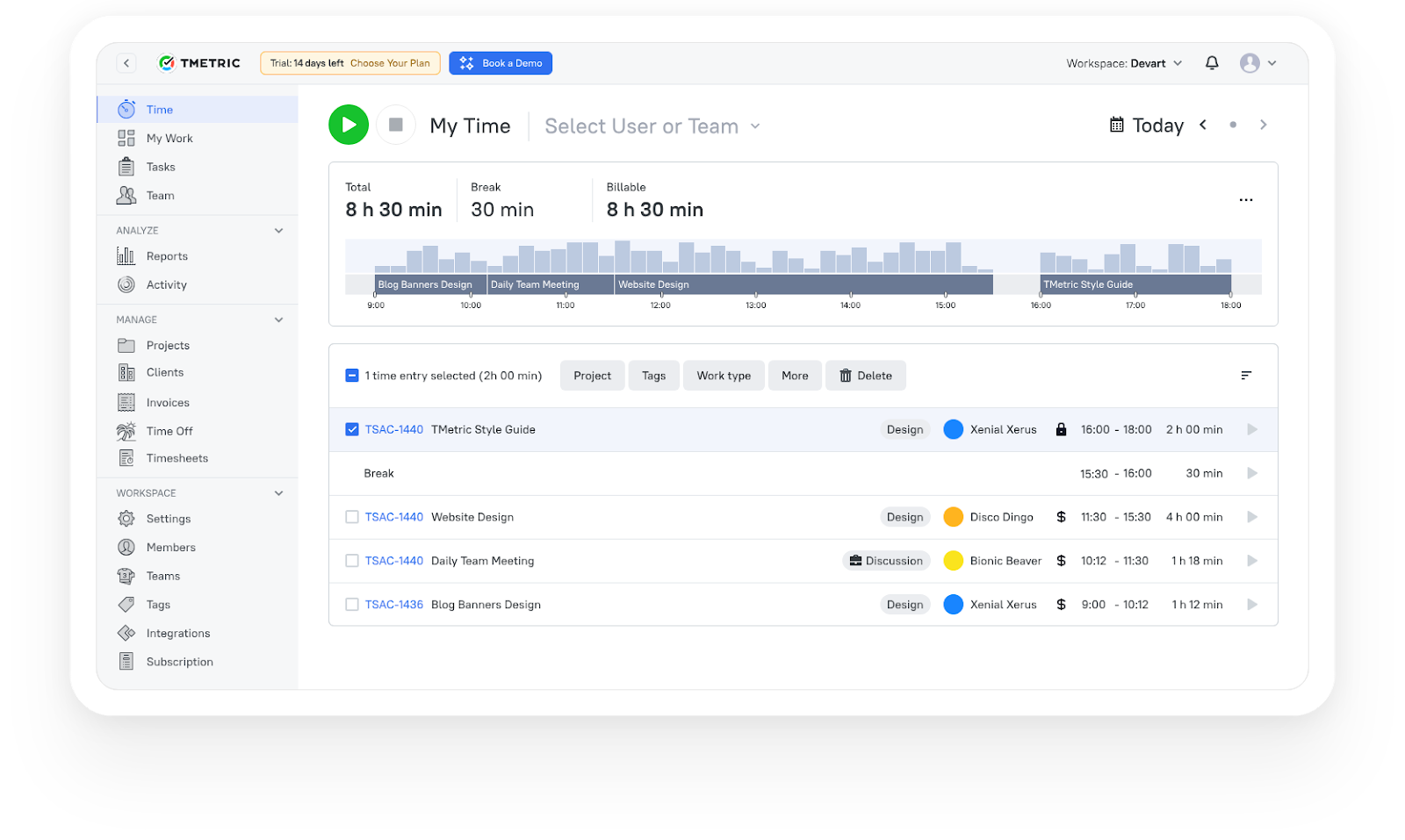
3,000+ companies, teams, and individuals worldwide use TMetric to track time, manage work, and bill with confidence.
FAQ
What is B2B project management?
B2B project management is the management of work delivered from one business to another. Typical scope of work includes onboarding, implementation, and service delivery with contract, budget, and client reporting. Some companies manage orders, billing, and fulfillment using project management tools together with B2B order management software.
What is the best software for B2B management?
It depends on what you value. TMetric is a good option for teams that need time tracking and billing. Jira is a favorite of Agile development teams. Asana is great for cross-department coordination, while ClickUp offers an all-in-one workspace for projects and documentation.
How is B2B project management different from B2C?
B2B projects are contract-driven, with approvals, billing, and client reporting. Typically, B2C project management is more focused on internal product development and faster iteration cycles.