
Top 5 Legal Time Tracking Software in 2026
Lawyers bill an average of just 2.6 hours in an eight-hour workday. The rest disappears into bad timekeeping, end-of-day reconstructions, and tools that weren't built for legal work. Read this guide to find the best legal time tracking software that fixes that and protects your billable hours.

Legal teams lose billable time every day. Not through bad intentions, but through poor systems. When attorneys rely on memory, end-of-day notes, disconnected spreadsheets, or slow manual entry, hours disappear before they're recorded. According to a recent legal trends report, lawyers bill an average of just 2.6 hours in an eight-hour workday.
This article reviews the best legal time tracking software for law firms that want better control over billable work, reporting, and invoicing.
Our top picks
How we selected the best legal time tracking apps
These legal time tracking software reviews cover tools evaluated against criteria that matter in legal work, not just general productivity contexts. We narrowed our focus to the six make-or-break criteria that actually impact a firm's bottom line:
- Time capture: How well the software records billable time.
- Invoicing: How easy it is to create invoices from tracked time and support different billing models.
- Legal workflows: Whether the platform is designed for matter-based work and legal billing.
- Reporting and budgeting: The quality of reports, budget tracking, and profitability insights.
- Integrations: Compatibility with calendars, accounting tools, and practice management software.
- Security: The protections in place for sensitive client and firm data.
The Bottom Line: An impressive feature list is a liability if the tool complicates your day, causes missed time, or slows down your billing cycle.
Comparison table: Best legal time tracking software at a glance
Use this table to compare the top legal time tracking software before reading the full reviews. Legal buyers typically evaluate on billable time capture, invoice support, reporting, workflow fit, integrations, mobile access, and pricing model.
| Tool | Best for | Billing | Legal features | Price* |
|---|---|---|---|---|
| TMetric | Firms that need time tracking, budgeting, reporting, and invoicing without a full practice management platform | Invoice generation, billable rates, budgeting, reporting | General time tracking; not legal-specific | Free plan; paid from $5.83/user/month |
| Clio | Firms that want practice management, billing, documents, and time tracking in one platform | Legal billing, payments, expense tracking | Trust accounting, matter-based workflows, full practice management | From $49/user/month |
| Harvest | Firms that need simple billable-hour tracking, invoicing, and reporting | Invoicing, retainers, expenses, reporting | General business billing; not legal-specific | Free plan; paid from $9/seat/month |
| TimeSolv | Firms with more complex legal billing requirements | Invoicing, payments, expense tracking | Trust accounting, retainers, ABA LEDES billing | From $38/user/month — Pro plan |
| WiseTime | Firms that want automatic time capture and AI-assisted legal timekeeping | No native invoicing; integrates with billing systems | Automatic time capture for legal matters and timekeeping | 30-day free trial; quote-based pricing |
List of the Best Legal Time Tracking Software
This section gives a fast shortlist before the detailed reviews. Each time tracking app is evaluated from the perspective of legal billing accuracy, ease of adoption, and fit for different law firm sizes and workflows.
1. TMetric
Rating: 4.6/5 (G2)
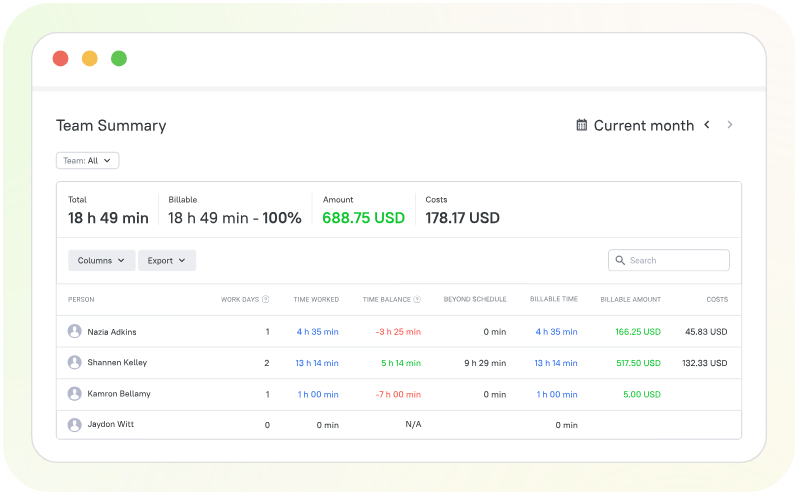
TMetric, an Everhour alternative, is one of the best time tracking software for legal service teams seeking an easy way to track billable hours and manage billing. Attorneys can track time by client or matter, see workloads, check budgets, and create invoices from tracked time. Budget alerts, billable rates, timesheet approvals and reporting keep billing organized without unnecessary complexity.
Professional plan starts at $5.83 per user per month. Business plan starts at $7.50 per user per month.
User reviews
2. Clio
Rating: 4.6/5 (G2)
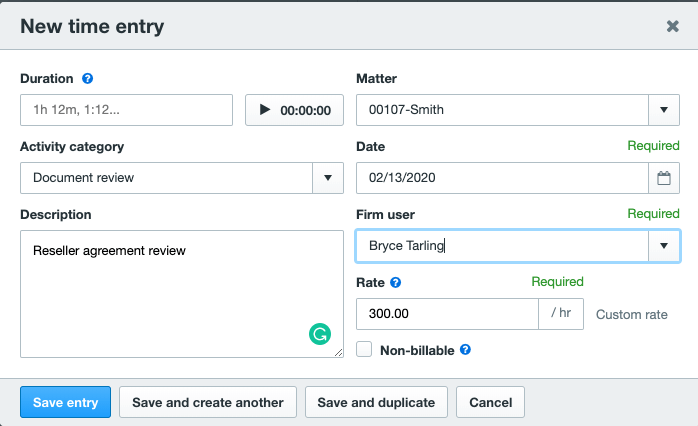
Clio is widely regarded as one of the best legal billing and time tracking platforms on the market. It combines case management, time tracking, billing, document management, client communication, and payments in one system built specifically for law firms. Attorneys can capture billable time from emails, calendars, tasks, and documents, then turn those entries into invoices without switching tools.
A 7-day free trial is available with no credit card required.
User reviews
3. Harvest
Rating: 4.3/5 (G2)
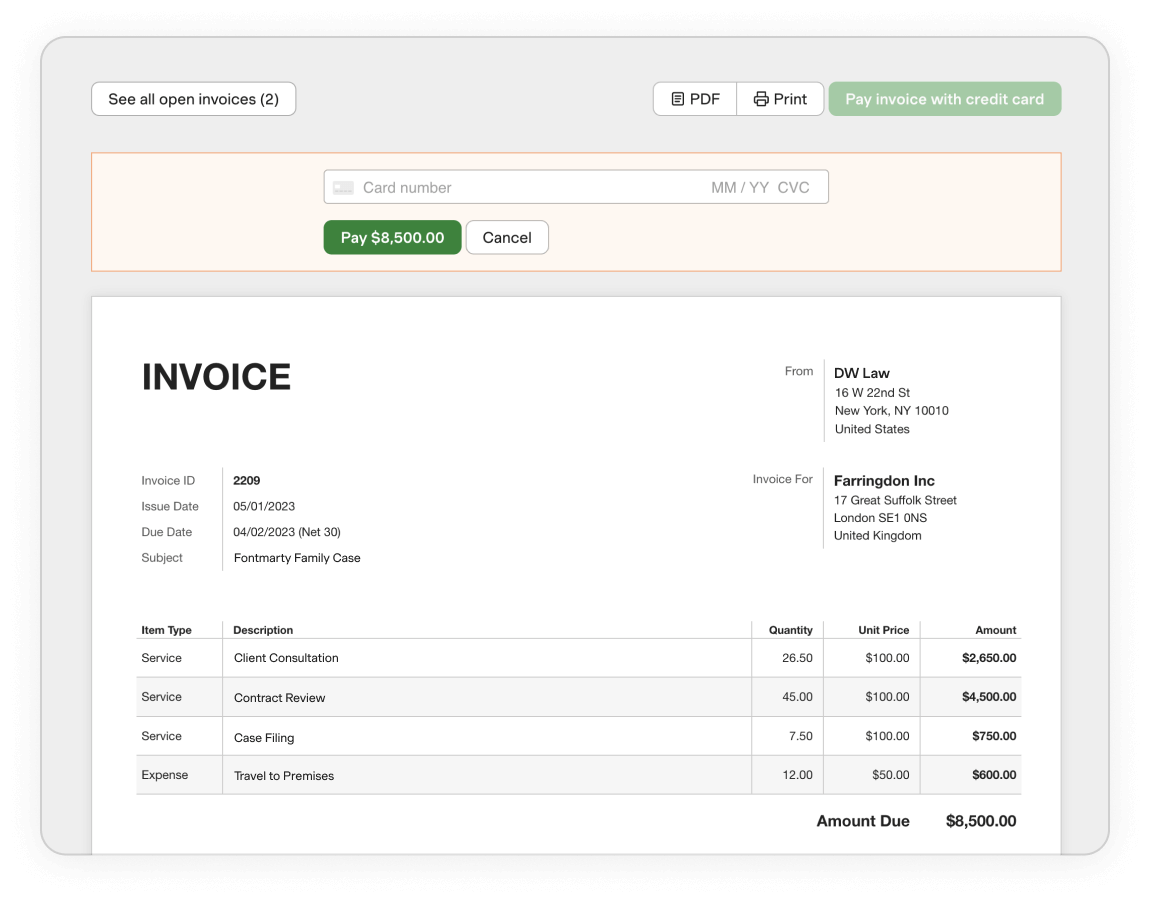
Harvest, an Everhour alternative, is one of the more affordable legal time tracking solutions available for small firms and solo practitioners. It handles billable hours, expenses, and invoicing in a clean interface, and integrates with accounting tools cleanly enough to fit most billing workflows. It won't replace a legal practice management system, but for firms that already have case management sorted and just need reliable time capture and invoicing, it covers the essentials without the overhead.
Paid plans start at $9 per seat per month. A 30-day free trial is included.
User reviews
4. WiseTime
Rating: 2.5/5 (G2)
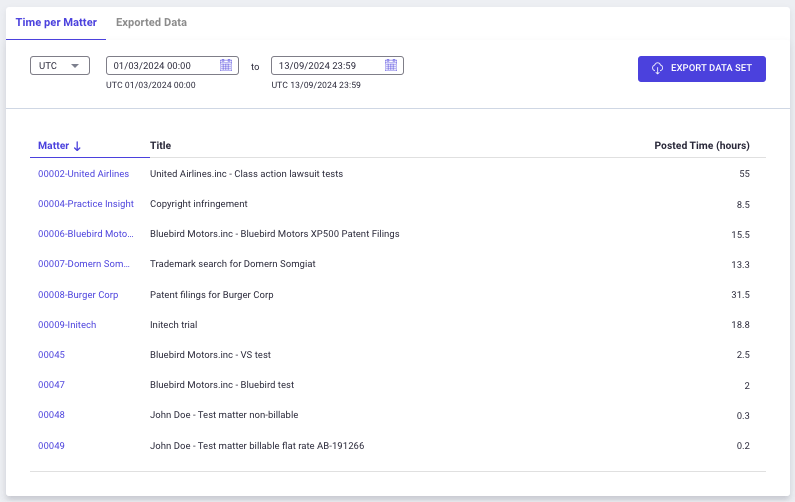
WiseTime automatically captures work activity, creating a timeline that attorneys can review later. Users can recreate their day, sync time entries with integrated systems and create AI-assisted billing narratives from recorded activity.
Automatic matter detection, reporting tools and privacy controls make it a useful option for firms looking to reduce timekeeping administration.
A 30-day free trial is available for new users.
User reviews
5. TimeSolv
Rating: 4.5/5 (G2)
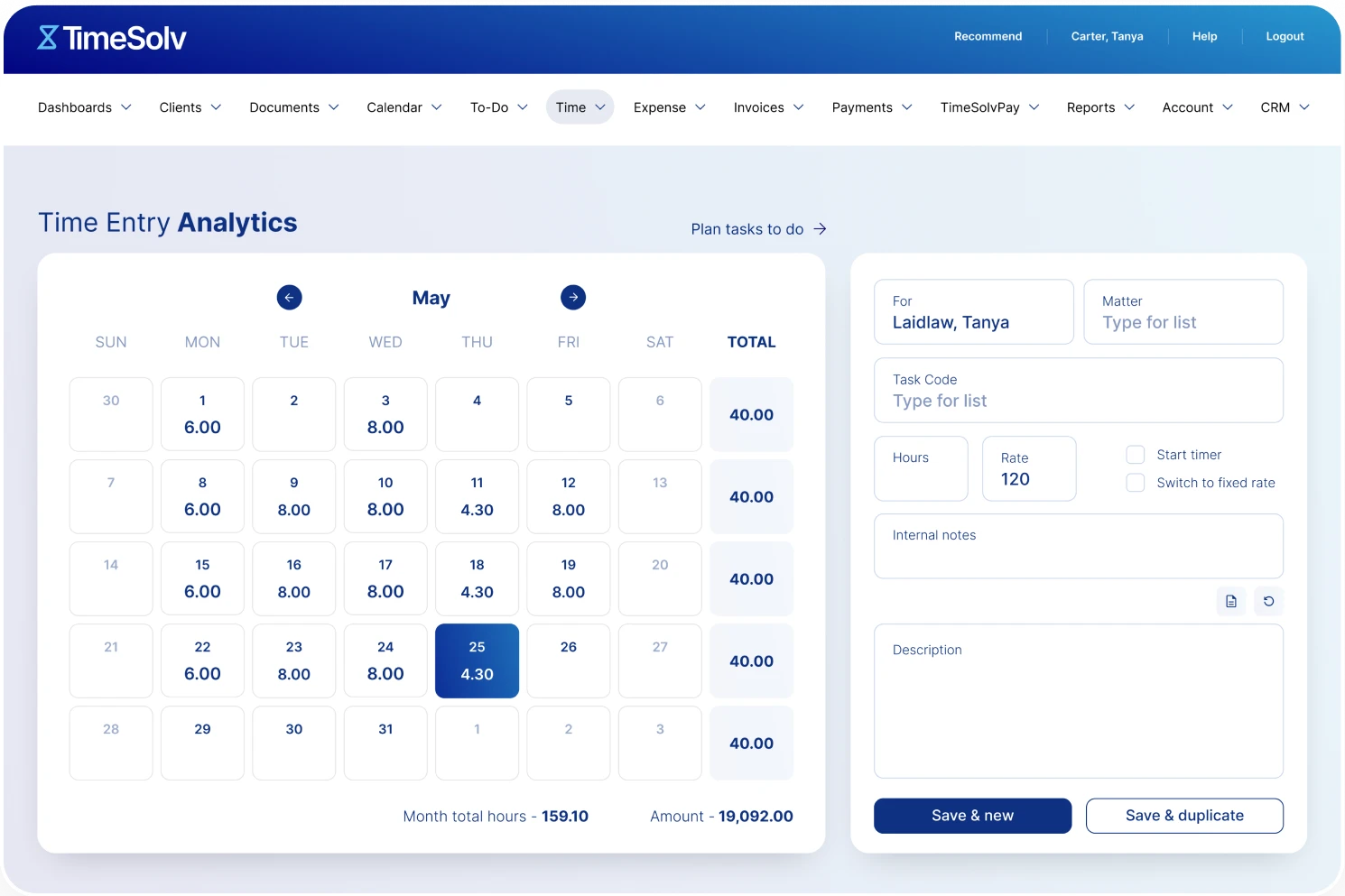
TimeSolv is a legal billing and time tracking platform built specifically for attorneys and law firms, and one of the best time and billing software for attorneys with complex invoicing requirements. It covers matter management, UTBMS code tracking, LEDES billing, trust accounting, expense management, and invoicing, all in a workflow designed around how legal billing actually works. For firms that need legal-standard billing formats and compliance features, TimeSolv covers ground that general tools don't.
TimeSolv Legal starts at $53 per user per month billed annually.
A 10-day free trial is available with no credit card required.
User reviews
What features matter most in the best legal time tracking software?
Not every time tracking feature is equally important in a legal context. The right time tracking systems for legal professionals share a few core capabilities that directly affect billing accuracy and profitability. Here's what actually moves the needle.
Accurate time capture
The best tools make it easy to record billable hours through timers, manual entry, or automatic tracking. They should also allow quick edits when time needs to be reassigned, corrected, or reviewed.
Billing and expense management
Law firms often use different billing rates by attorney, client, or matter. Good software supports flexible rate structures, tracks expenses alongside billable time, and provides budget visibility to help prevent matters from running over budget.
Reporting and performance tracking
Reports help firms understand where time is spent, identify lost billable hours, monitor profitability, and support billing reviews. Export options such as PDF, CSV, and XLS are useful for accounting and client reporting.
Cloud access and security
Attorneys need to log time wherever work happens, whether in the office, court, or at a client site. Look for cloud access, mobile apps, two-factor authentication, clear data protection policies, and responsive customer support.
How to choose the right legal time tracking software for your firm
The best legal time tracking tools for law firms are the ones that teams will actually use consistently. Focus on these factors when comparing options.
Size of firm and workflow
Solo lawyers and small firms often need simple time tracking, invoicing and quick setup. Larger firms may require approvals, reporting, budget tracking and better visibility across attorneys and matters.
Standalone tracker vs. practice management platform.
If you’re already using case management and document tools, a stand-alone tracker like TMetric or Harvest could work. If you’re looking to track cases, documents, billing and client communication all in one place, then a platform like Clio or TimeSolv may be a better choice.
Time capture methods
Some attorneys prefer timers, others enter time later, and some benefit from automatic tracking. Choose software that matches how your team already works rather than forcing new habits.
Billing and expense management
Look beyond time tracking. The right tool should support your billing model, generate invoices efficiently, track expenses, manage retainers where needed, and help reduce billing errors.
Integrations and security
Check compatibility with tools such as QuickBooks, Xero, Outlook, Google Calendar, and your existing legal software. Cloud access, mobile apps, two-factor authentication, and reliable support should be standard.
Price vs. value
Don't compare tools on subscription cost alone. Recovering missed billable hours, reducing invoicing effort, and improving reporting can deliver far more value than the monthly fee.
The Takeaway
Legal time tracking comes down to one thing: capturing billable hours accurately and turning them into invoices with as little admin work as possible. The right tool should fit how your firm already works, not force new processes.
Firms that need case management, trust accounting, and legal-specific billing features should look at platforms like Clio, TimeSolv, MyCase, and Bill4Time. Firms that mainly need time tracking, reporting, and invoicing may be better served by a simpler tool.
TMetric stands out for its mix of time tracking, budgeting, reporting, and invoicing without the complexity of a full legal platform. For firms looking to improve billing accuracy and visibility, it's a solid place to start.
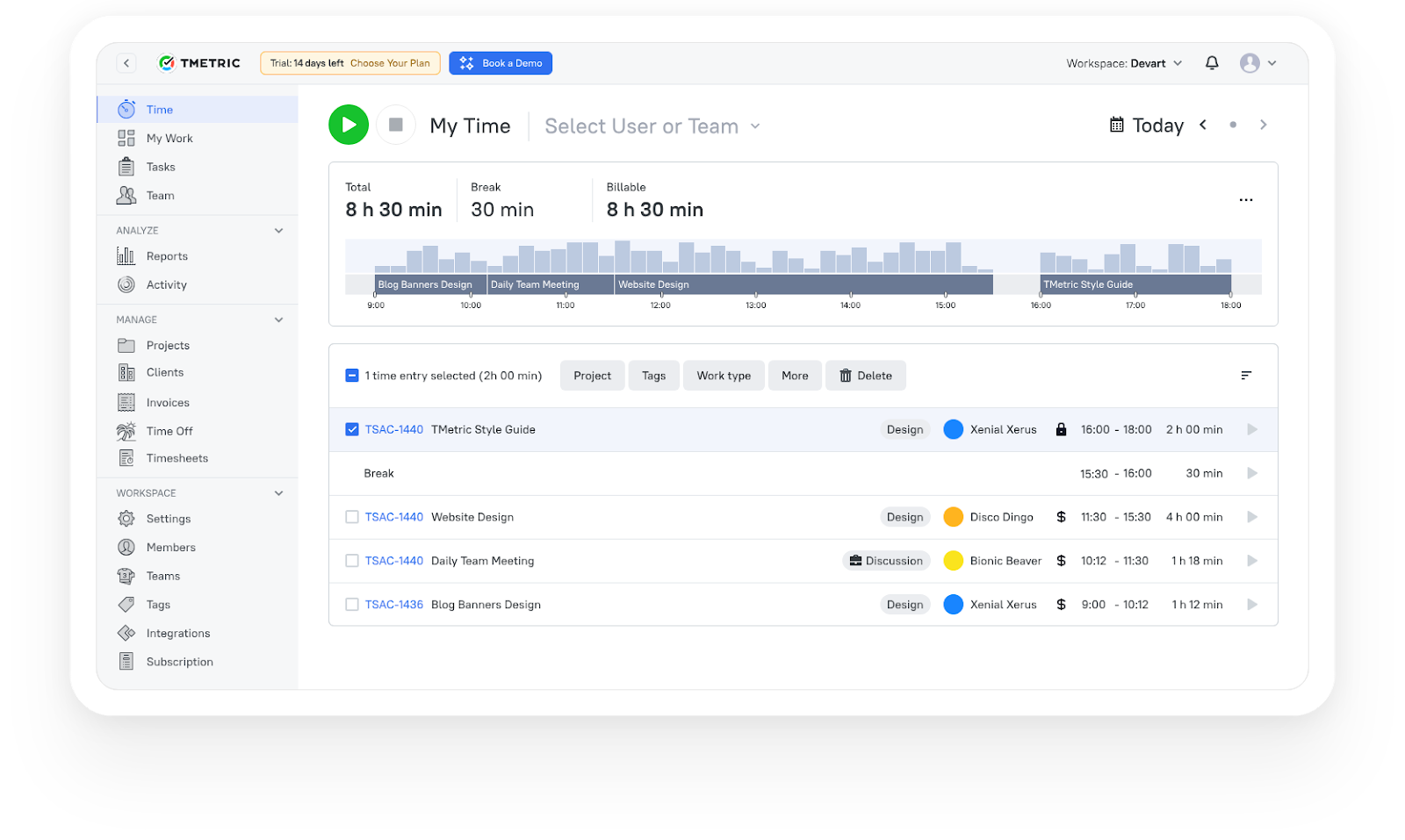
3,000+ companies, teams, and individuals worldwide use TMetric to track time, manage work, and bill with confidence.
Frequently asked questions
How can attorneys avoid losing time they forgot to record?
Track time as close to the work as possible using timers or mobile apps. Top legal time tracking software solutions such as TMetric and WiseTime can also help reconstruct work completed throughout the day.
Which tools turn tracked time into invoices?
TMetric, Clio, Harvest, TimeSolv, MyCase, Bill4Time, and eBillity can generate invoices from tracked billable time. The main differences are billing models, trust accounting support, and accounting integrations.
What should a small law firm look for in a time-tracking tool?
Prioritize ease of use, quick setup, accurate time capture, invoicing, and reporting. Smaller firms often benefit from simpler tools that don't require a full practice management platform.
Can TMetric work well for attorneys and legal teams?
Yes. TMetric supports billable rates, project-based matter tracking, timesheets, reporting, budgeting, and invoicing. It doesn't include legal practice management or trust accounting, but it covers the core requirements of time tracking and billing.
Can TMetric generate invoices from tracked time?
Yes. Paid plans include invoice generation from billable hours, with support for custom branding, multiple currencies, and exports to tools such as QuickBooks and Xero.